Learn
The must-knows of stocks and options, one short video at a time.
The 15 rules
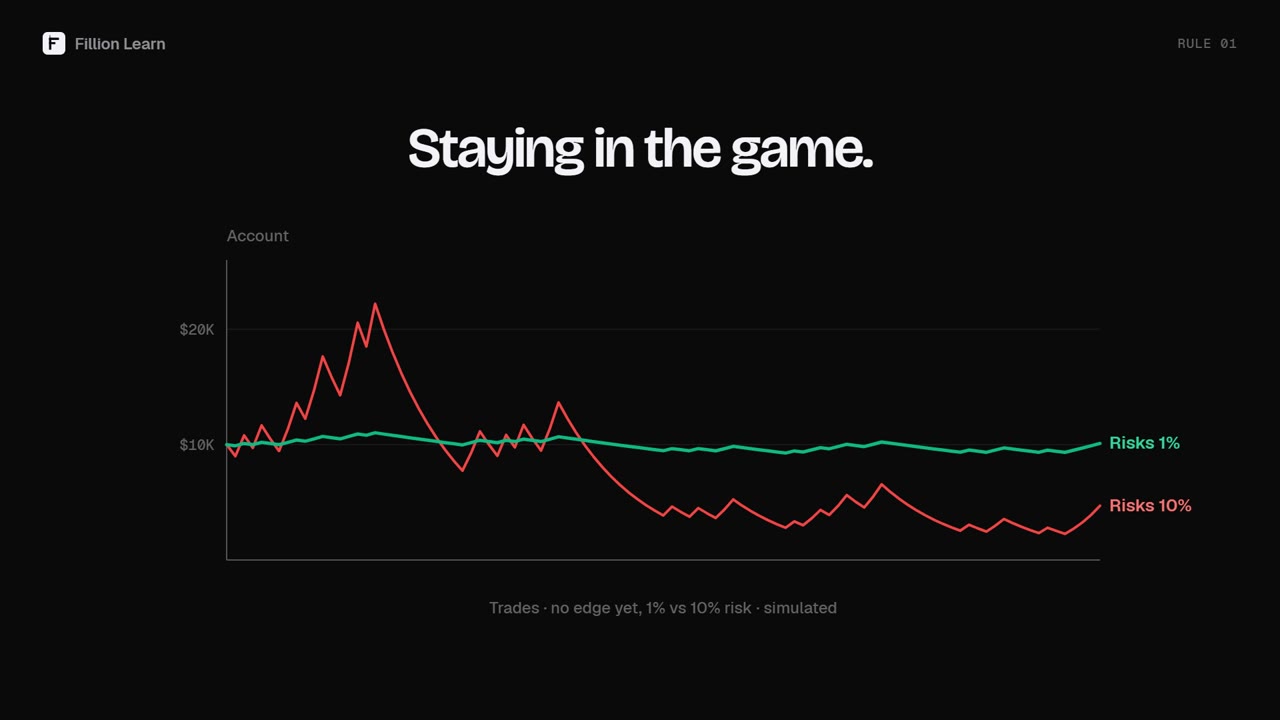 1:46Rule 1Survive firstProtect the account before you try to grow it. Losses are uneven, and a few habits cause most blowups.
 2:03Rule 2Risk 1% per tradeSize every trade so no single loss matters. The same plan survives at 1% and breaks at 10%.
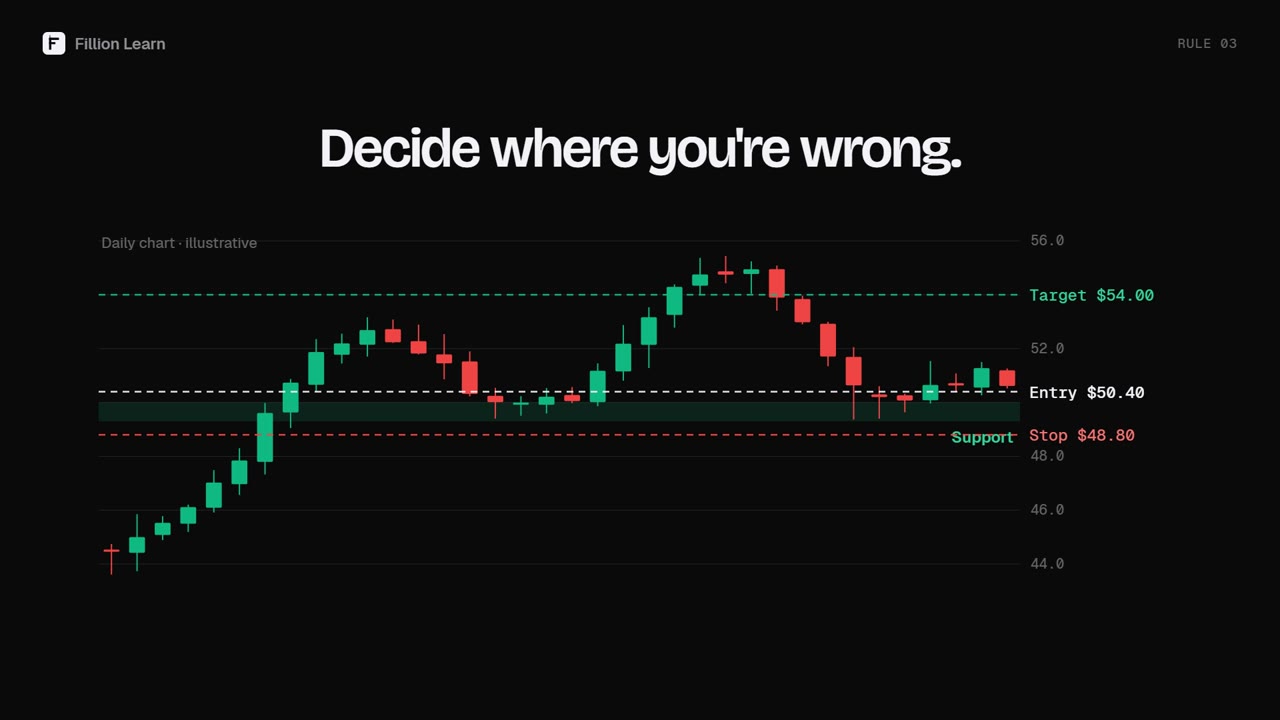 1:32Rule 3Know your exit before you enterDecide where the idea is wrong before you buy, place the stop as a real order, and never move it further away.
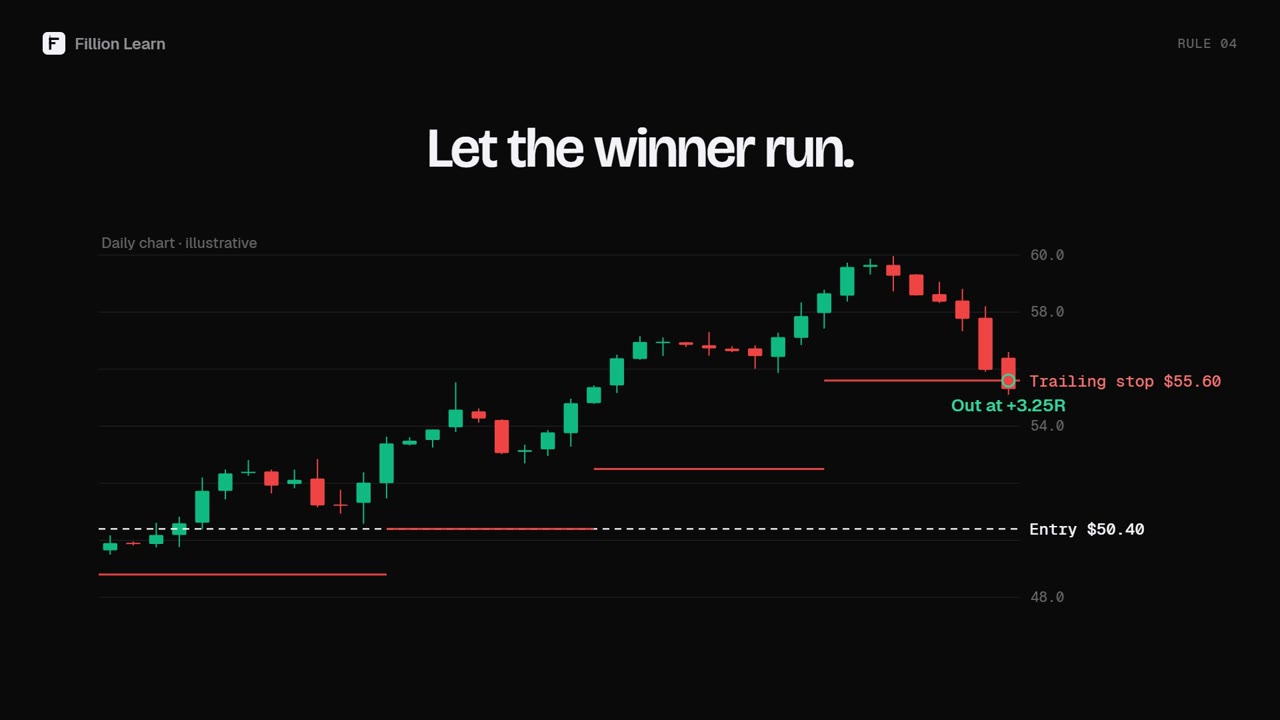 1:47Rule 4Cut losses, let winners runMost traders grab small wins and sit on big losses. Reversing that habit is where the money is.
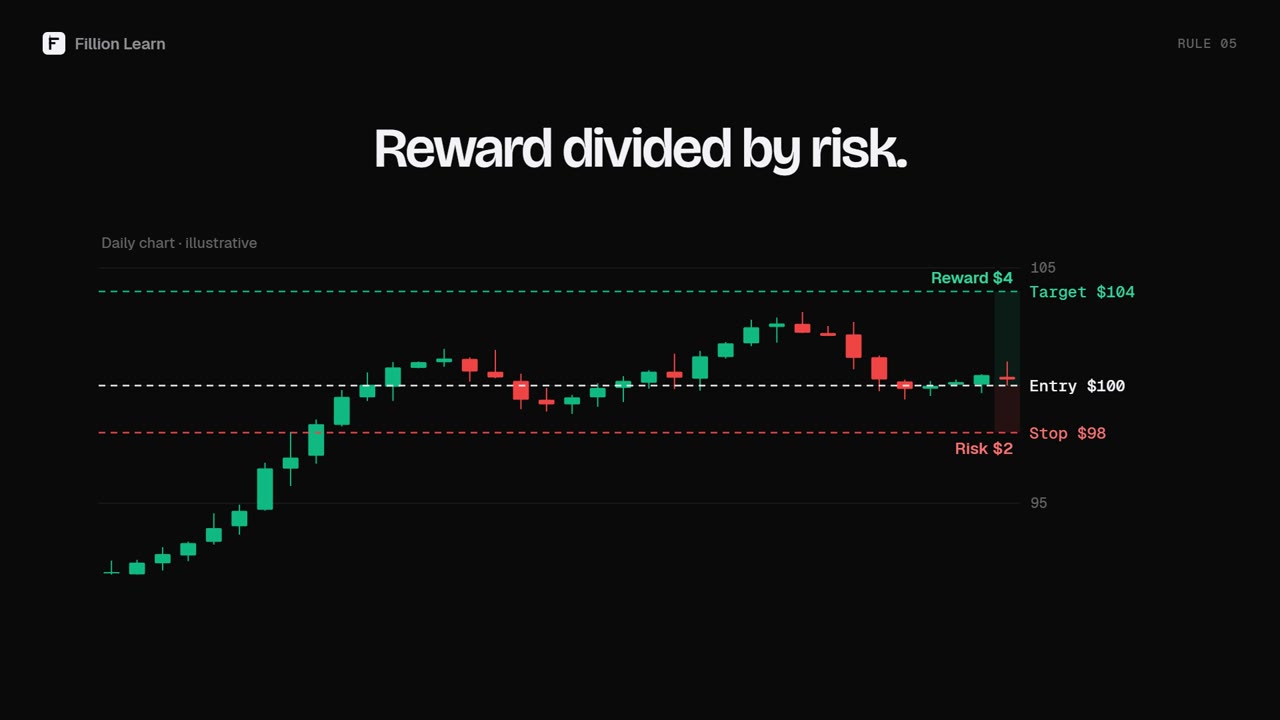 1:48Rule 5Demand 2 to 1Only take trades that can pay at least twice what they risk, measured honestly before you enter.
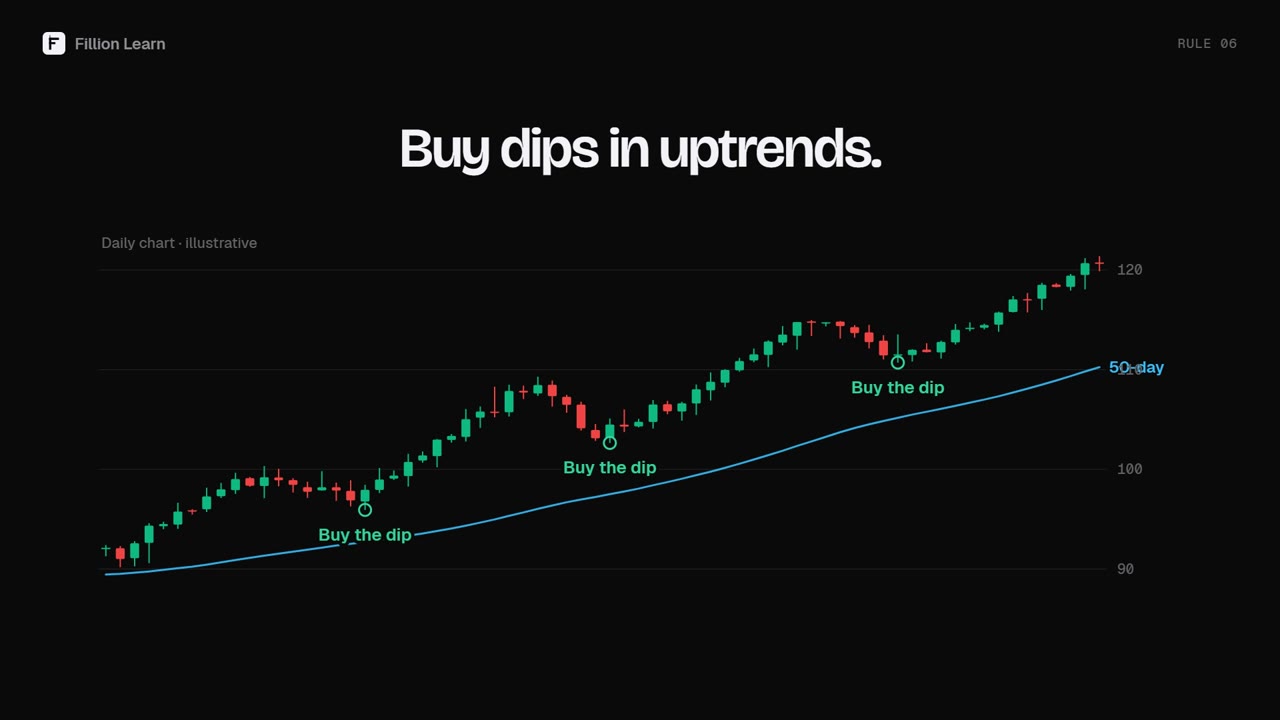 1:26Rule 6Trade with the trendBuy dips in uptrends, avoid catching falling knives, and check the market before the stock.
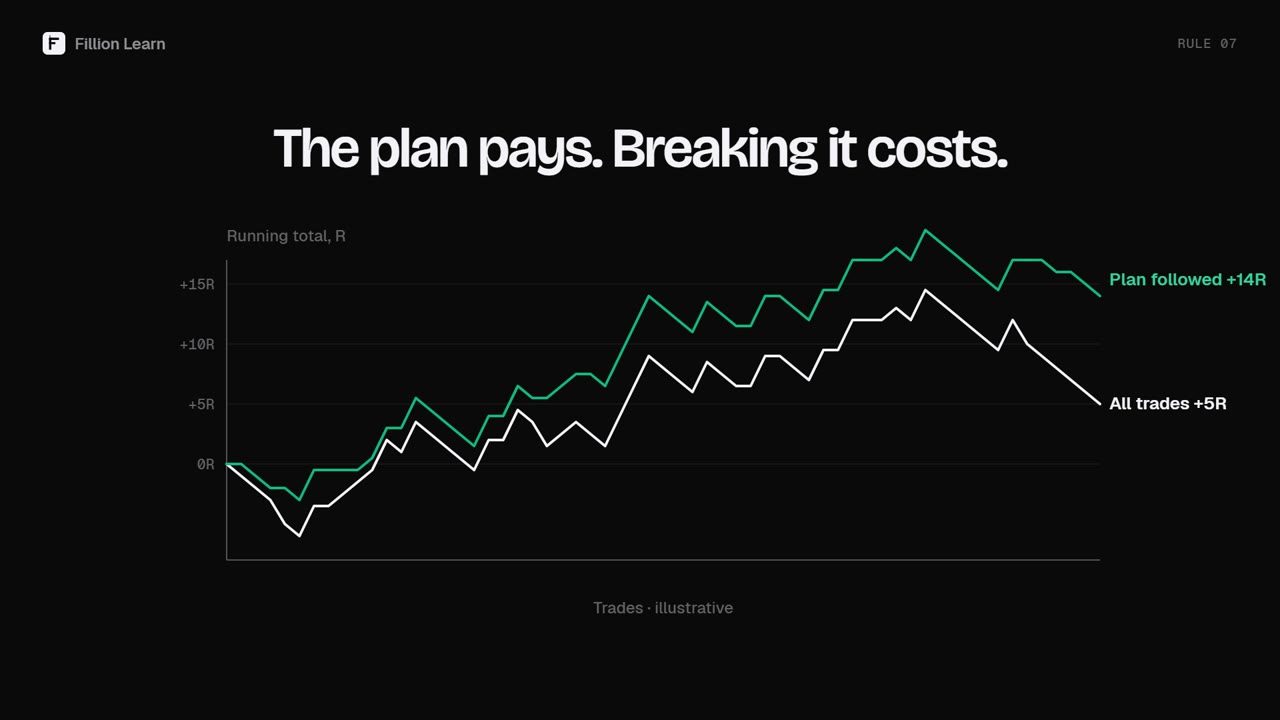 1:33Rule 7Write the plan, follow the planMake every decision before the trade, in six lines, then let the plan be the boss.
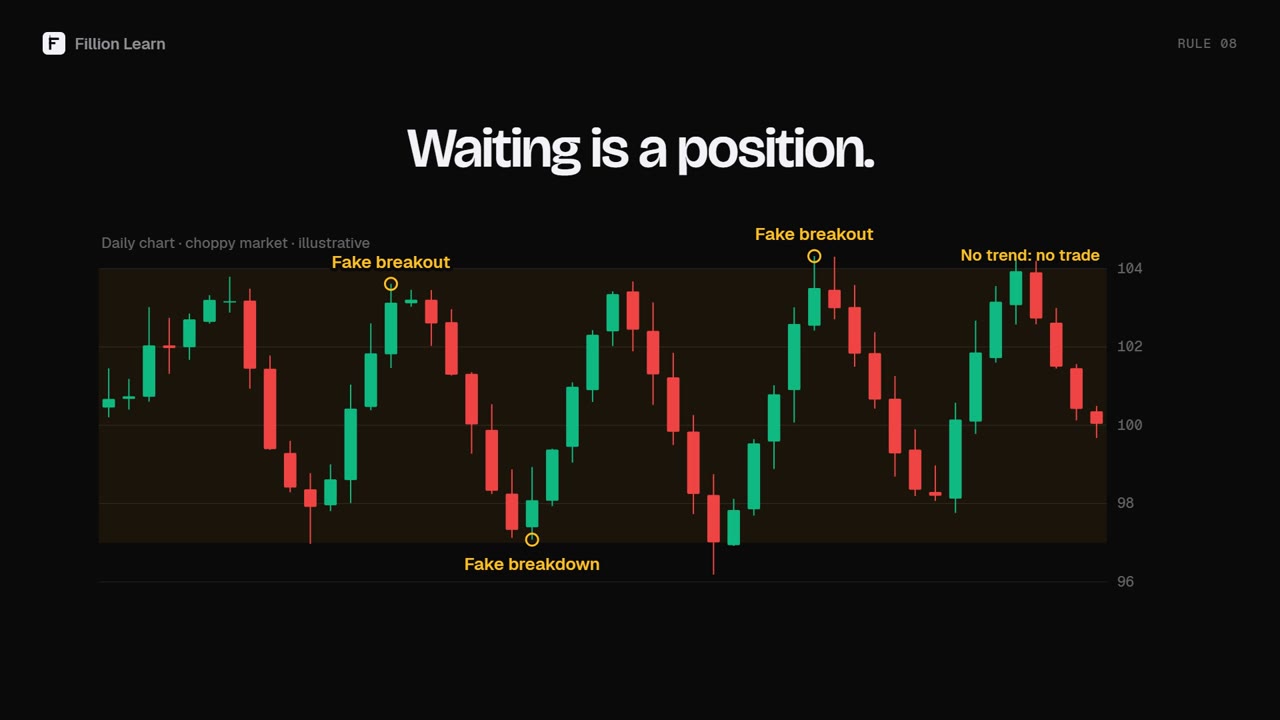 1:27Rule 8Fewer, better tradesEvery trade pays a toll. Raise the bar, wait for setups that pass a checklist, and sit out the chop.
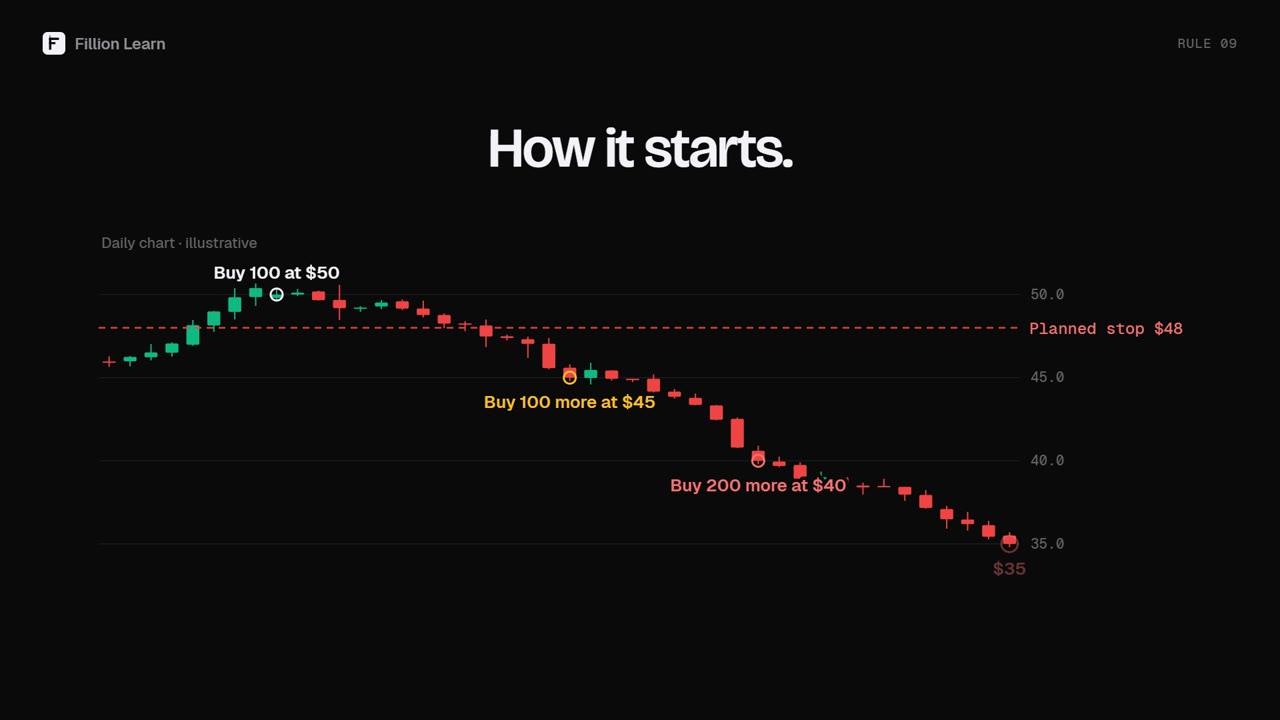 1:26Rule 9Never add to a loserAveraging down makes your position biggest exactly when the evidence says you're wrong.
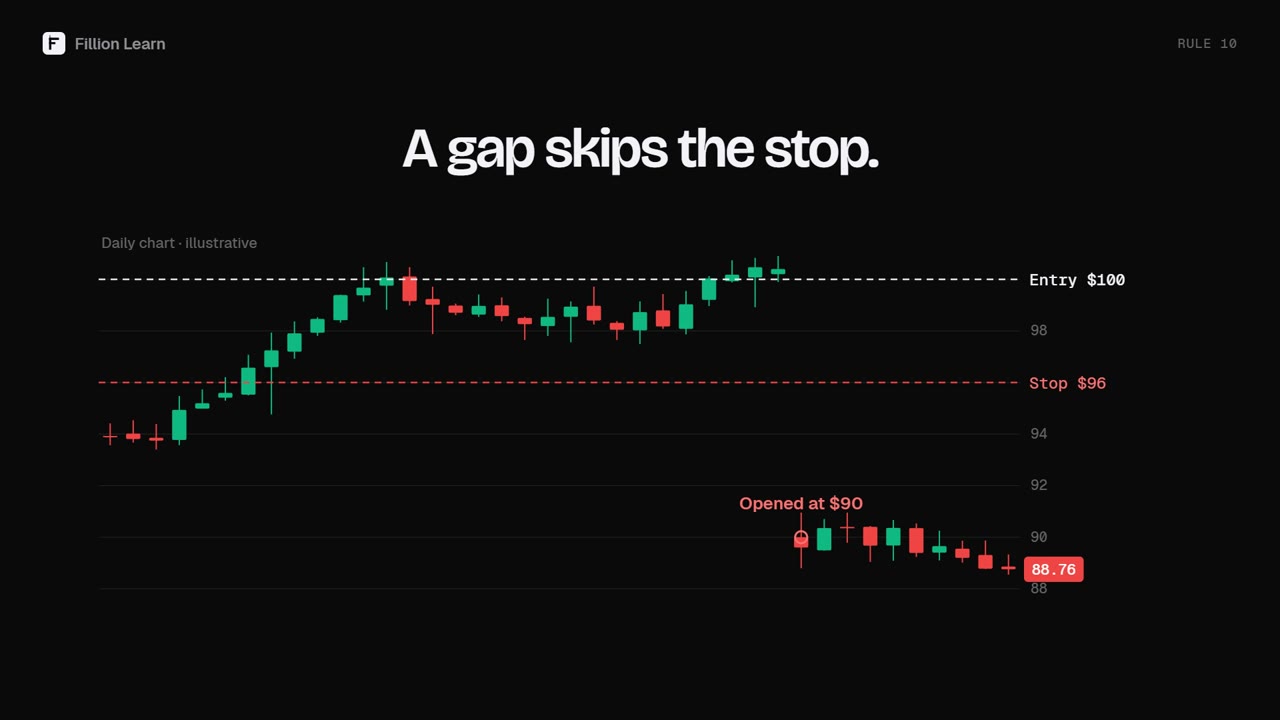 1:33Rule 10Respect the calendarEarnings and economic reports can gap a stock right past your stop. Know the dates and size for the gap.
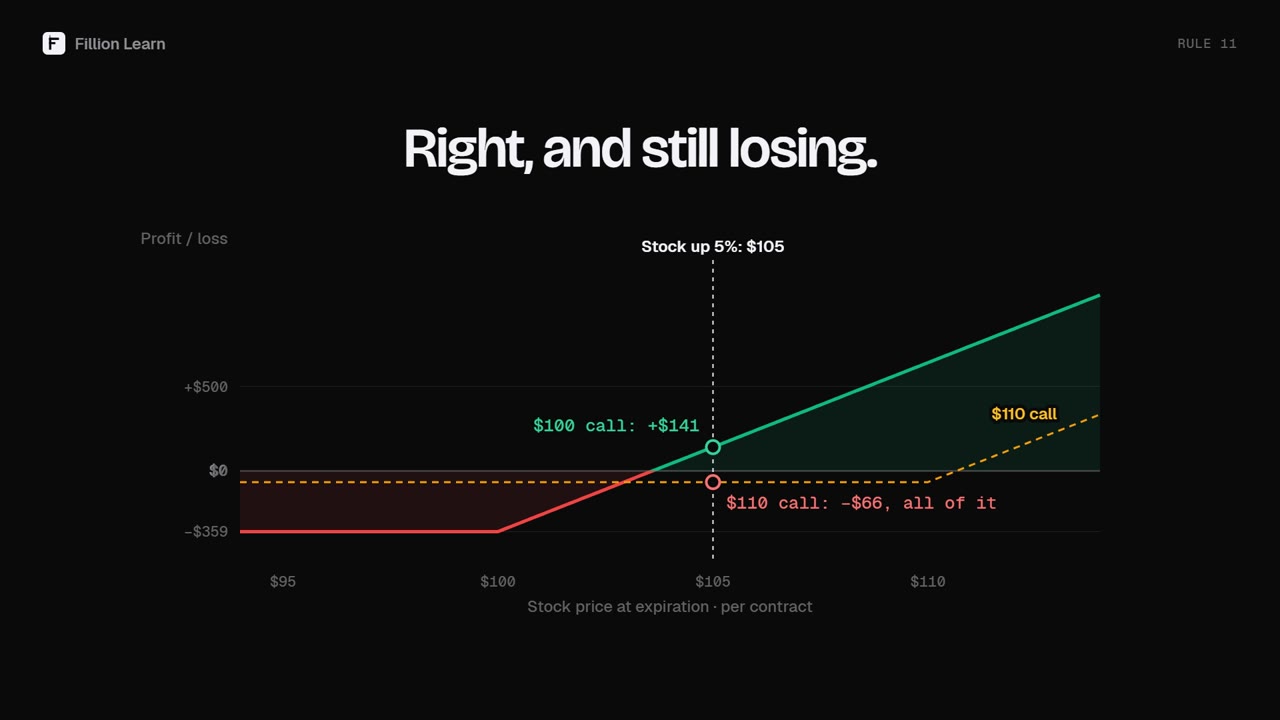 1:57Rule 11Don't buy lottery ticketsCheap out-of-the-money options rarely pay. Even when you're right, they can expire worthless.
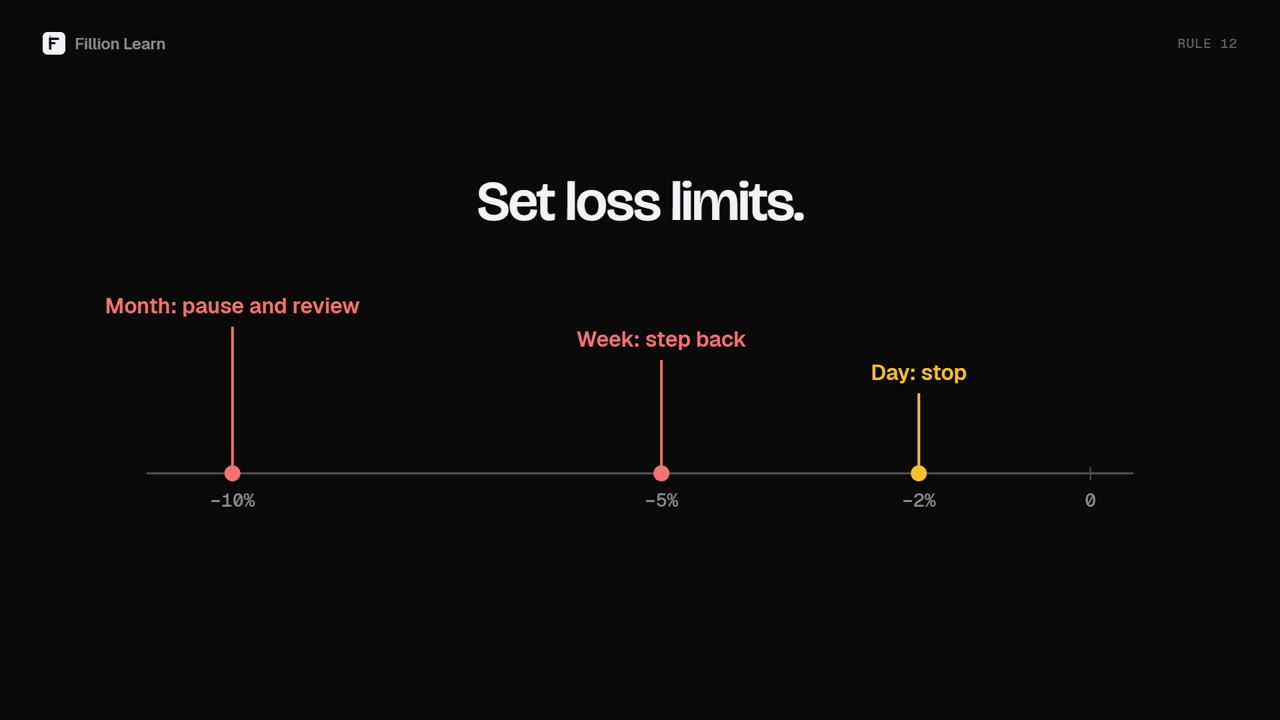 1:36Rule 12Let rules beat emotionsFear, greed and hope all break plans. Loss limits, fixed risk and automatic orders decide before feelings do.
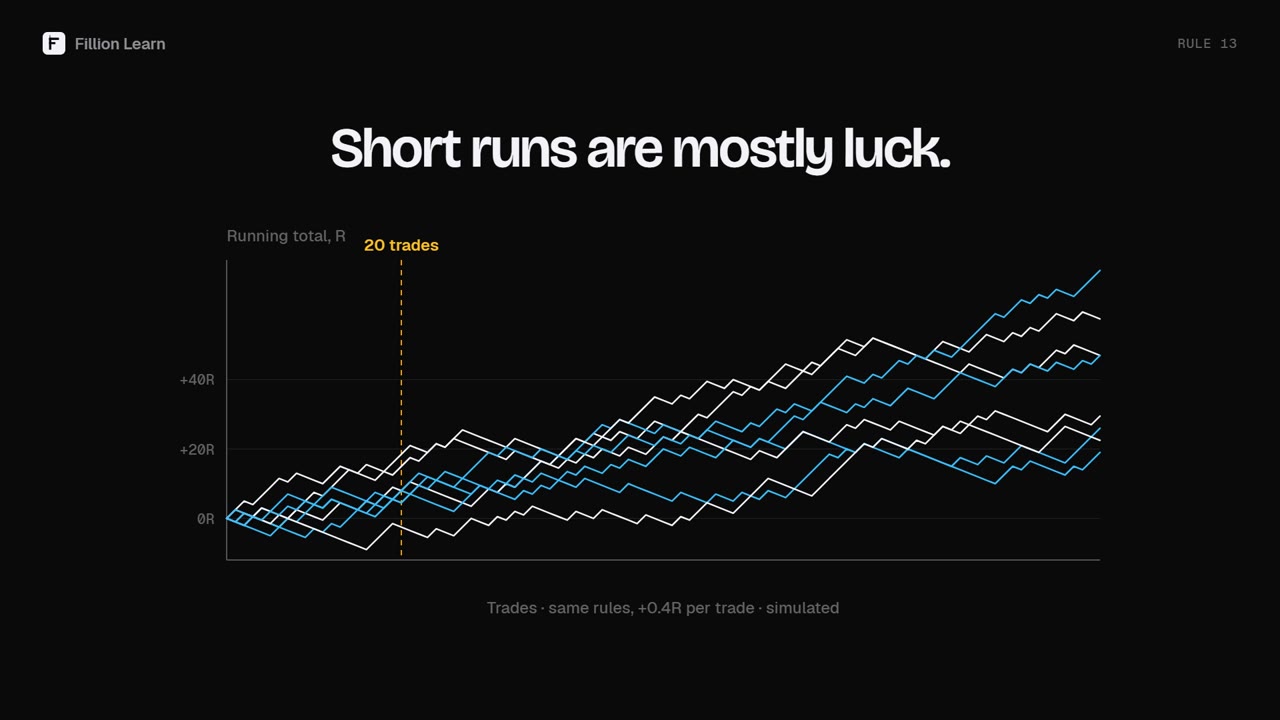 1:43Rule 13Think in probabilitiesNo single trade, or week, tells you whether you're good. Judge expectancy over many trades.
 1:20Rule 14Keep a journalWrite down every trade and review weekly. It's the fastest way to find what works and what costs you.
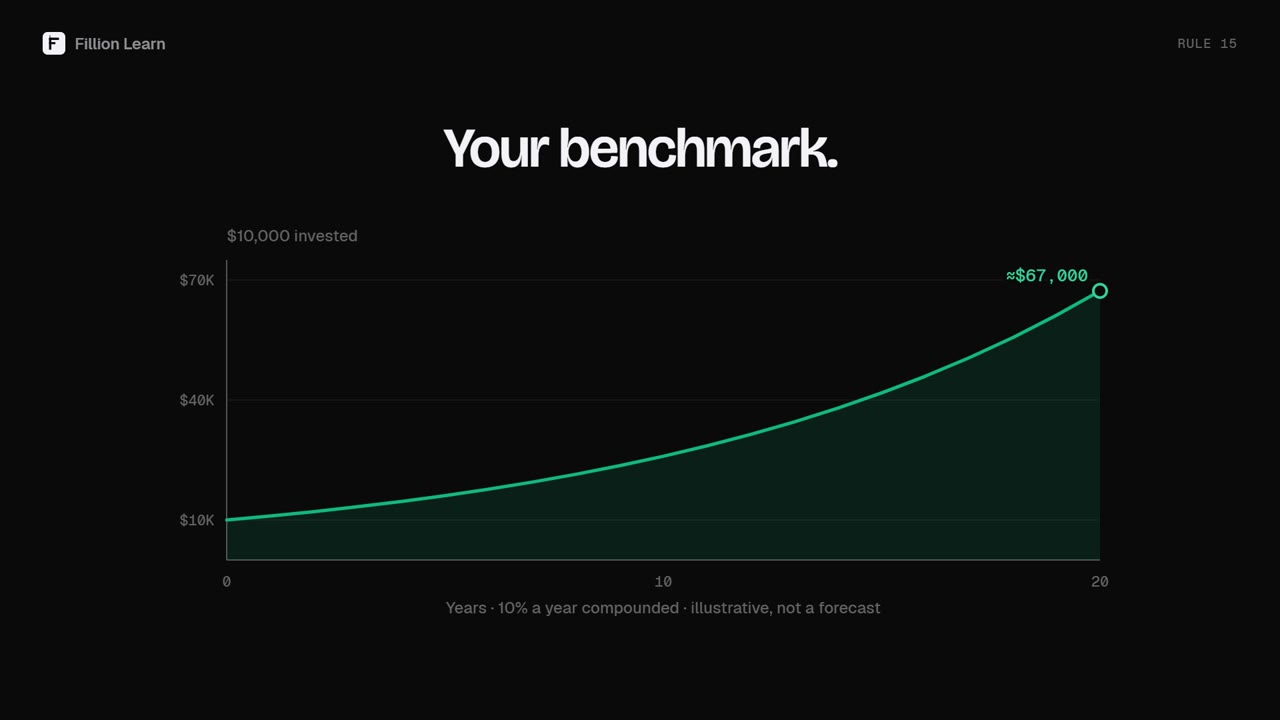 1:48Rule 15Beat the index, or own itMeasure yourself against an S&P 500 index fund after costs and taxes. If you can't beat it, own it.
Core track
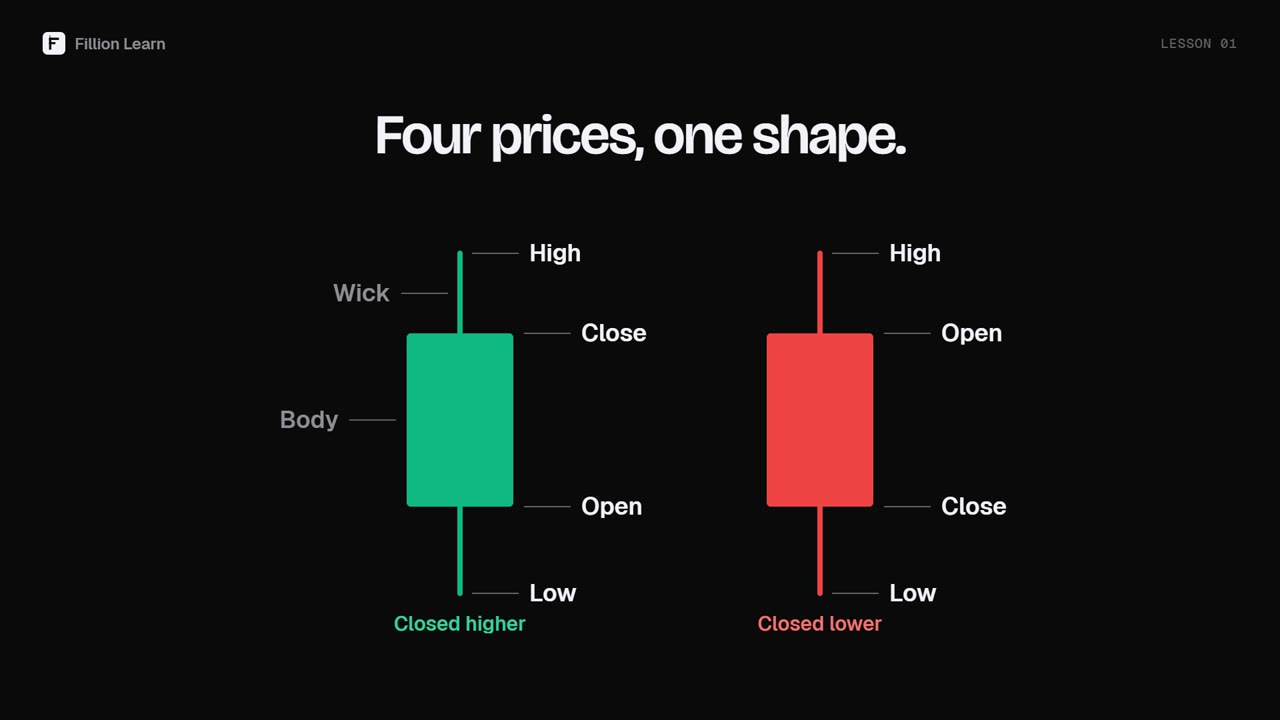 2:33Lesson 1Read a candlestick chartEach candle packs four prices into one shape. Learn to read who won the session at a glance.
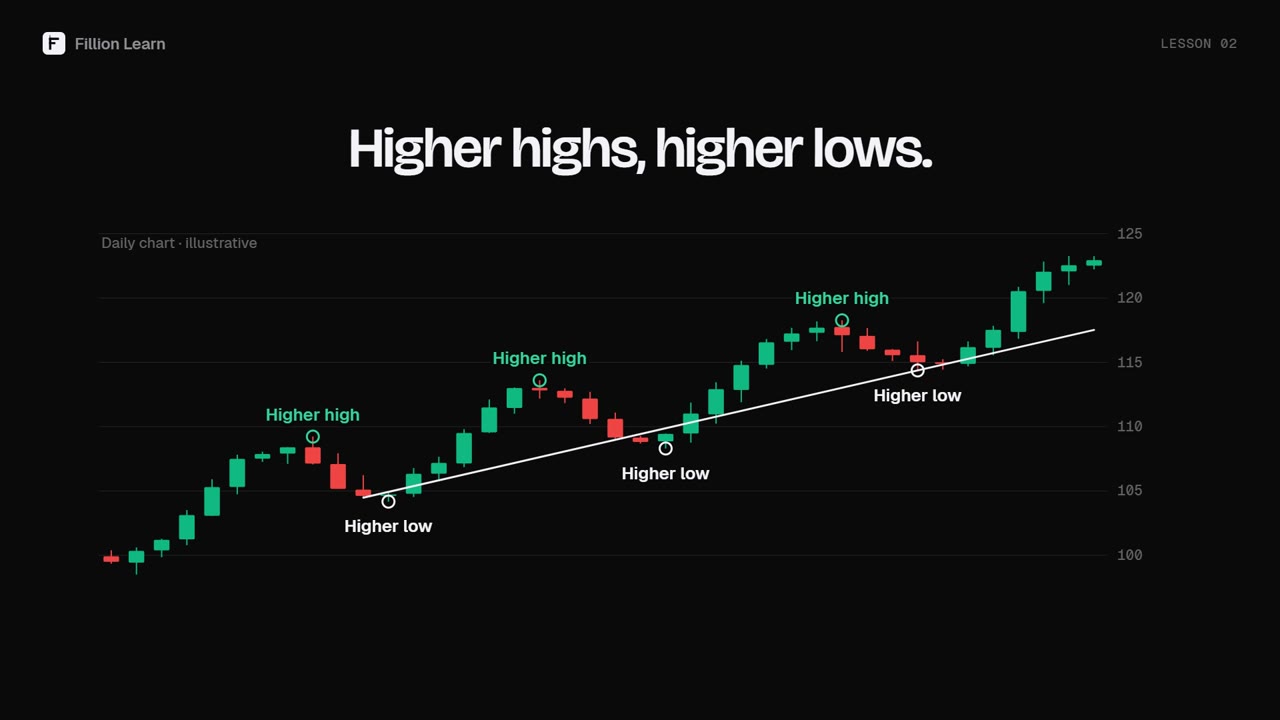 2:16Lesson 2TrendHigher highs and higher lows. How to tell an uptrend from a downtrend, and when one is ending.
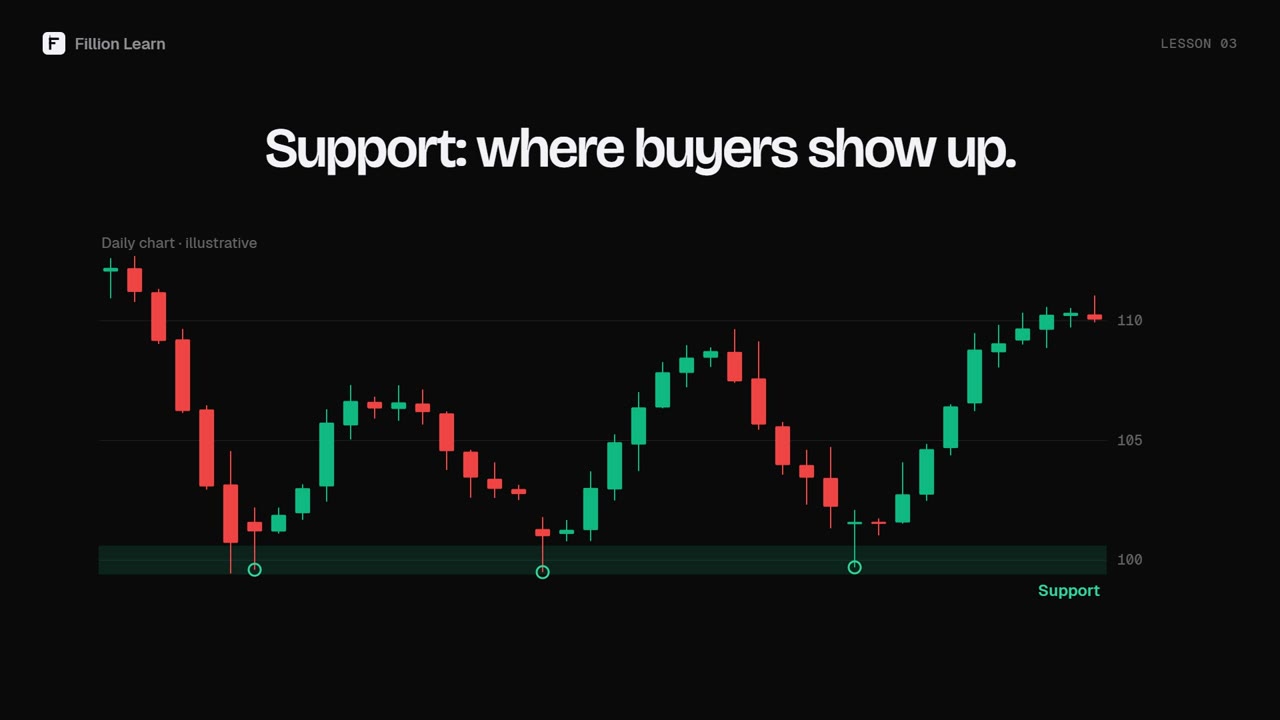 2:21Lesson 3Support and resistancePrices where buyers or sellers showed up before. Why they matter, and why broken levels flip roles.
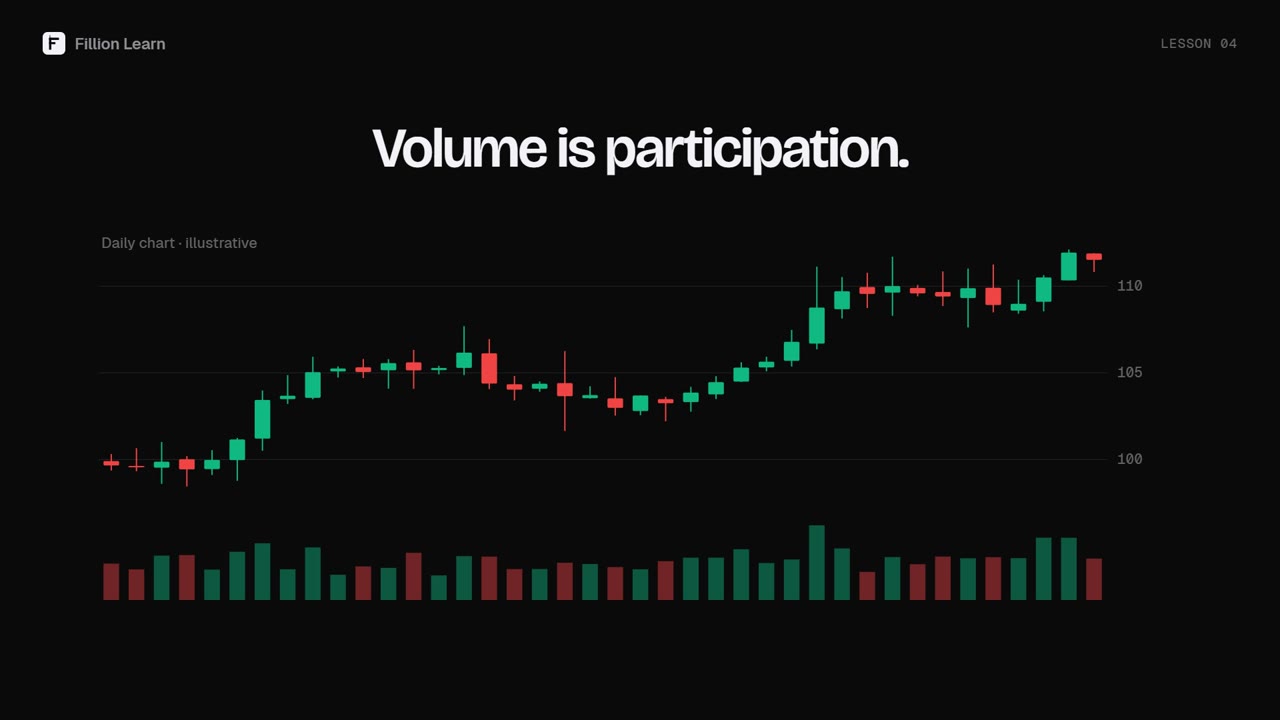 1:55Lesson 4VolumeHow many shares changed hands. Volume tells you how much conviction sits behind a move.
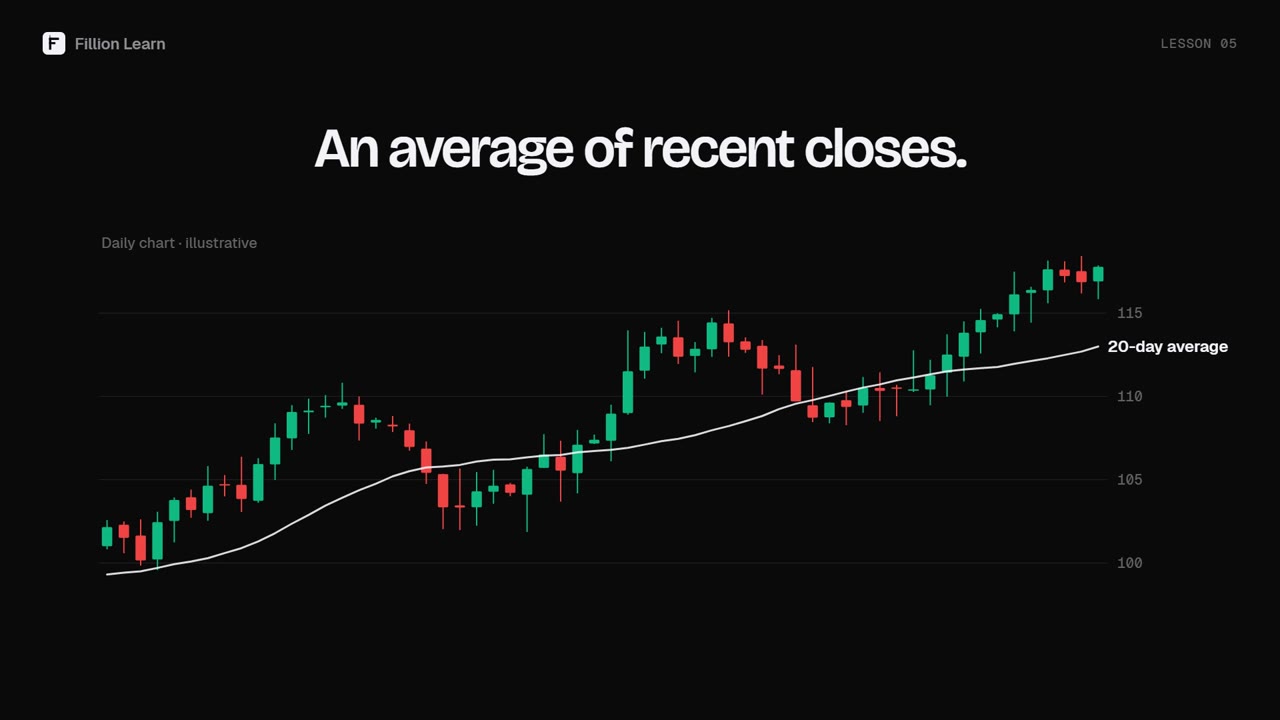 2:48Lesson 5Moving averagesThe 20, 50 and 200-day averages smooth out noise and show the trend traders are all watching.
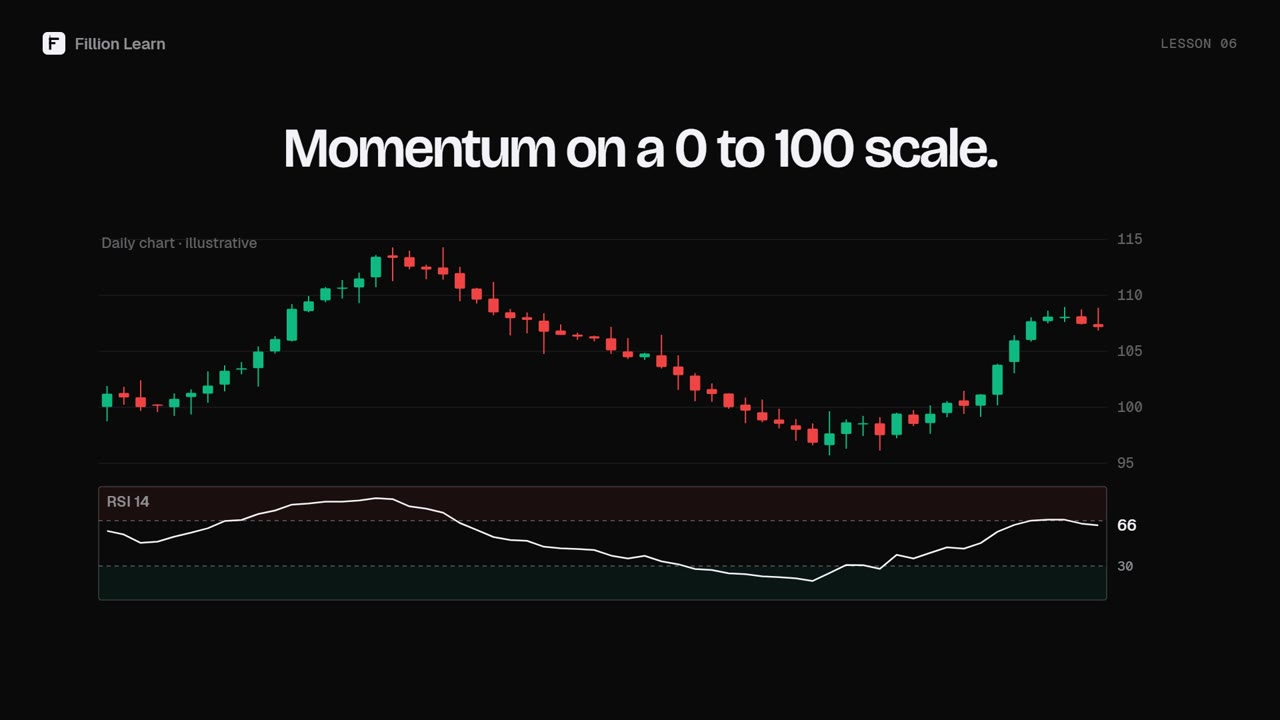 2:10Lesson 6RSI and momentumRSI measures how hard a stock has been pushed. Overbought is not a sell signal, and here is why.
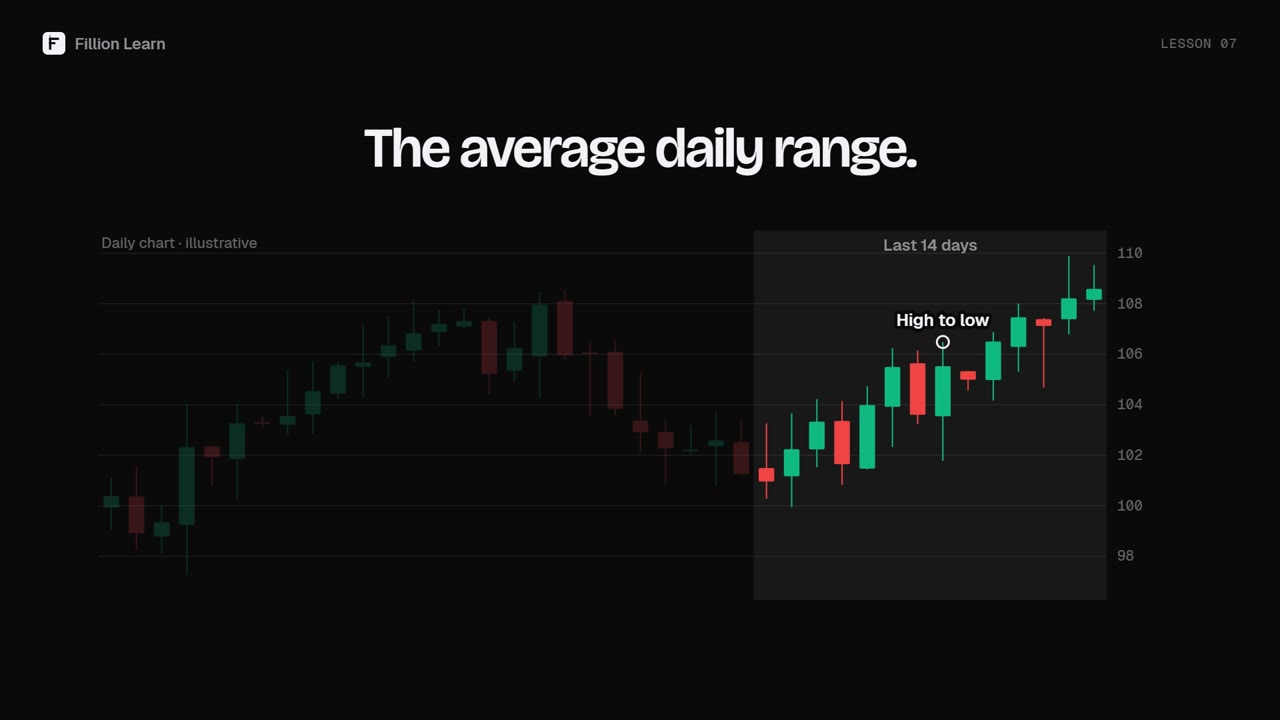 2:34Lesson 7ATR: how far a stock really movesAverage True Range turns volatility into dollars, so your stops and targets fit the stock you trade.
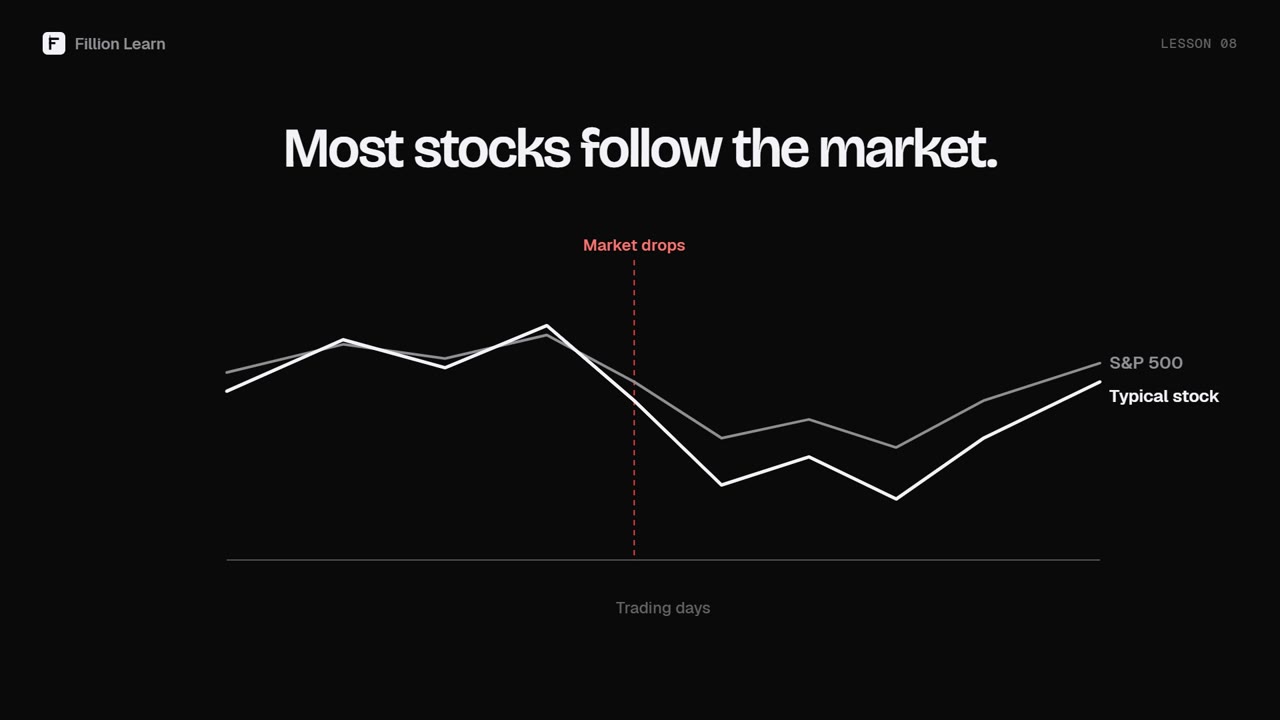 2:24Lesson 8The market's mood: SPY, QQQ and the VIXMost stocks follow the market. Read the indexes and the fear gauge before you read a single chart.
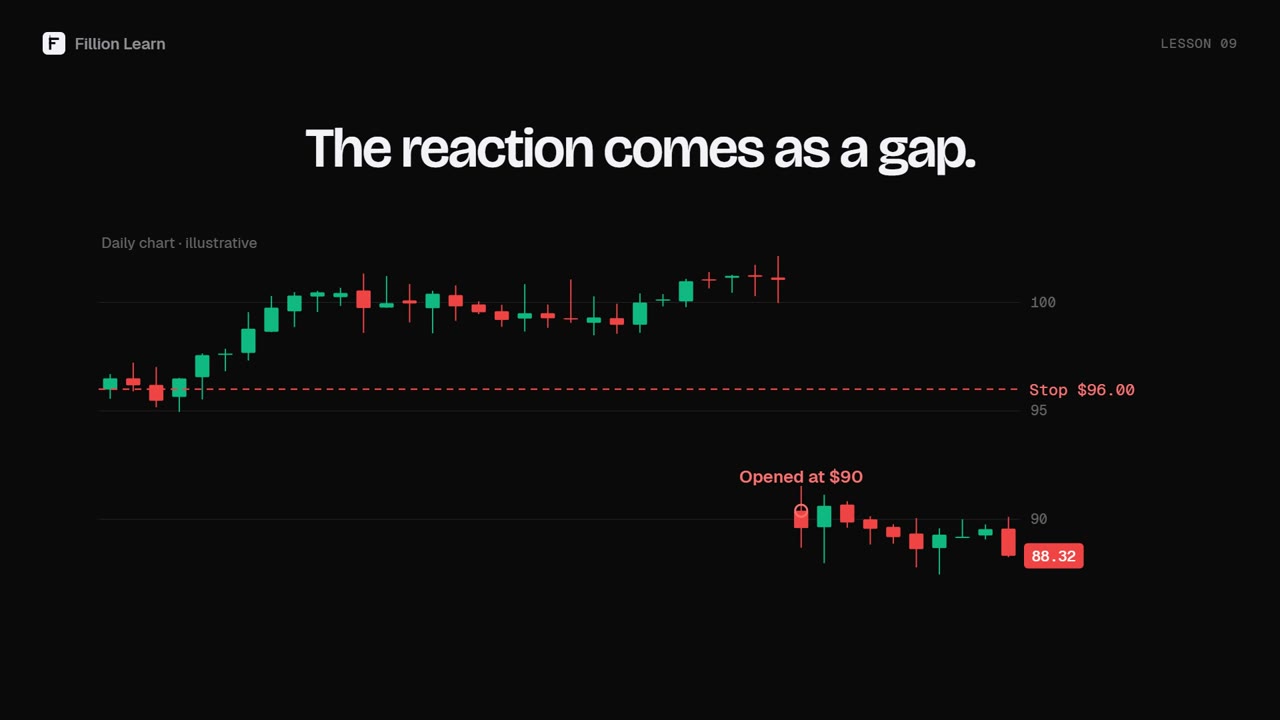 2:26Lesson 9Earnings and catalystsEarnings, guidance and news are the events that move stocks the most. Know when they land.
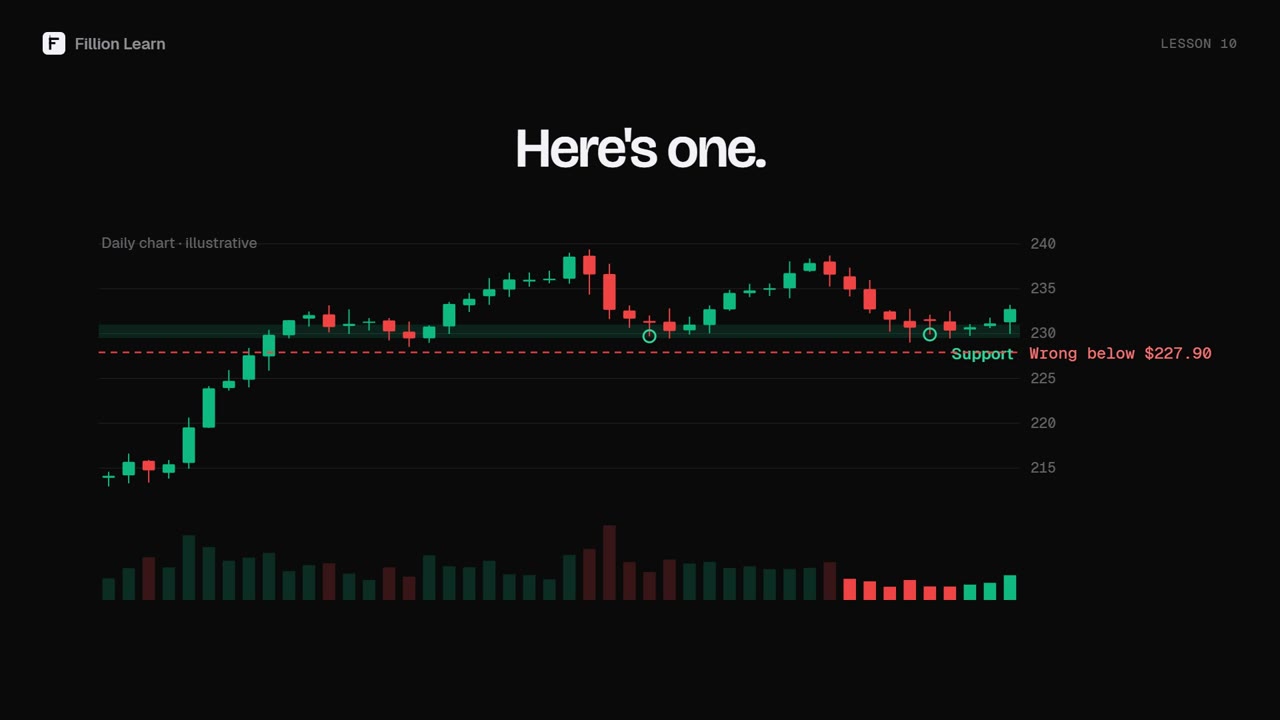 2:13Lesson 10Every trade needs a thesisA reason to be in, and a price that proves you wrong. Without both, it is a guess.
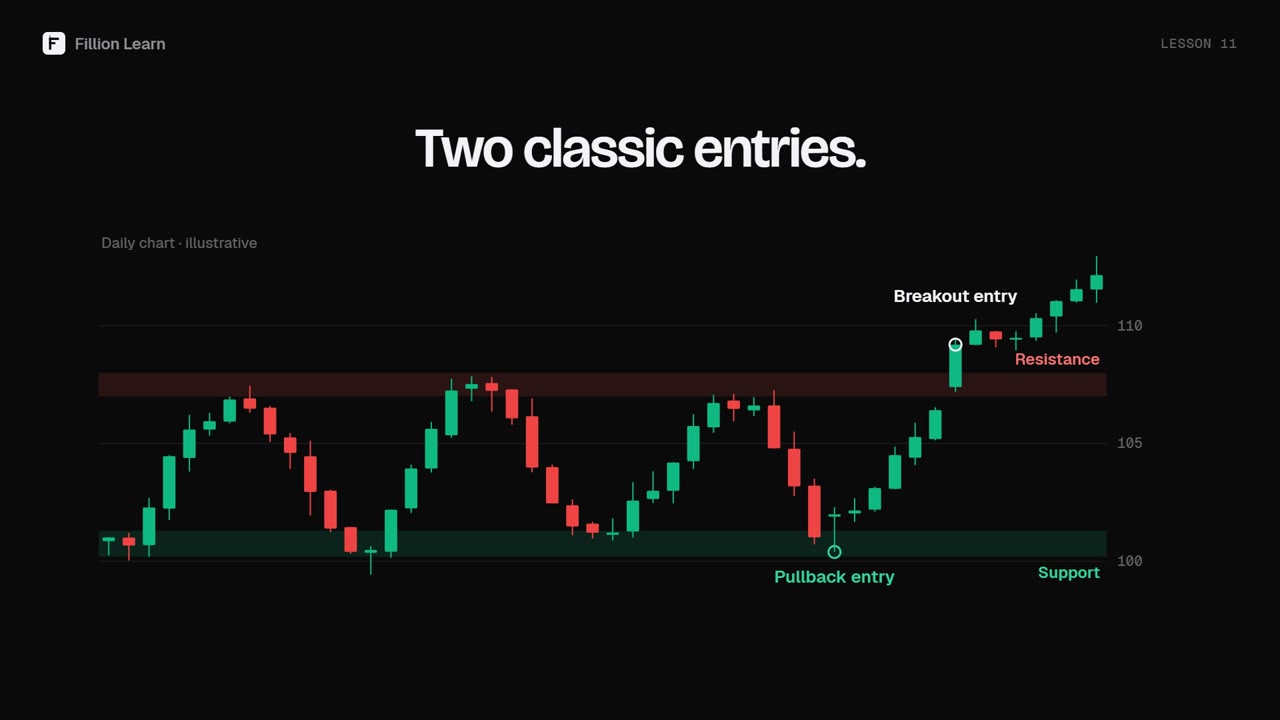 2:21Lesson 11Entry, stop and targetThe three prices of every plan, set before you buy. Where they go and why.
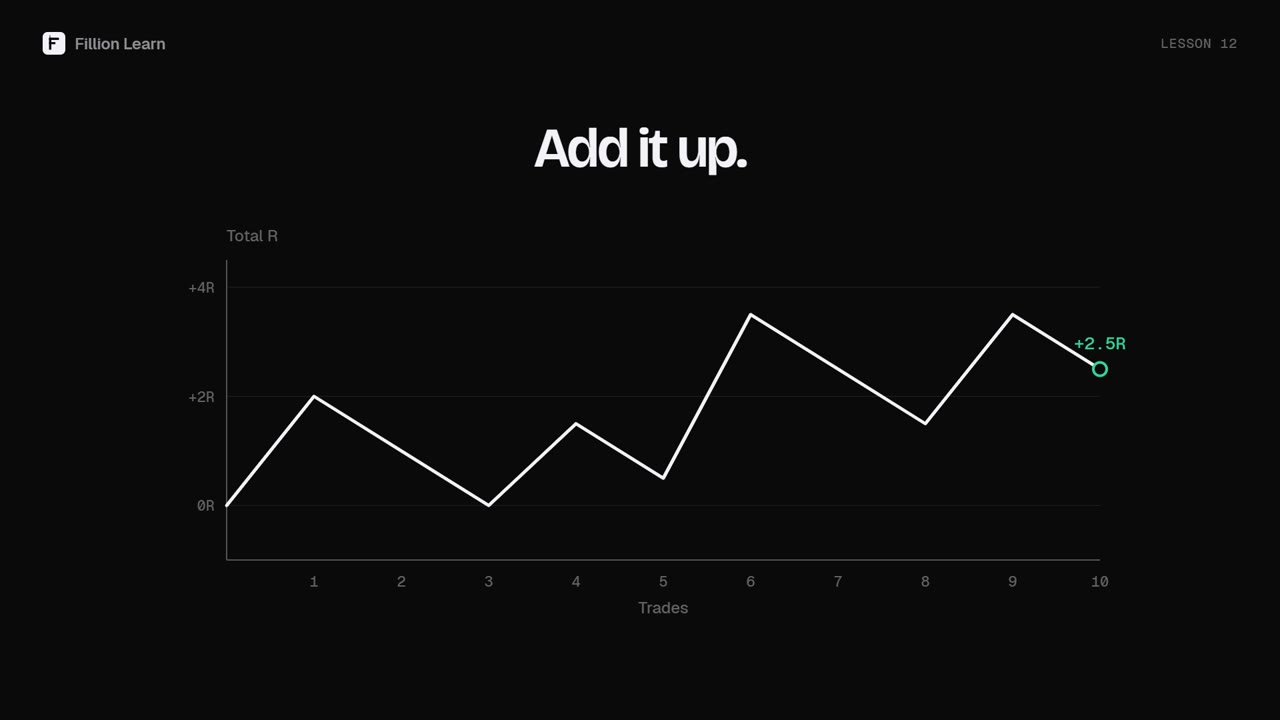 2:11Lesson 12R-multiplesMeasure every trade in units of risk, not dollars. The language every serious trader uses.
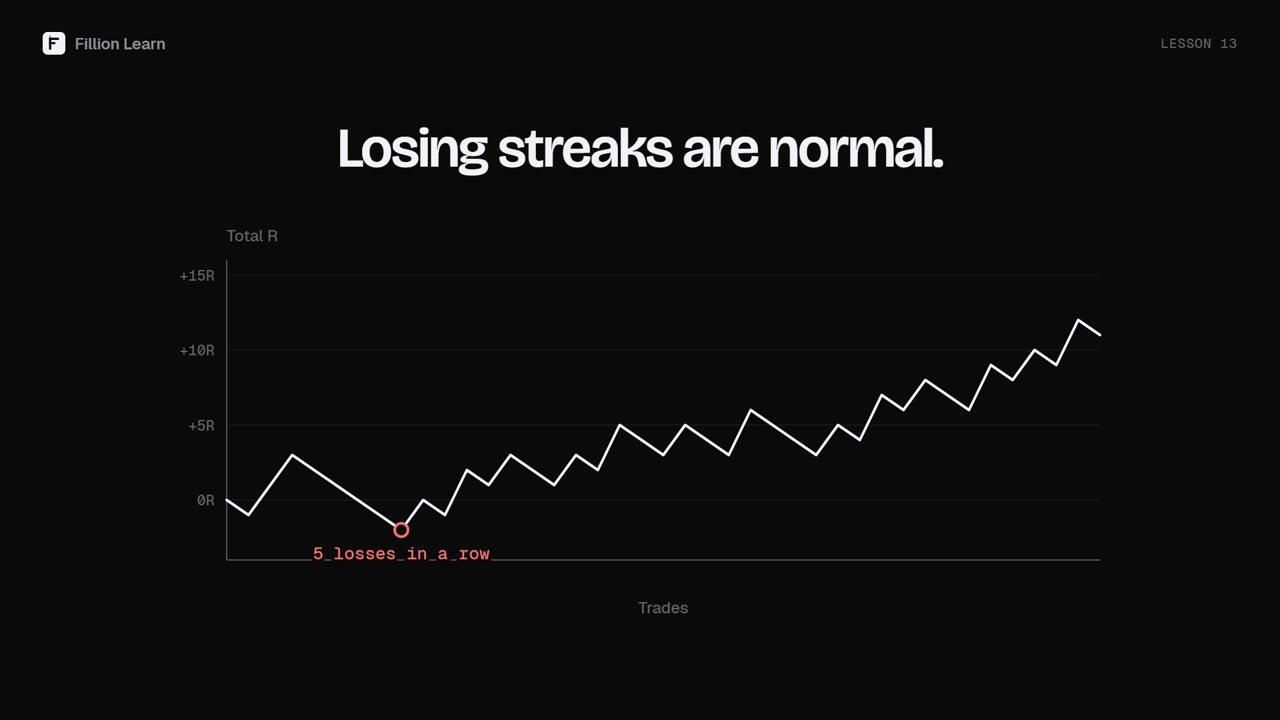 2:34Lesson 13Win rate and expectancyYou can be wrong most of the time and still make money. The math that decides if an edge is real.
 2:22Lesson 14Position sizingHow many shares to buy so one bad trade never hurts you. The formula takes ten seconds.
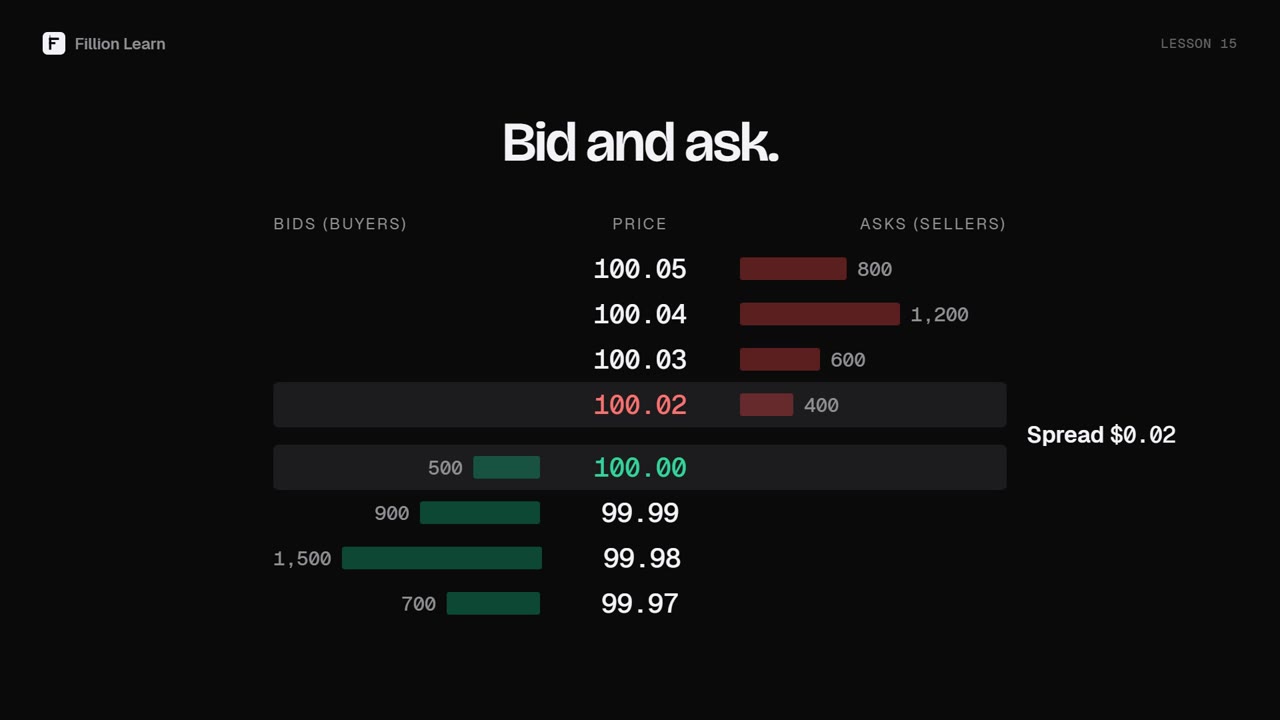 2:41Lesson 15Bid, ask and order typesThe spread is a cost you pay on every trade. Market, limit and stop orders, and when to use each.
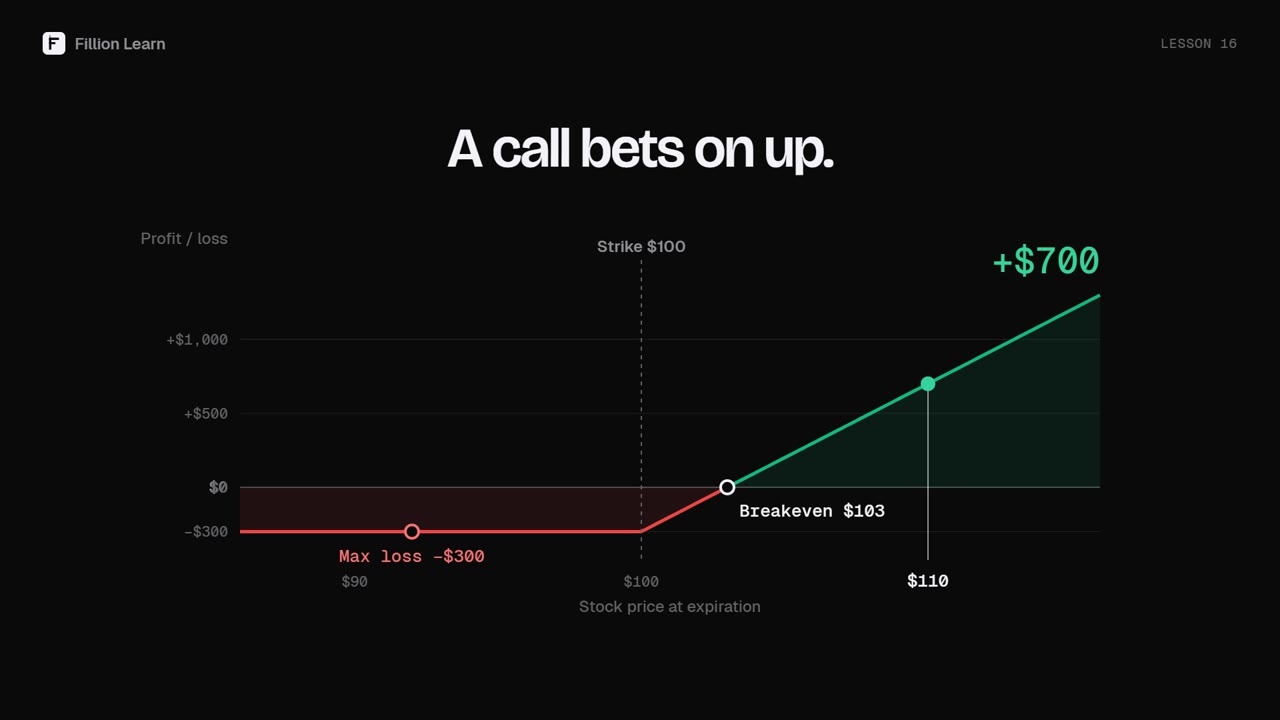 2:47Lesson 16Calls and putsA call profits when the stock rises, a put when it falls. What you are actually buying.
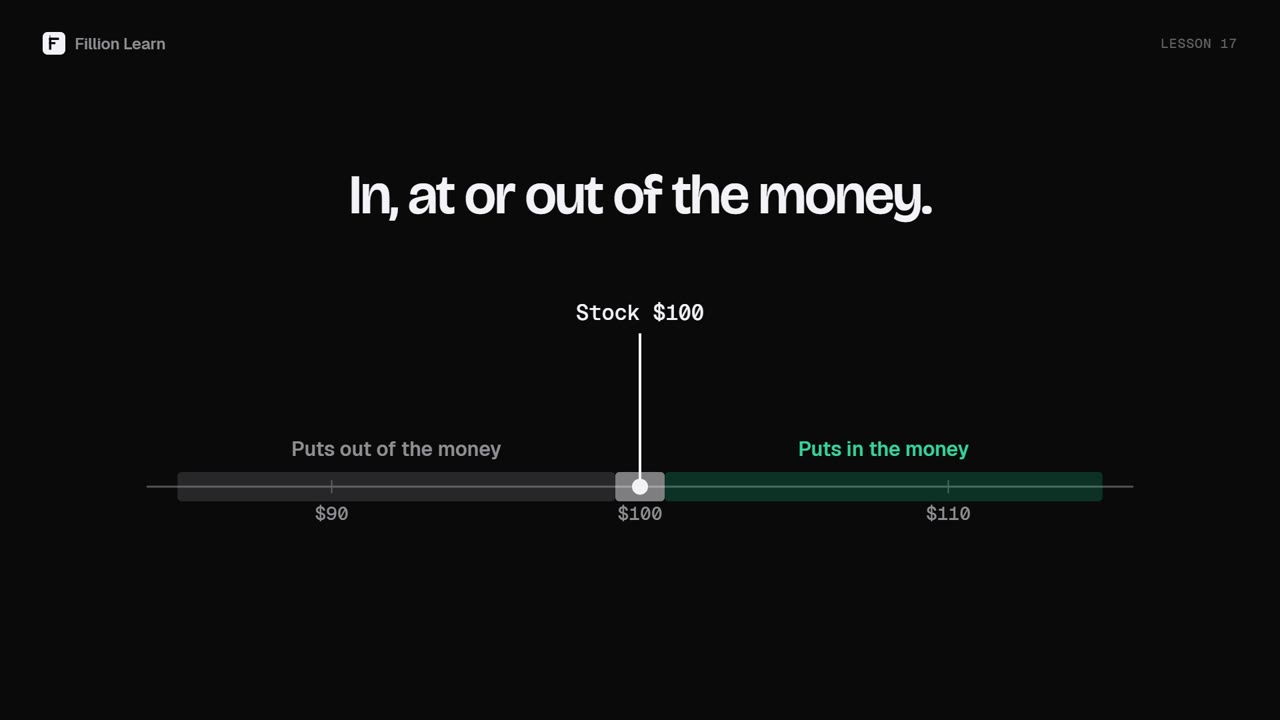 2:45Lesson 17Strike, expiration and moneynessIn, at or out of the money. How strike and expiration shape what an option costs and how it behaves.
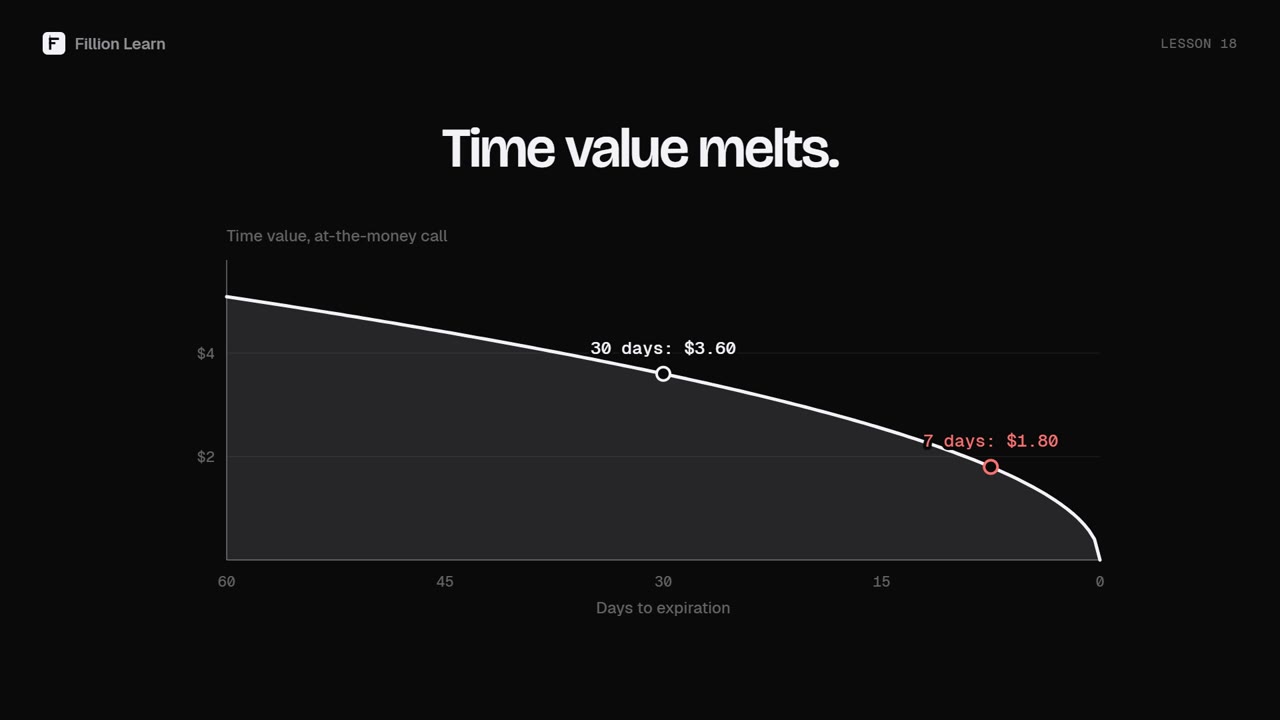 2:31Lesson 18Premium, time value and breakevenWhat the option price is made of, why time value melts, and the price the stock must reach.
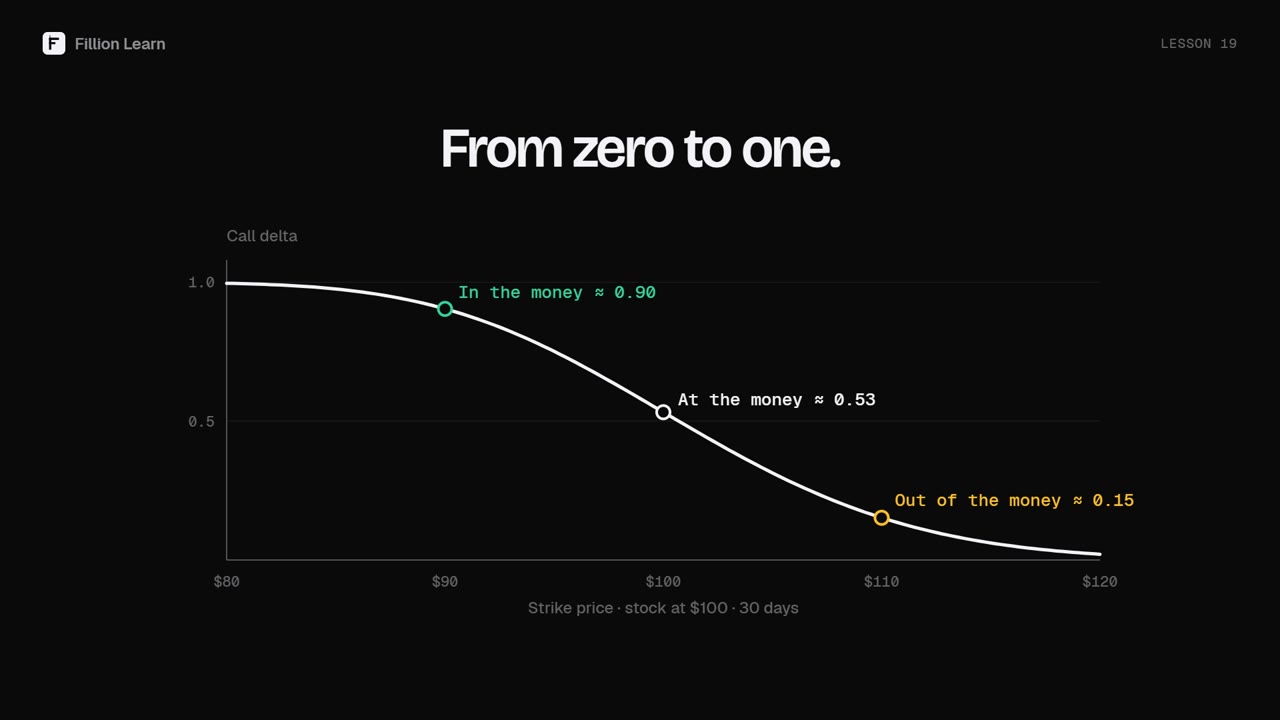 2:46Lesson 19DeltaHow much an option moves when the stock moves a dollar. The most useful Greek for a stock trader.
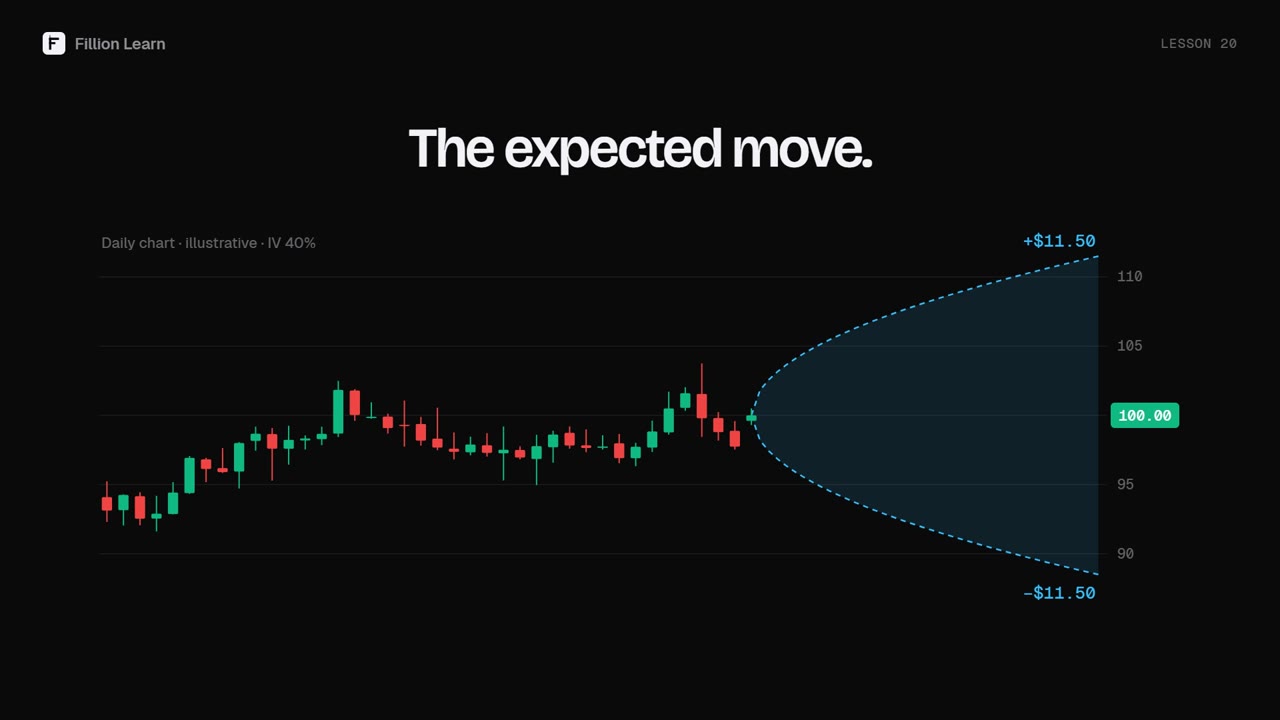 2:38Lesson 20Implied volatility and IV crushThe market's forecast of movement, baked into every option price. The expected move, and why it can crush you.
Market basics
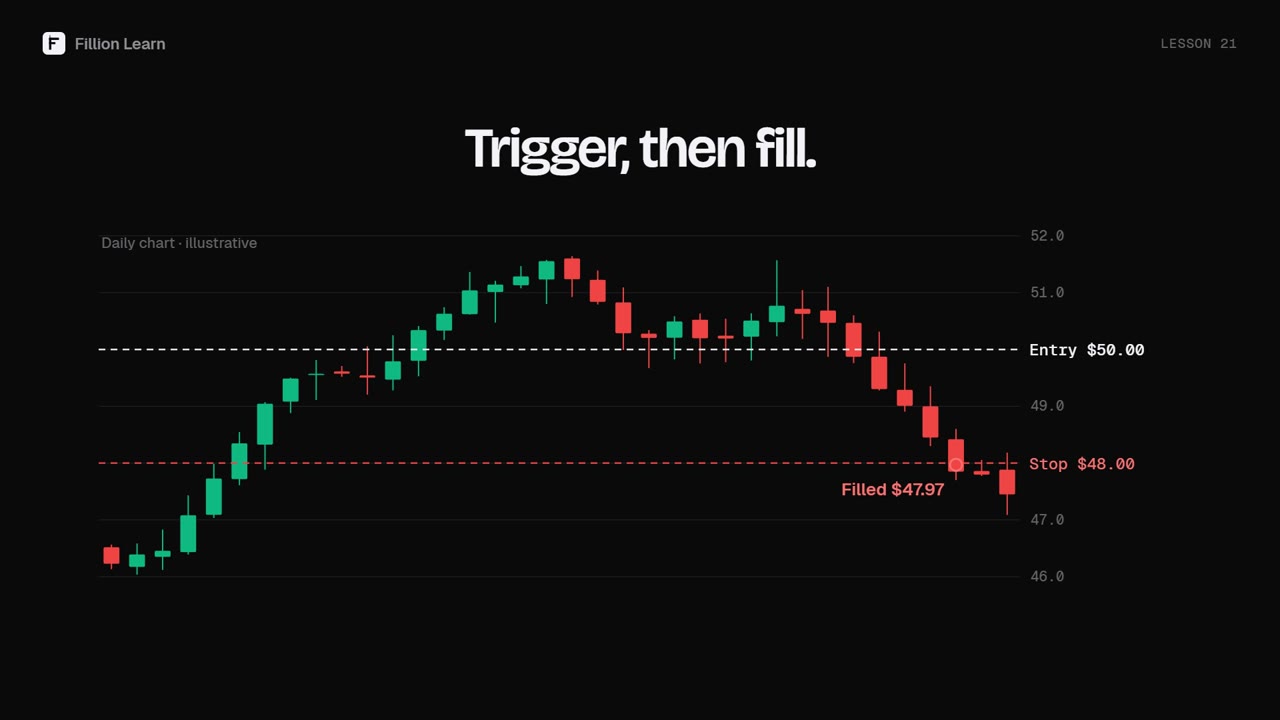 2:39Lesson 21Stop and stop-limit ordersHow stop orders trigger, why they can fill worse than your price, and when a stop-limit helps.
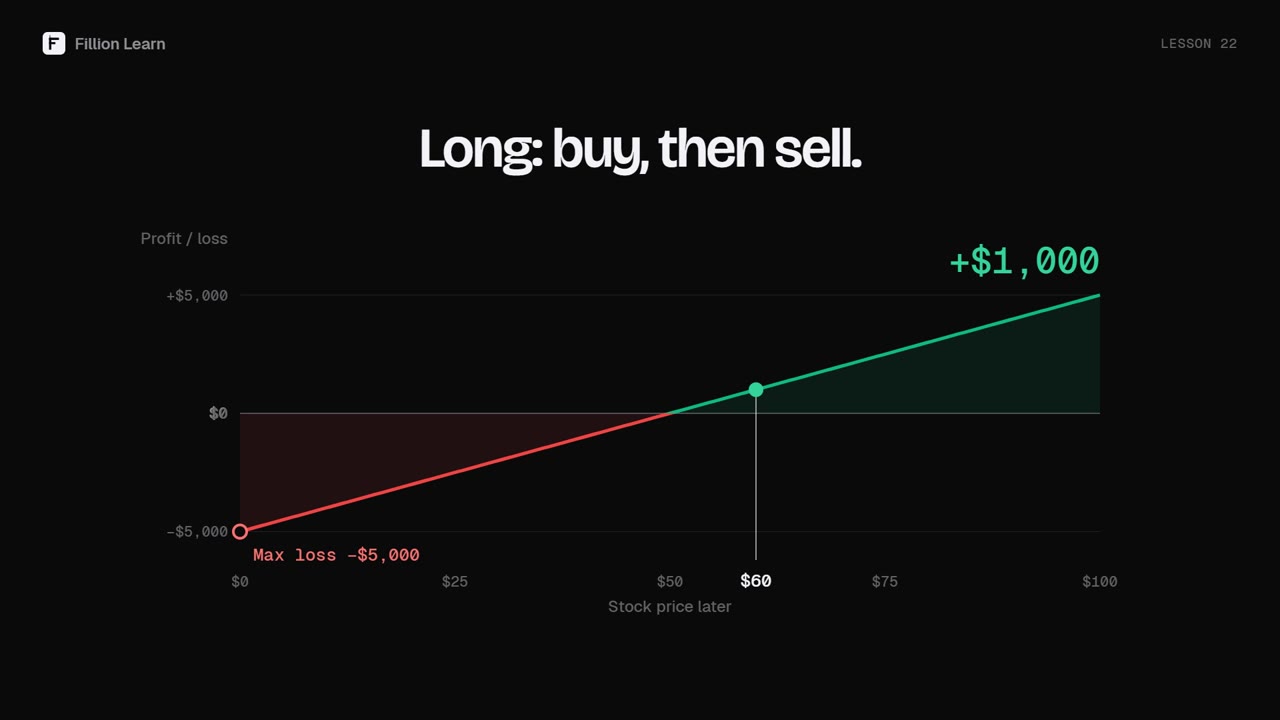 2:28Lesson 22Long and shortBuying to profit from a rise, selling short to profit from a fall, and the risk that comes with each.
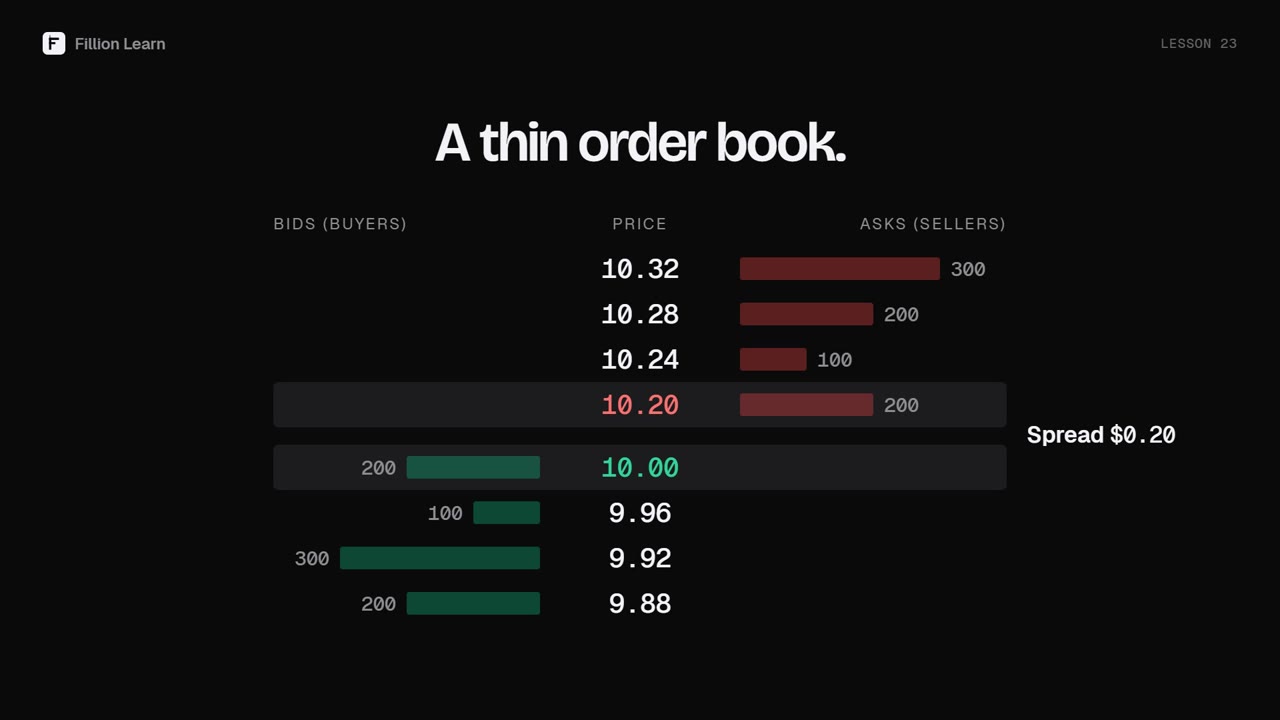 2:35Lesson 23Liquidity and market capWhy large, heavily traded stocks are cheaper and safer to trade than thin ones.
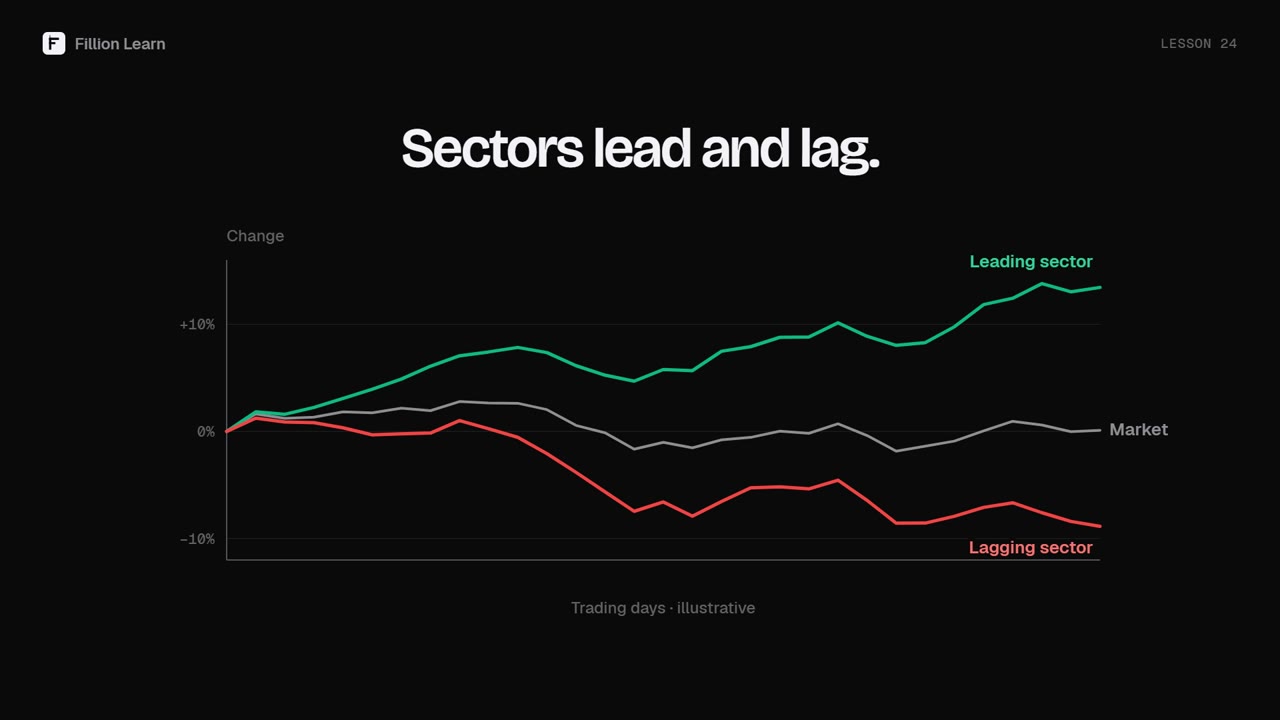 2:36Lesson 24Indexes and ETFsSPY, QQQ, IWM and sector ETFs: what they hold and why traders watch them all day.
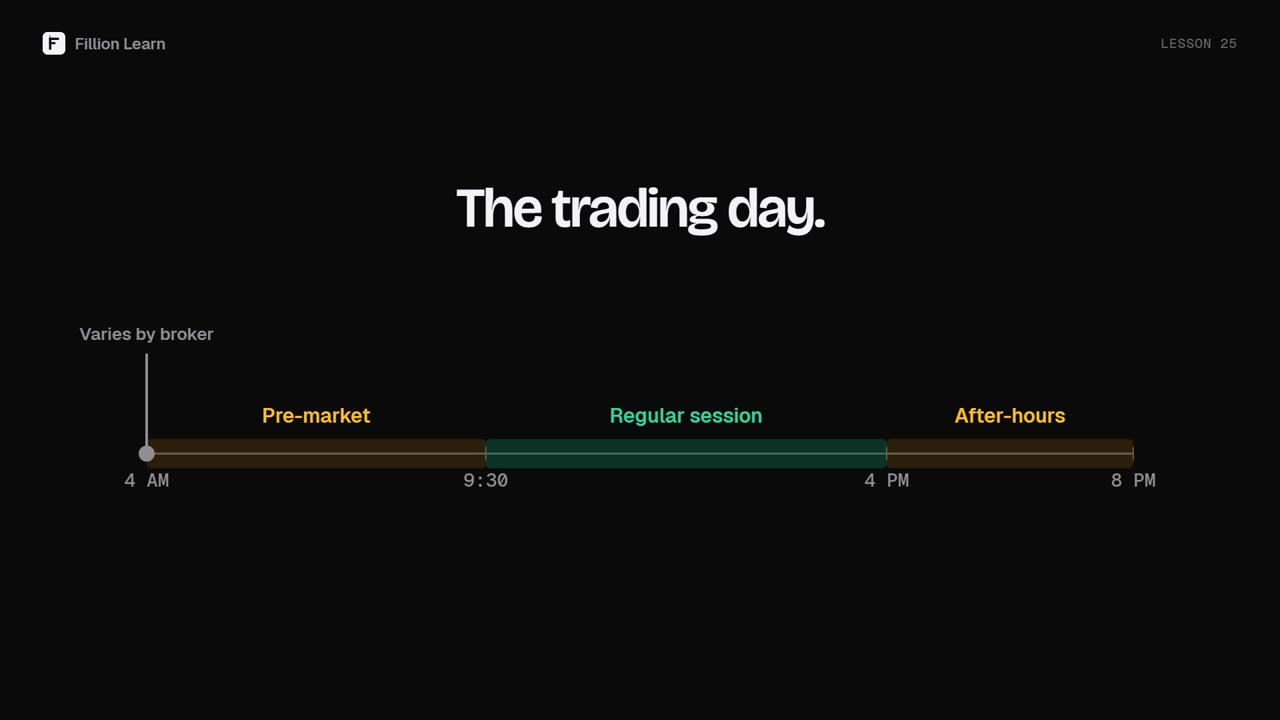 2:18Lesson 25Market hours and extended tradingPre-market, regular hours and after-hours, and why prices outside the session can mislead.
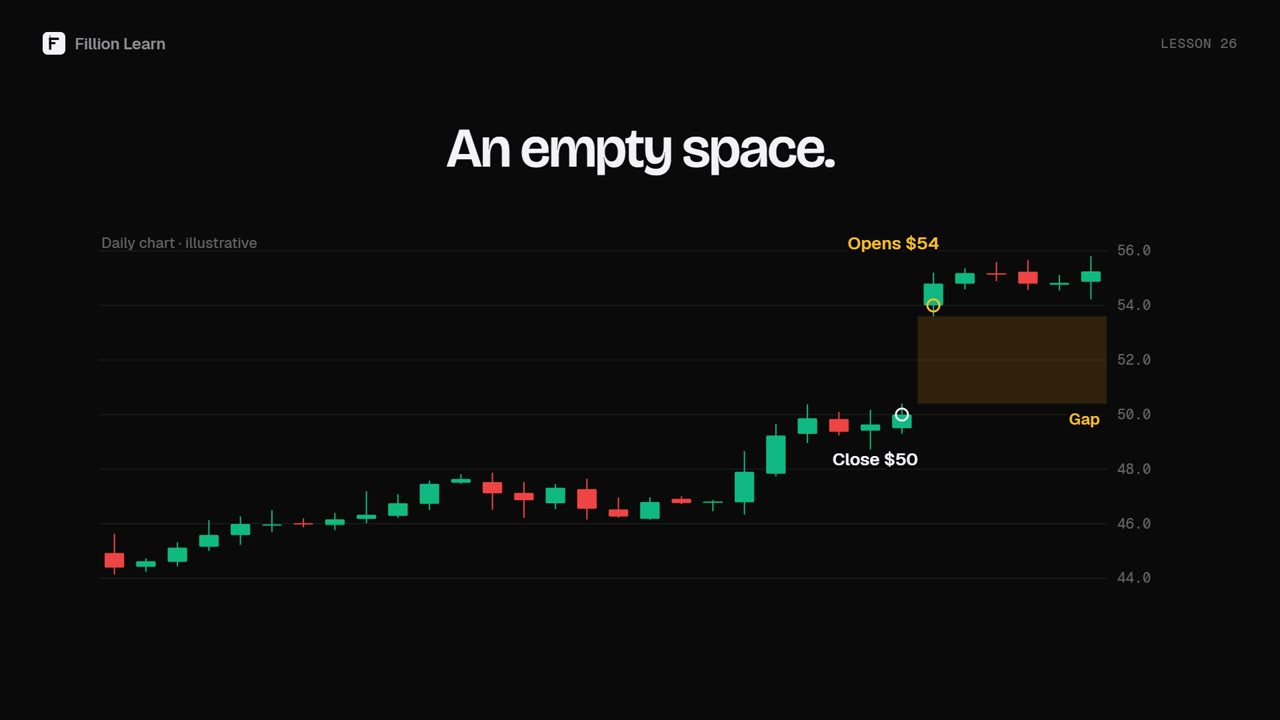 2:09Lesson 26GapsWhy a stock opens far from yesterday's close, and how gaps get filled or run.
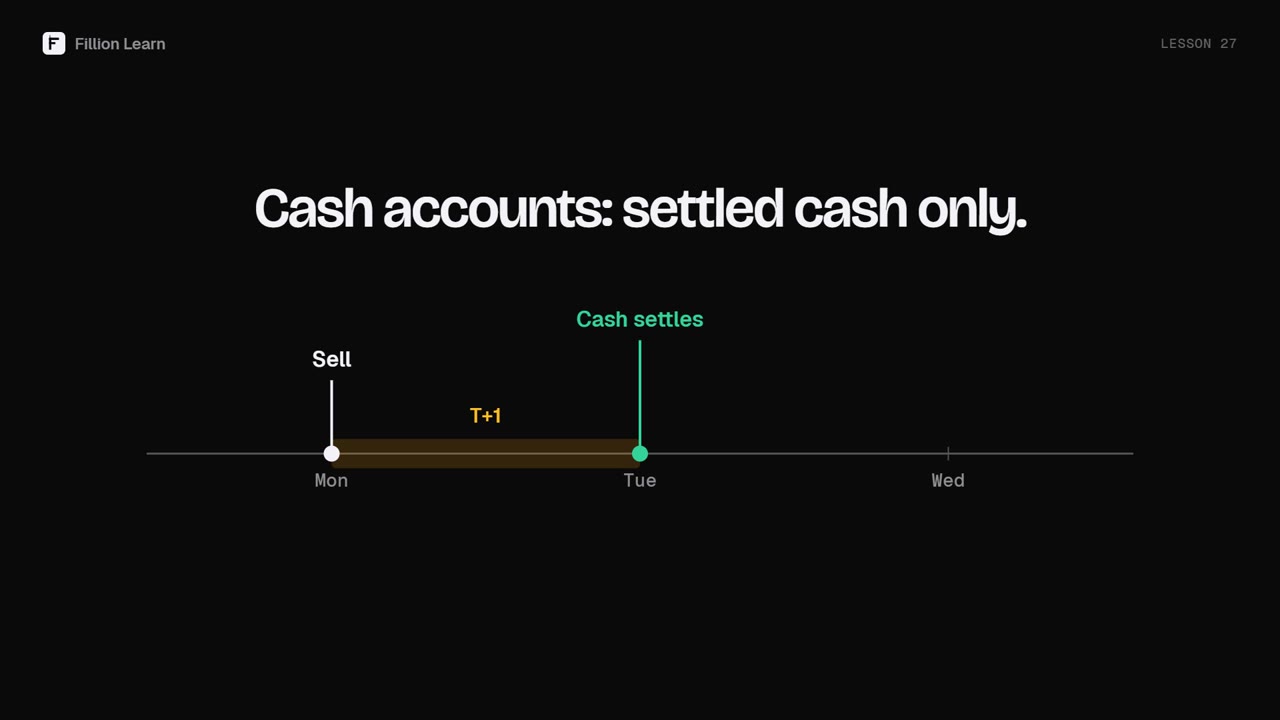 2:36Lesson 27Margin, the PDT rule and account typesCash versus margin accounts, borrowing power, and the pattern day trader rule.
Reading the chart
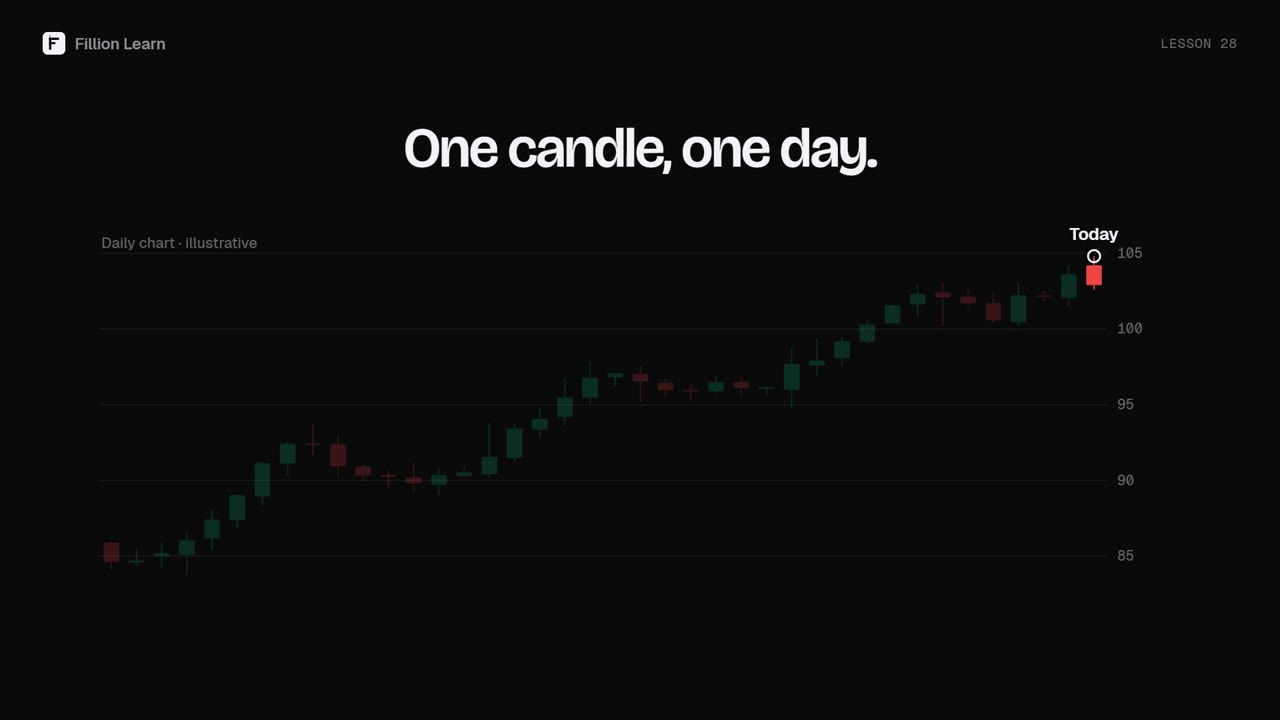 2:22Lesson 28TimeframesThe same stock can look bullish on one chart and bearish on another. Match the timeframe to the trade.
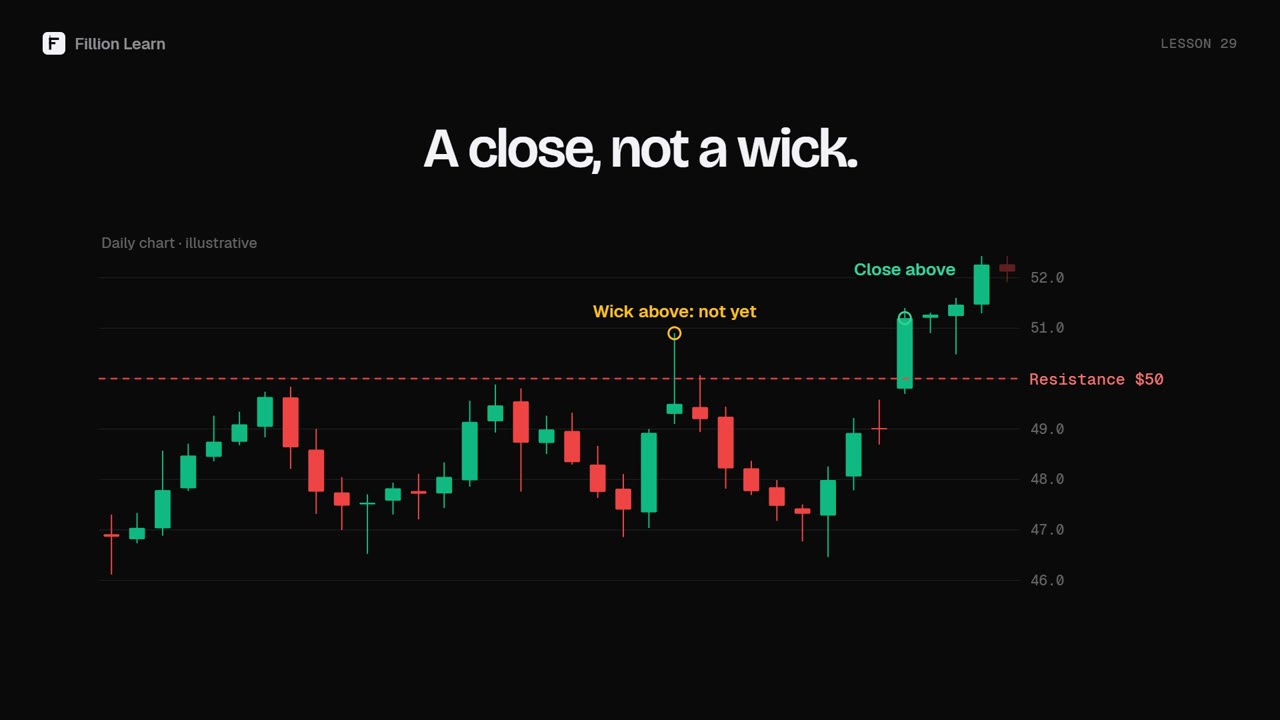 2:34Lesson 29Breakouts and breakdownsWhen price escapes a range. What a real breakout looks like, and what to check before trusting one.
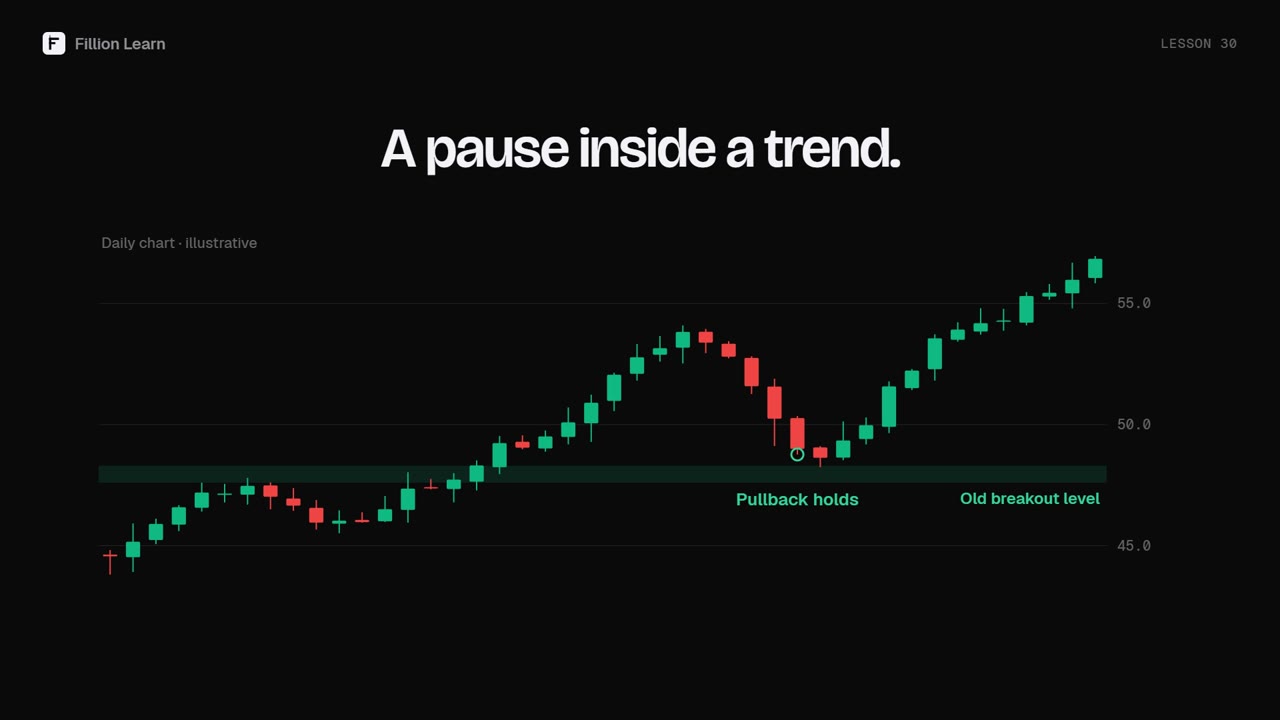 2:09Lesson 30PullbacksBuying the dip inside a trend, and telling a healthy pullback from the start of a reversal.
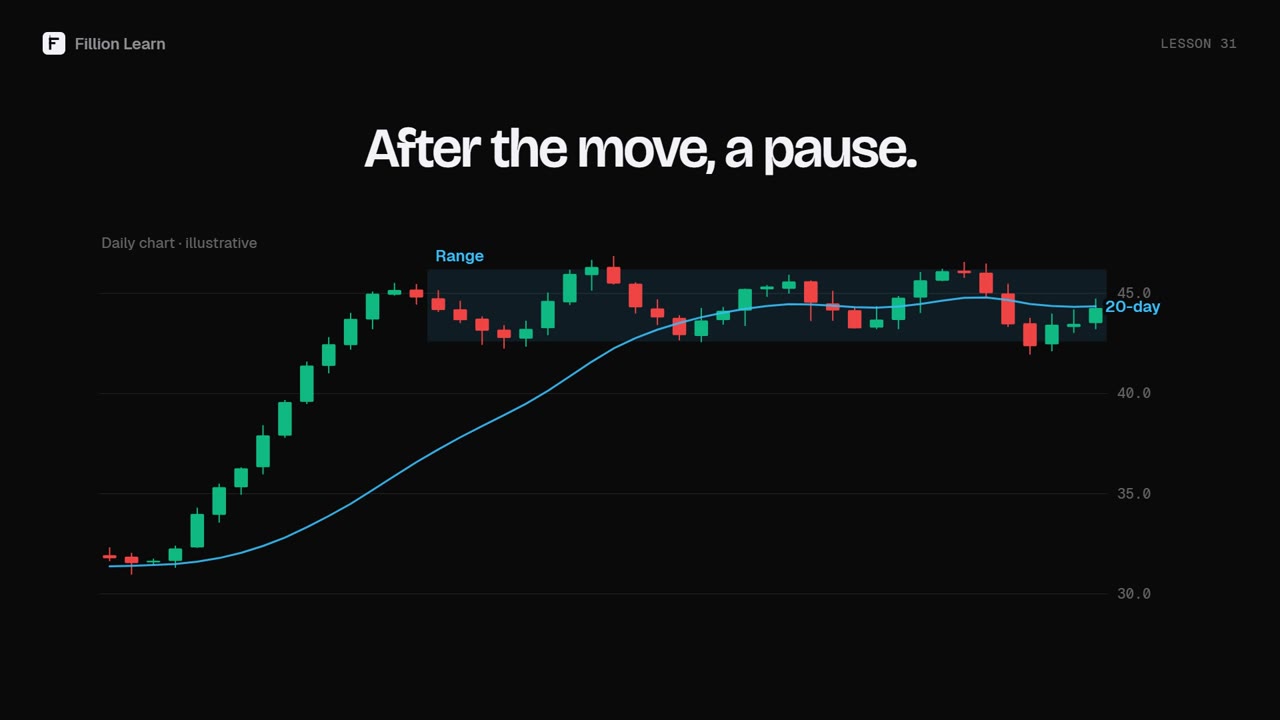 2:18Lesson 31Ranges and consolidationSideways markets: where they come from, how to trade them, and what usually follows.
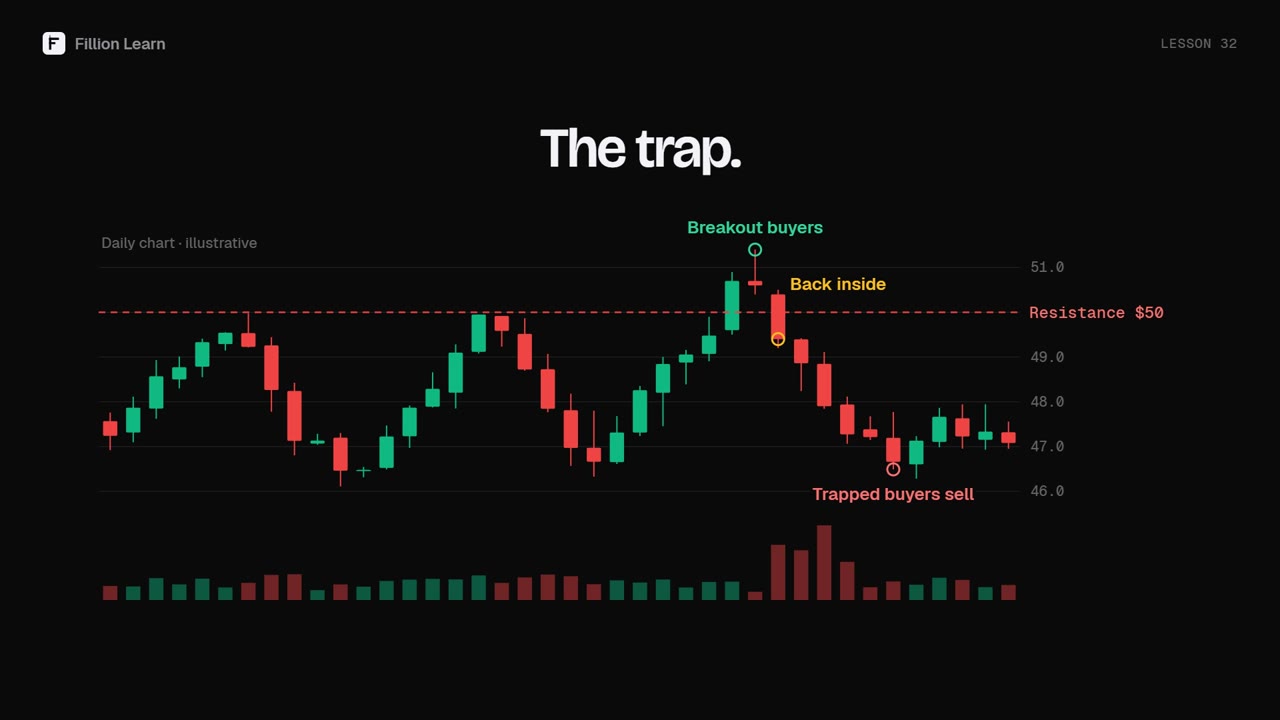 2:18Lesson 32FakeoutsBreakouts that fail and trap traders. Why they happen and how a plan protects you.
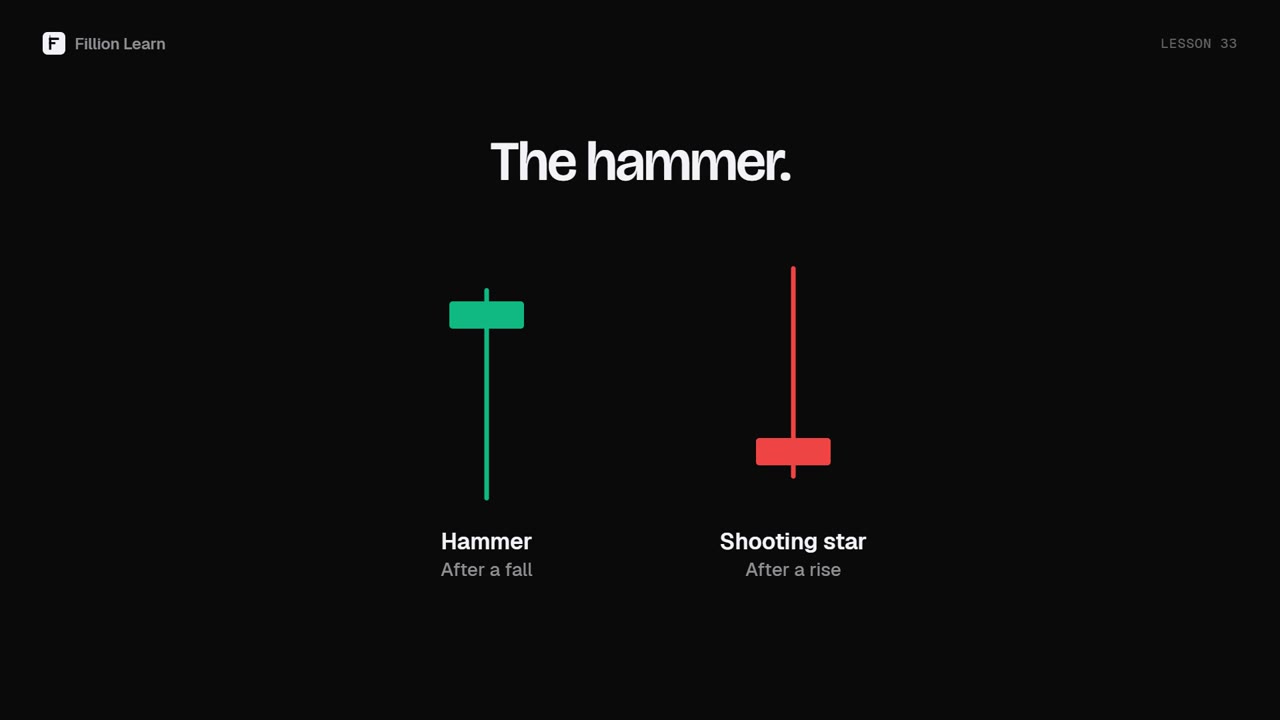 2:10Lesson 33Candlestick patterns that matterEngulfing, hammer and doji: the few patterns worth knowing, and the context they need.
Indicators
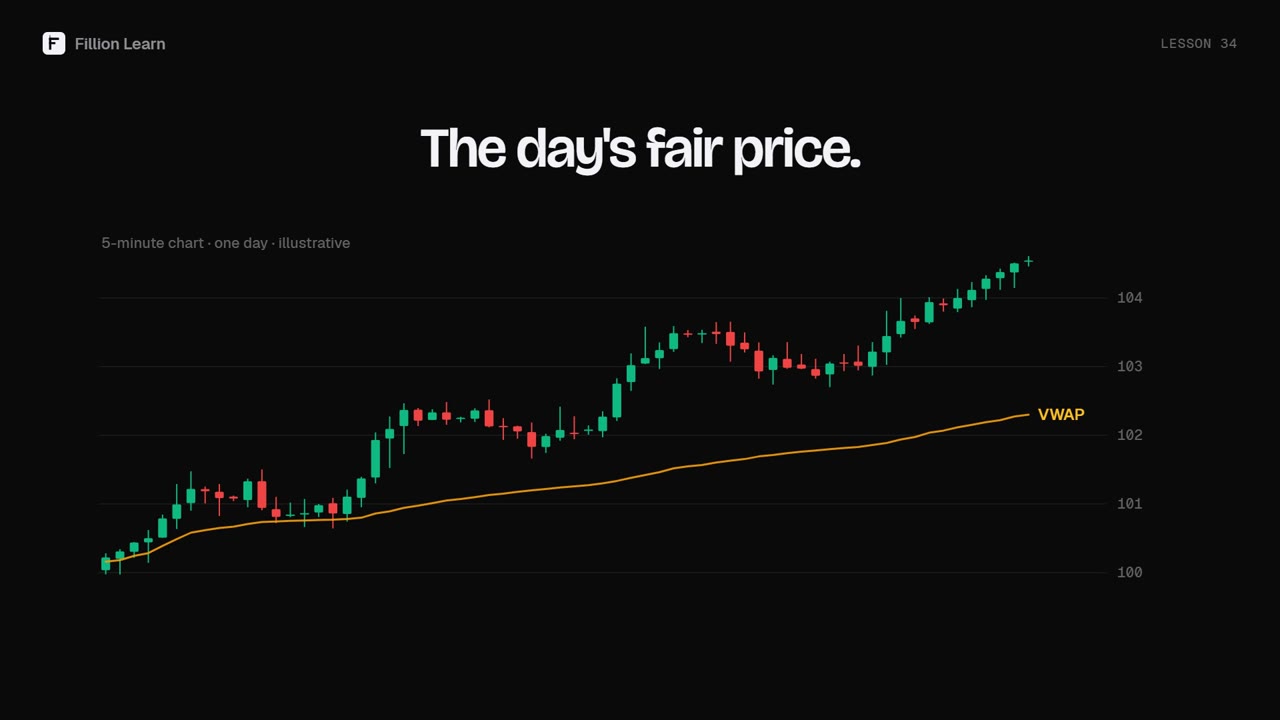 2:15Lesson 34VWAPThe volume-weighted average price, the line institutions use to judge a fair fill each day.
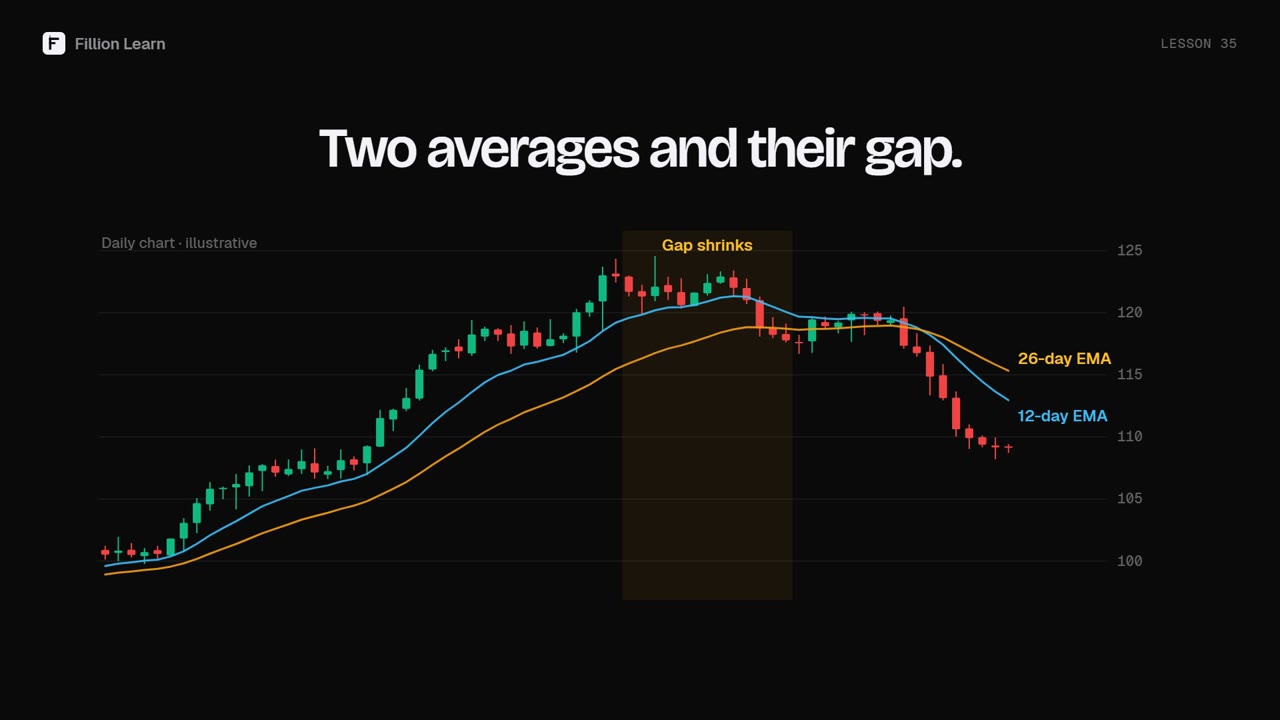 2:48Lesson 35MACDTwo moving averages and their gap. How MACD shows momentum turning before price does.
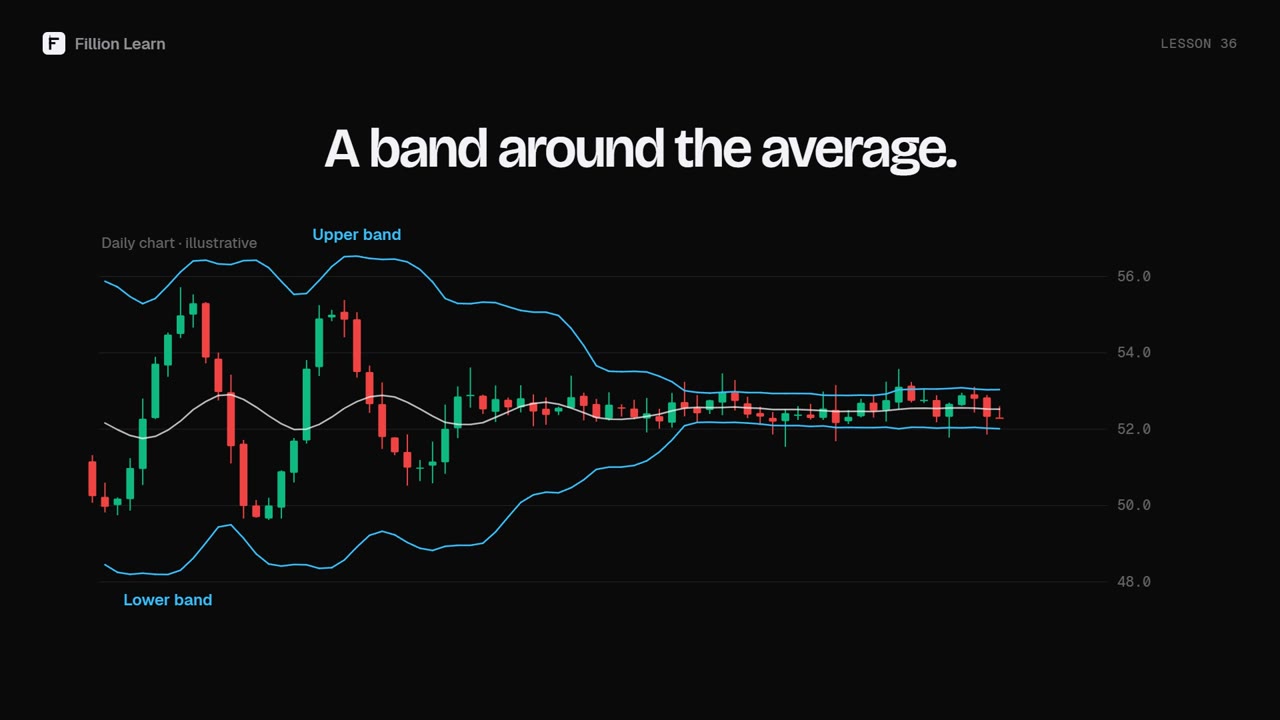 2:37Lesson 36Bollinger BandsBands that widen and squeeze with volatility, and what a squeeze often comes before.
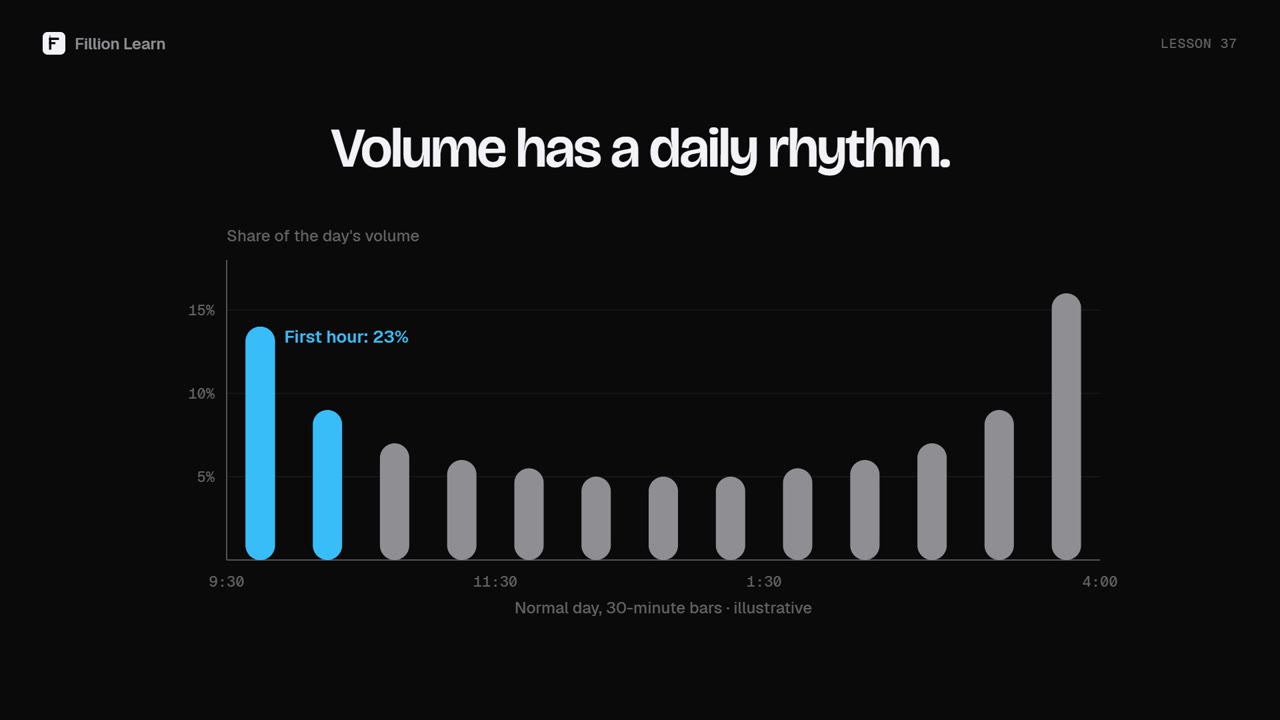 2:27Lesson 37Relative volumeToday's volume compared to normal. The quickest way to spot a stock that is in play.
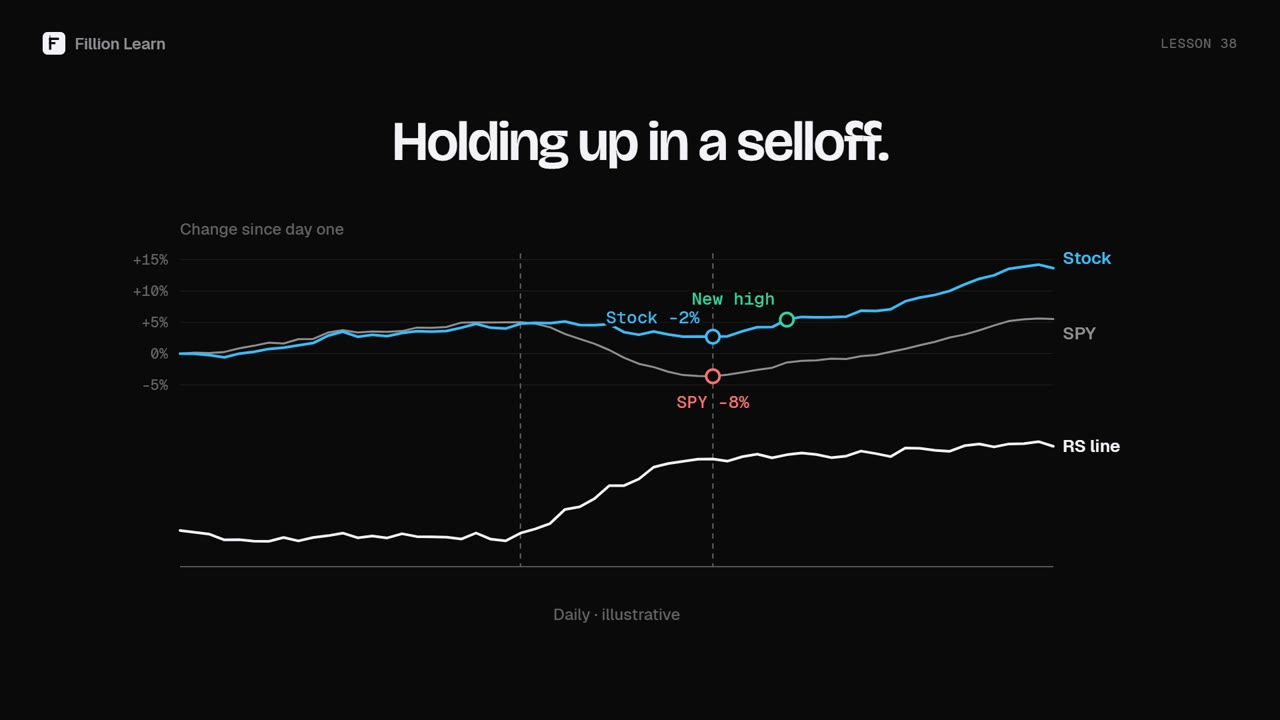 2:27Lesson 38Relative strength vs the marketStocks that hold up when the market drops often lead when it turns. How to measure it.
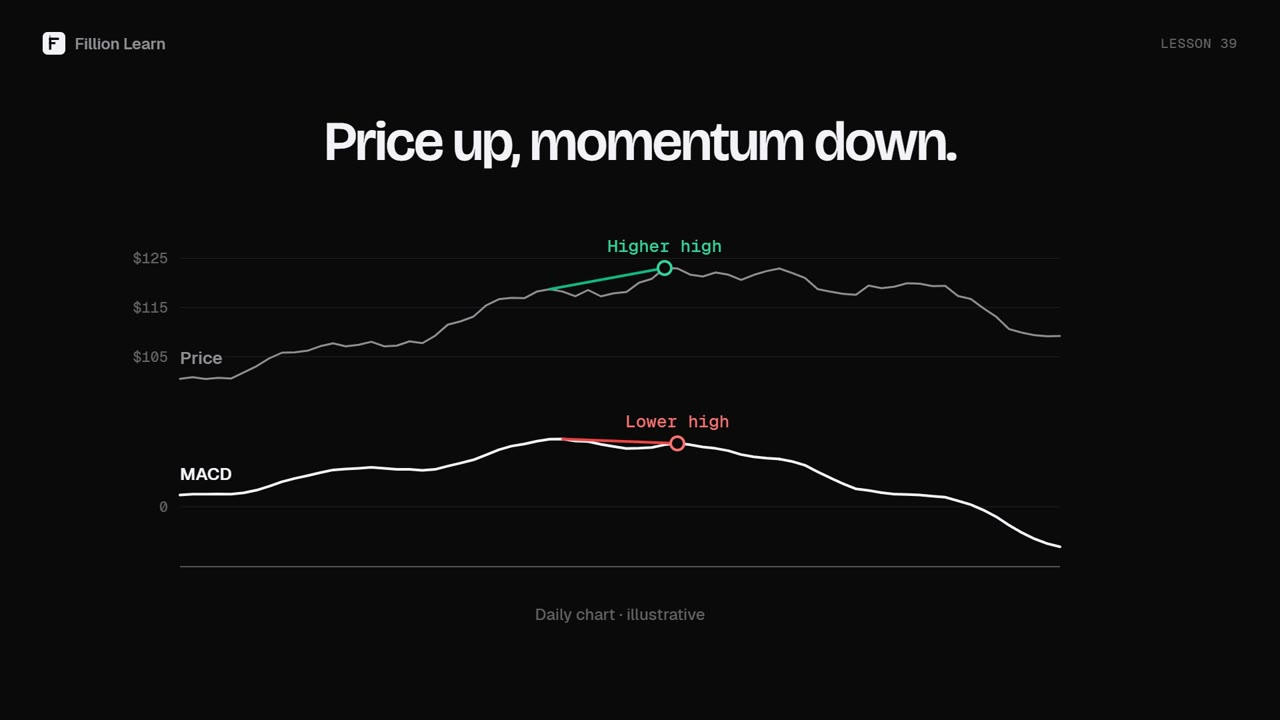 2:33Lesson 39DivergenceWhen price makes a new high and momentum does not. An early warning, not a trigger.
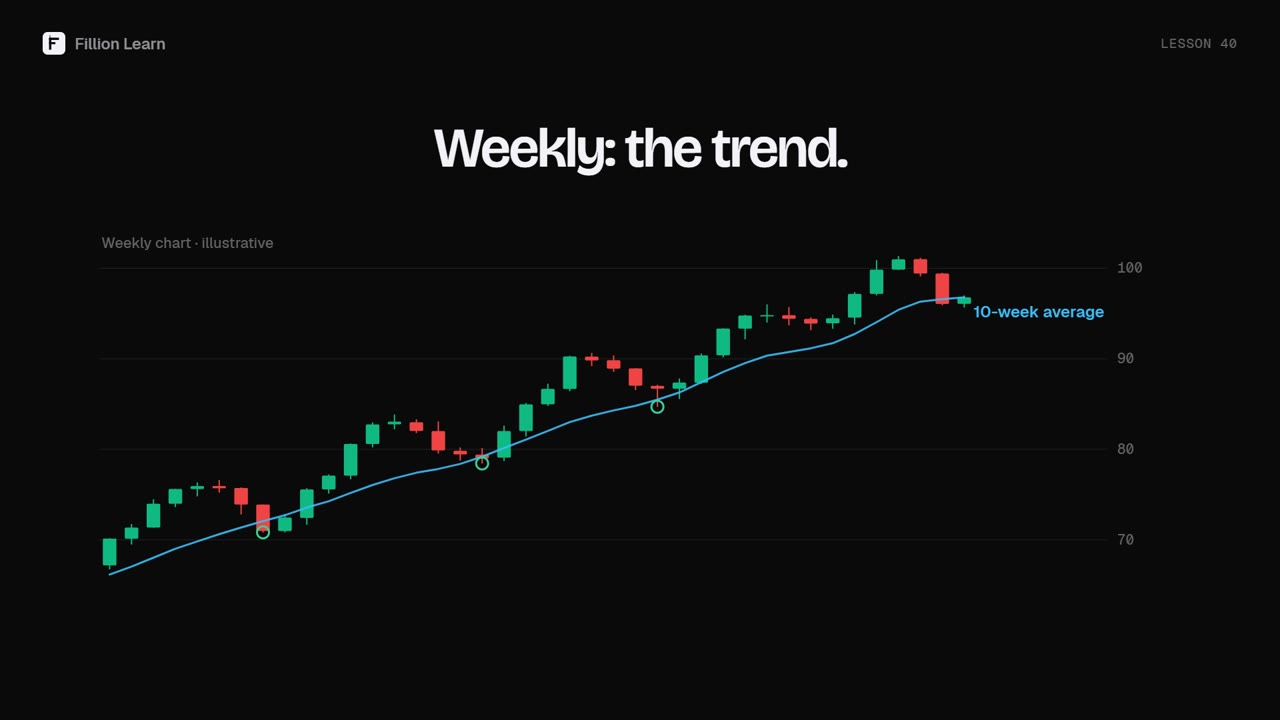 2:17Lesson 40Multi-timeframe alignmentTrades work best when the weekly, daily and intraday charts point the same way.
Market context
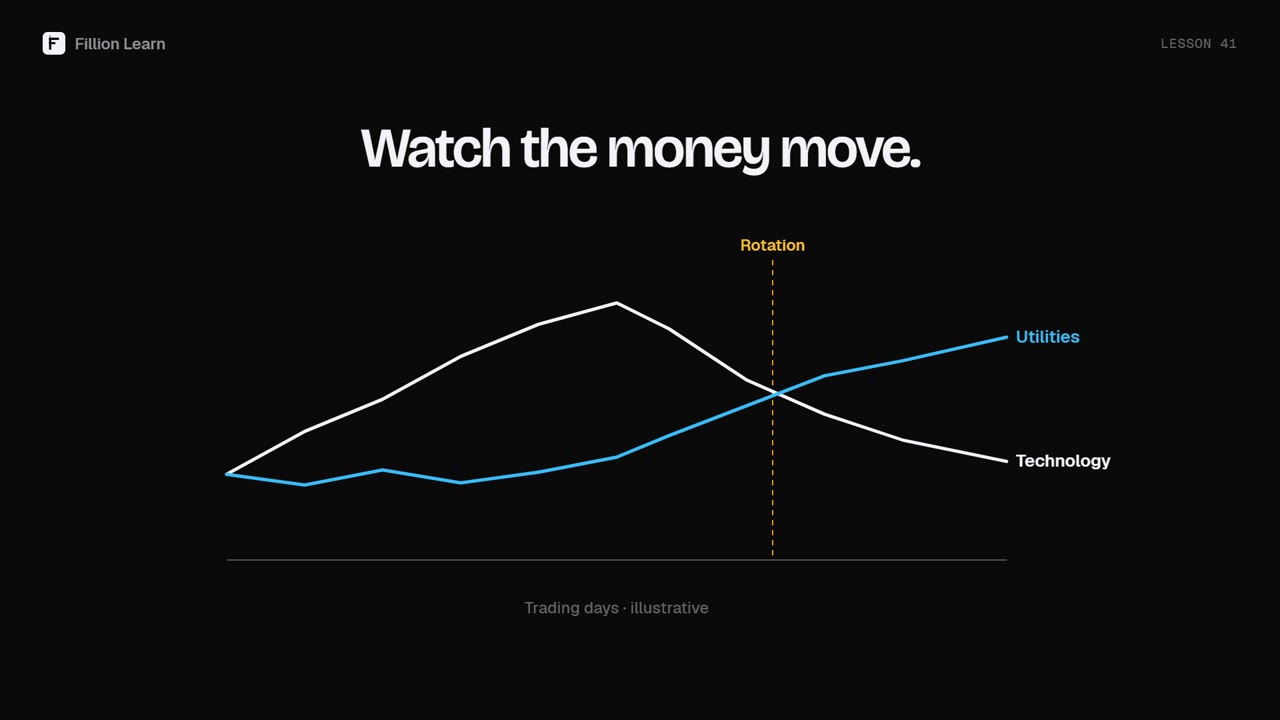 2:45Lesson 41Sector rotationMoney moves between tech, energy, banks and defensives. Following it keeps you on the right side.
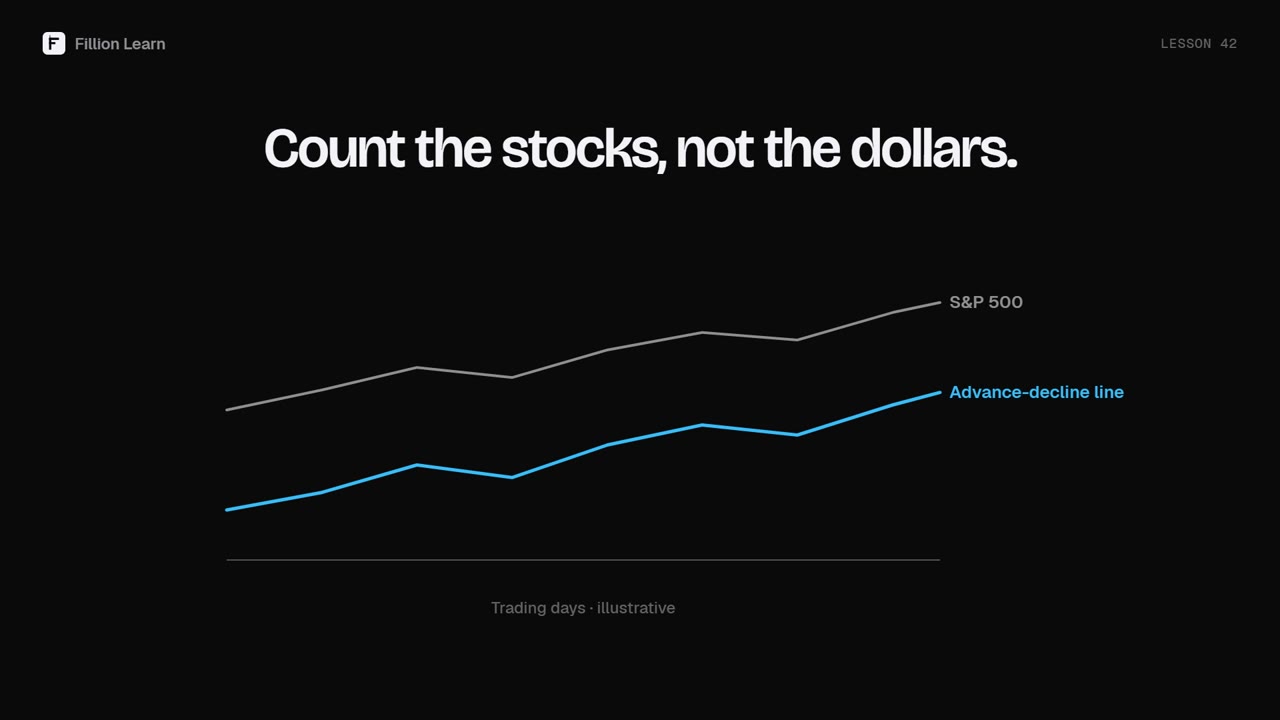 2:35Lesson 42Market breadthIs the whole market rising, or just a few giants? Breadth tells you how healthy a rally is.
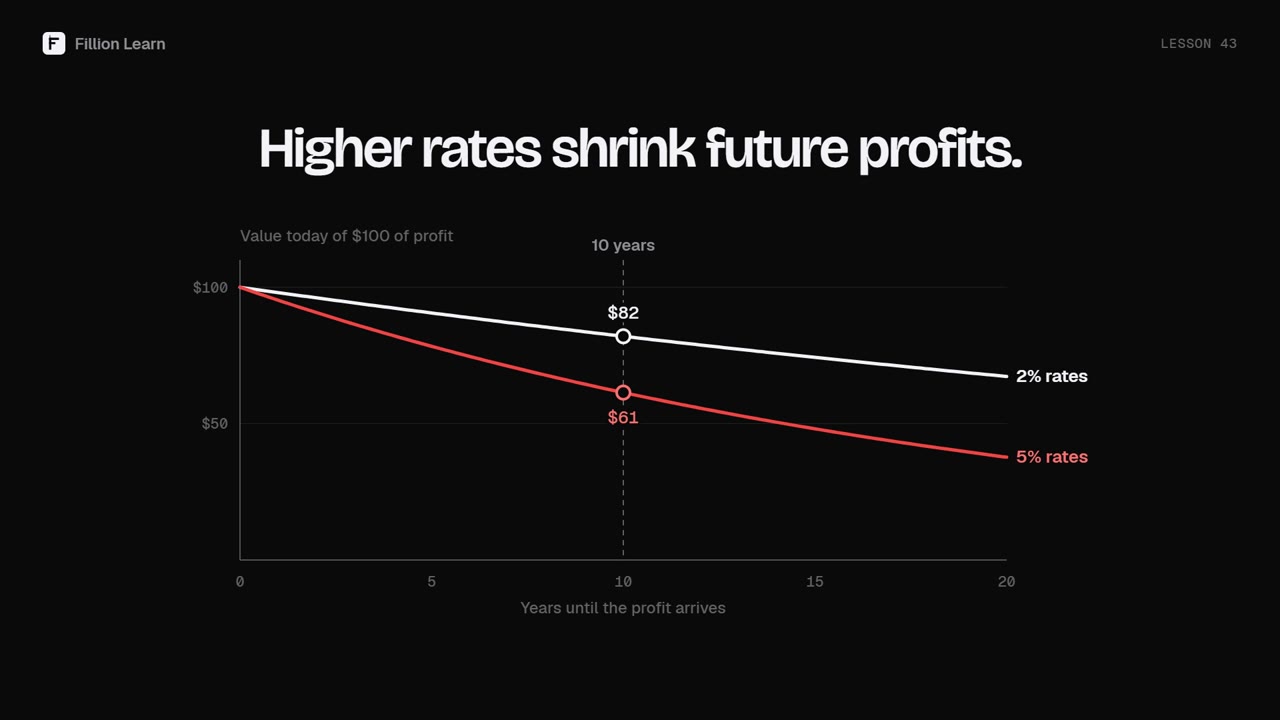 2:37Lesson 43The Fed and interest ratesWhy rate decisions and Fed speeches move every stock at once.
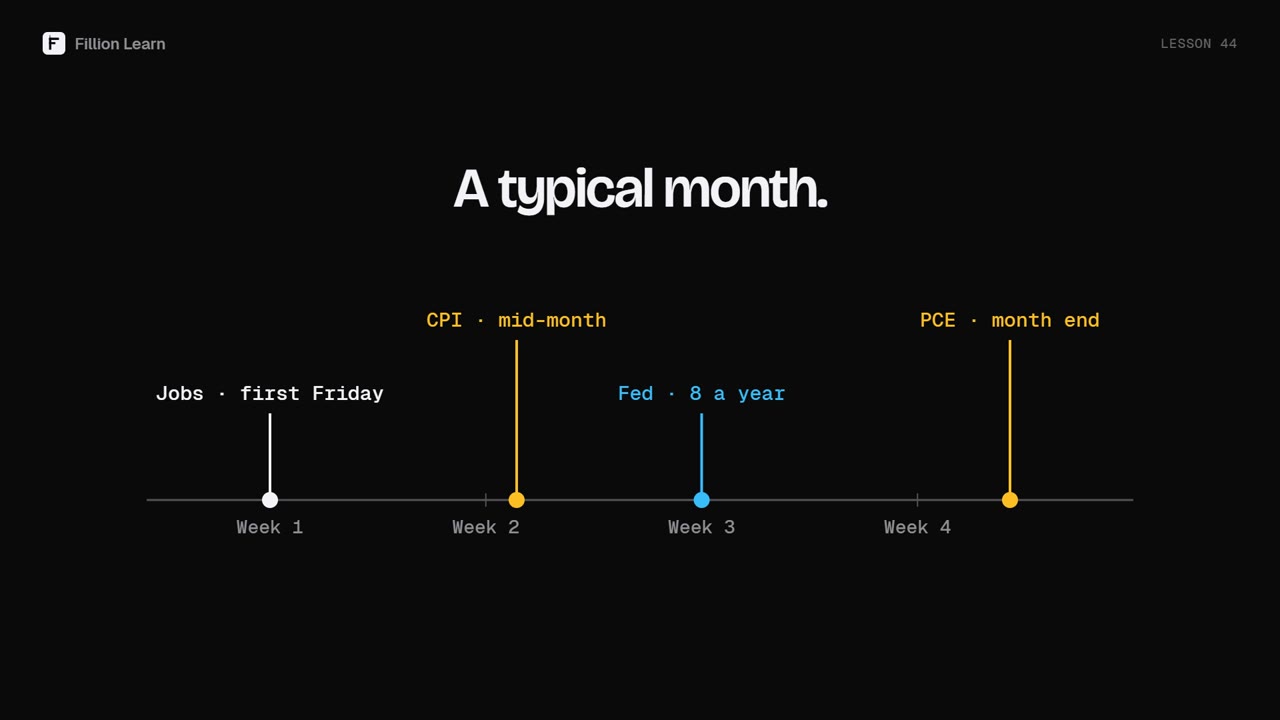 2:27Lesson 44CPI, jobs and the economic calendarThe scheduled reports that move markets, and how to plan trades around them.
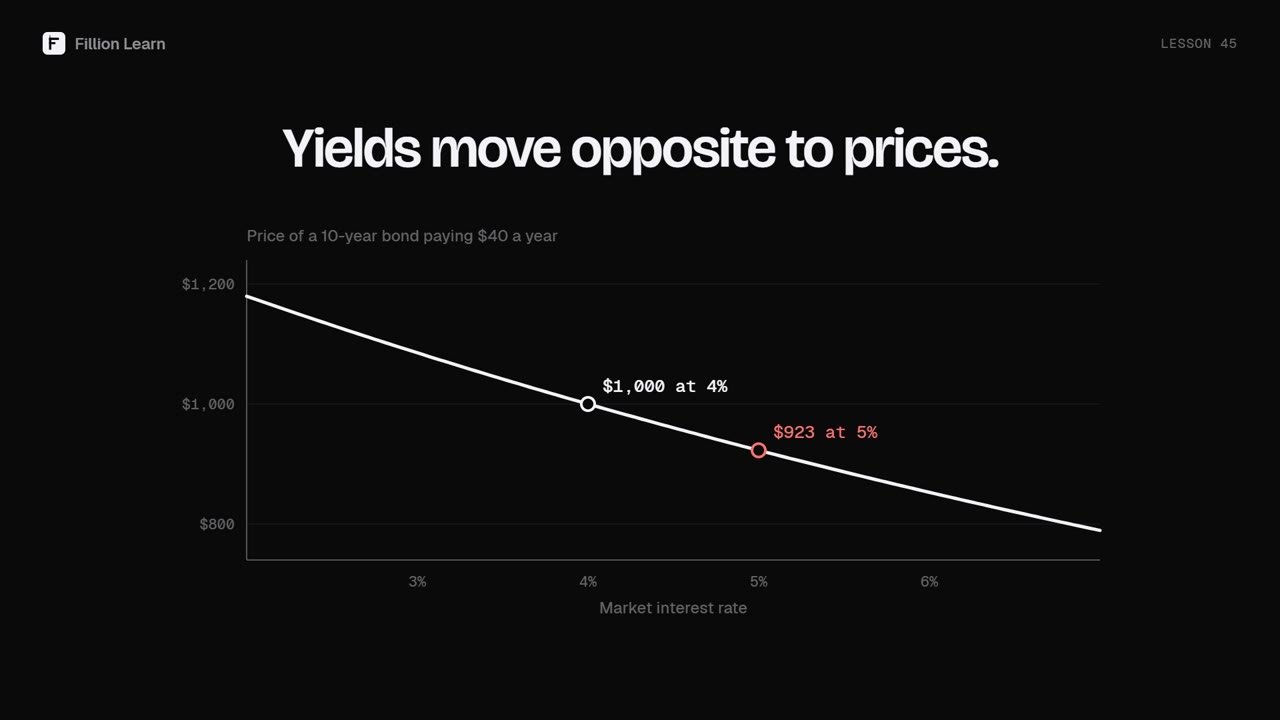 2:23Lesson 45Bond yields and the dollarRising yields and a strong dollar pressure growth stocks. How the pieces connect.
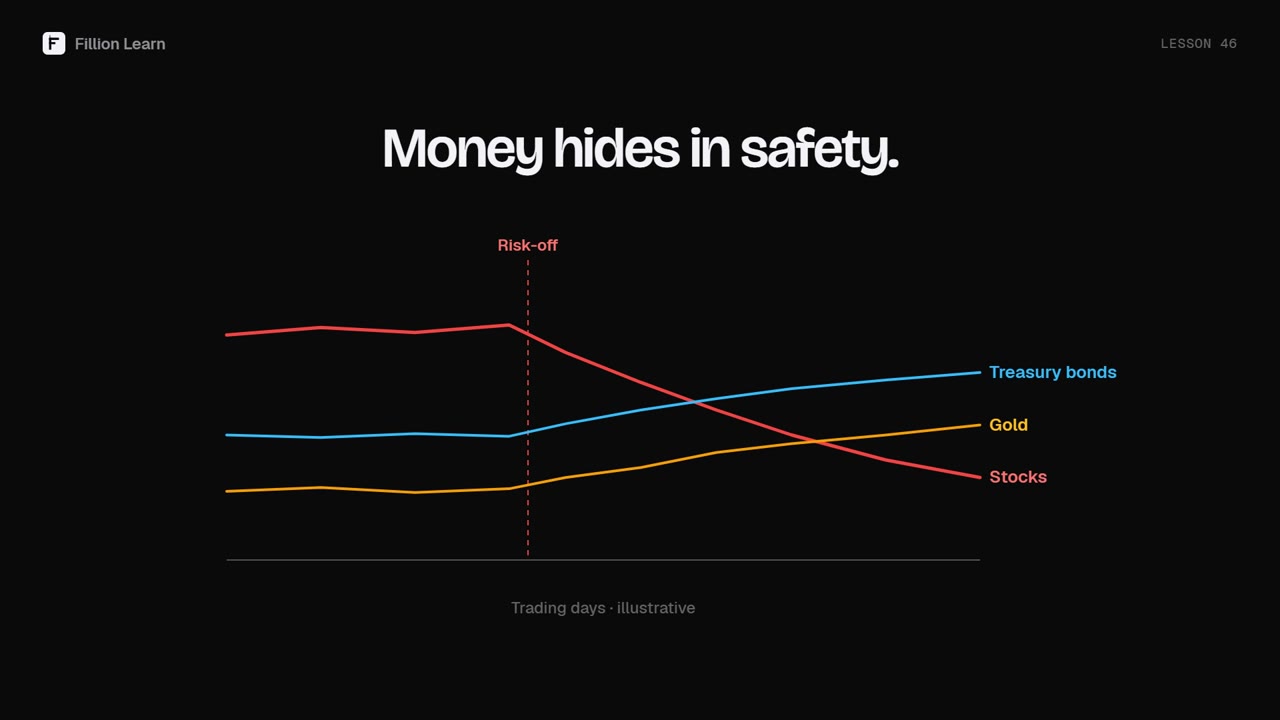 2:21Lesson 46Risk-on and risk-offRegimes where traders chase growth or hide in safety, and the signs that a regime is changing.
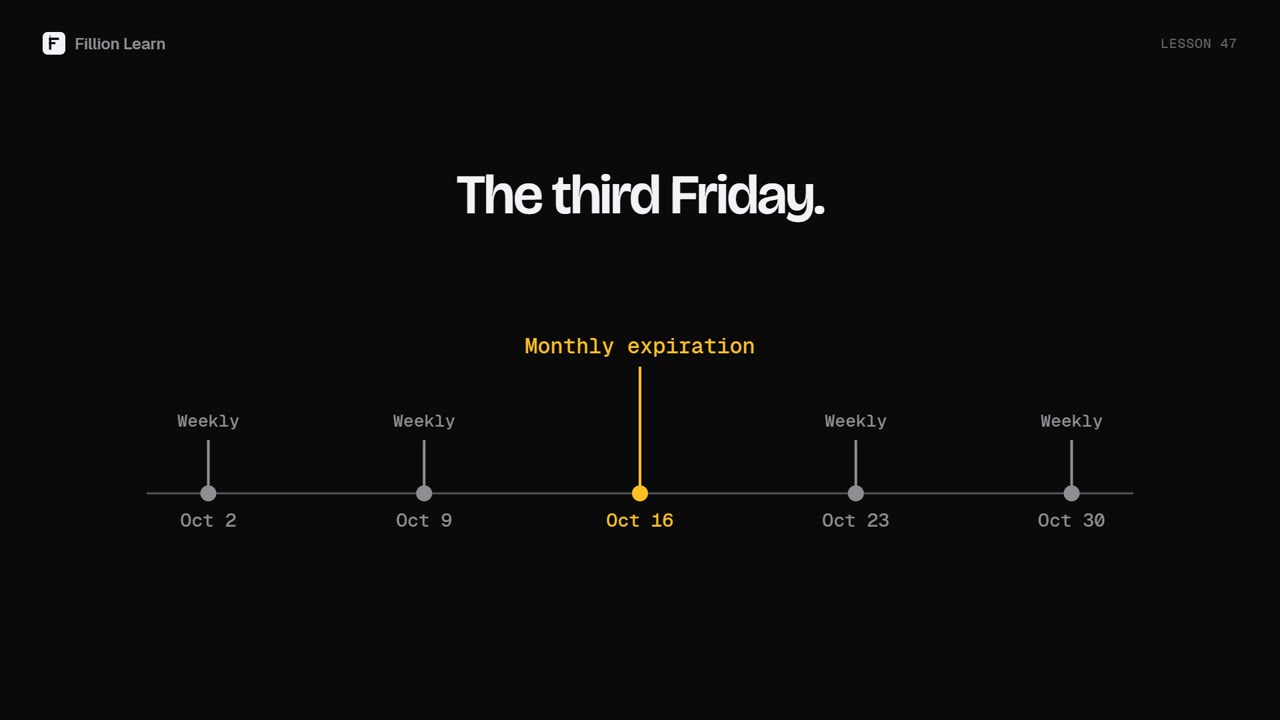 2:44Lesson 47Options expiration weekWhy the third Friday of the month can pin prices and add strange moves.
News and fundamentals
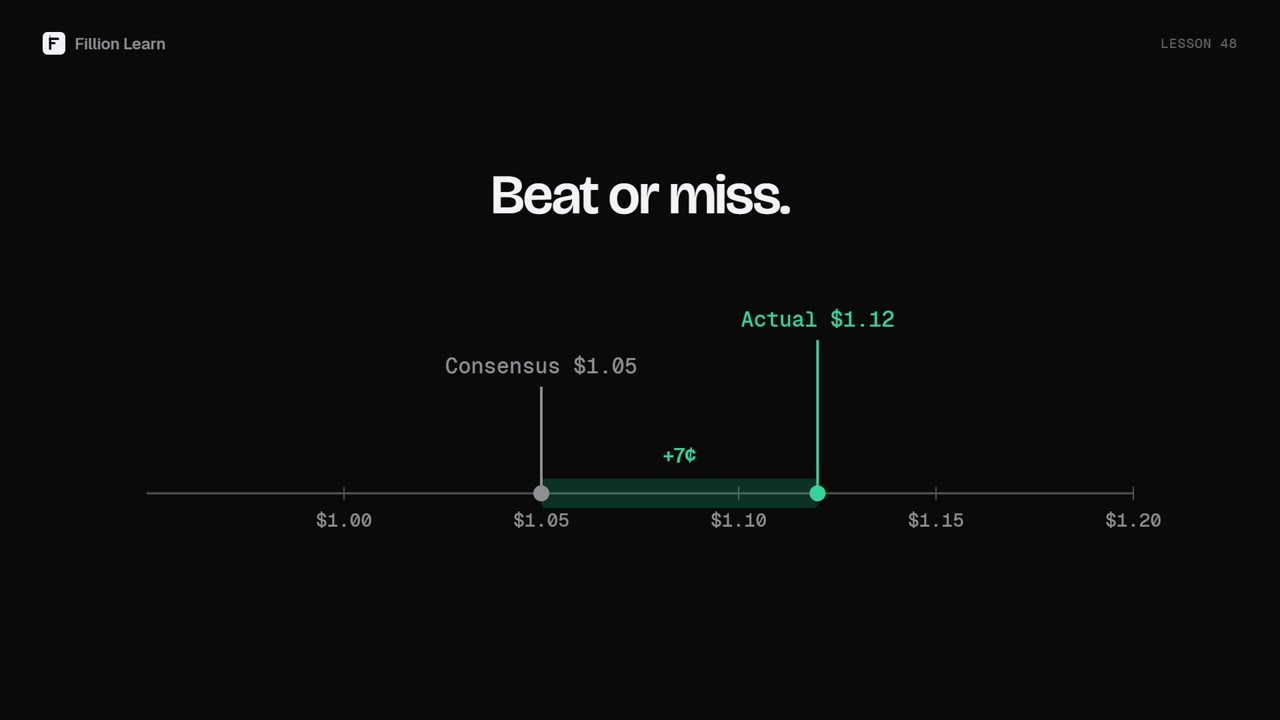 2:39Lesson 48EPS, revenue and guidanceThe three numbers in every earnings report, and why guidance often matters most.
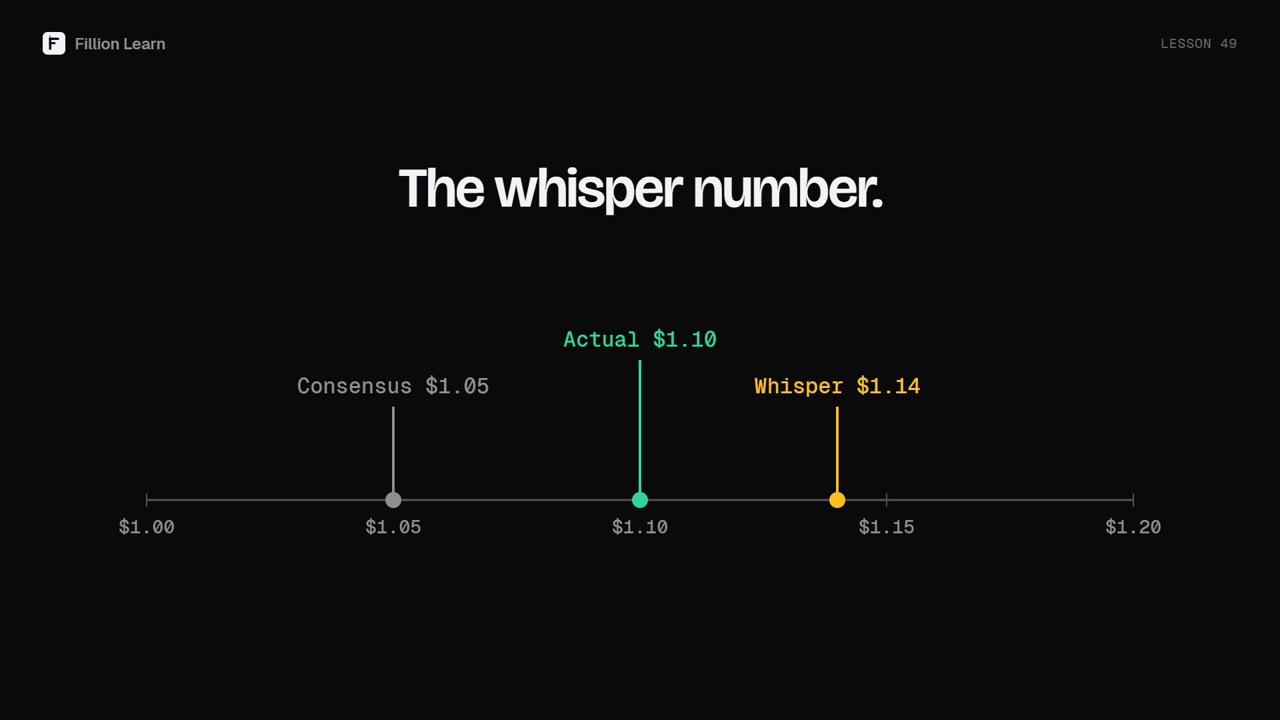 2:20Lesson 49Why stocks fall on good newsExpectations, whisper numbers and positioning. A beat is only a beat versus what was priced in.
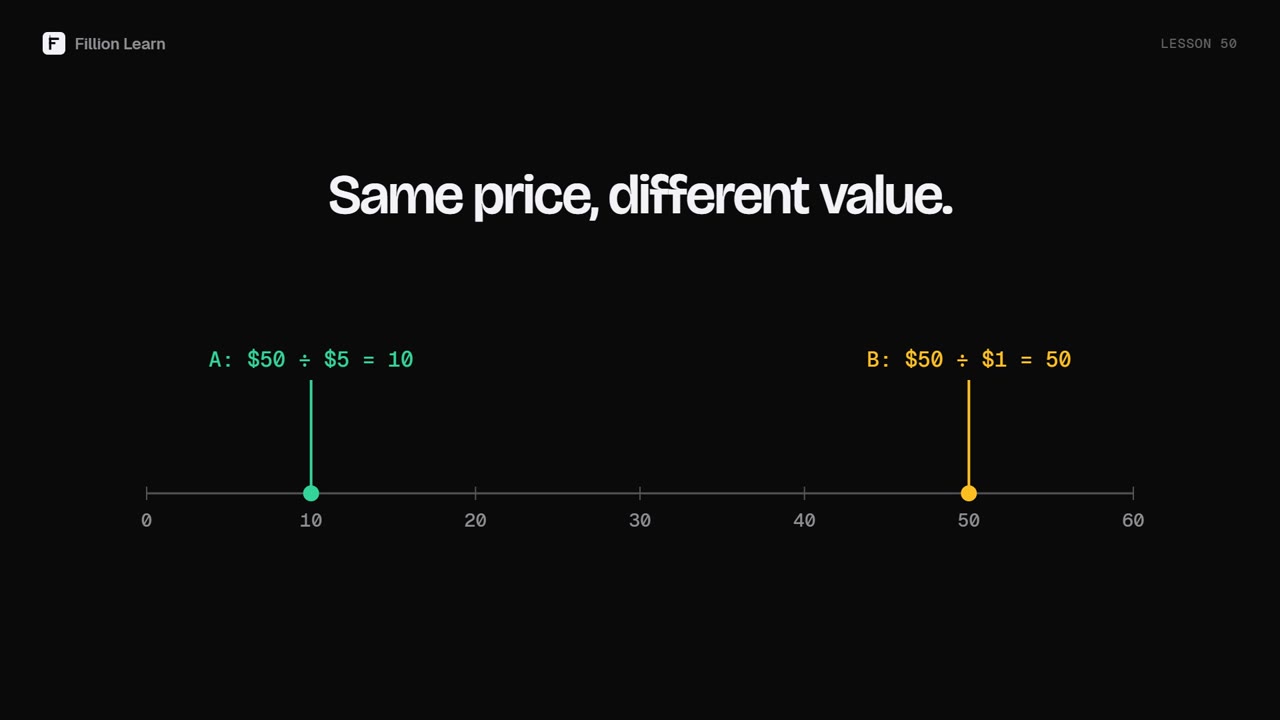 2:43Lesson 50P/E and valuationWhat a price-to-earnings ratio tells you, and why cheap stocks can stay cheap.
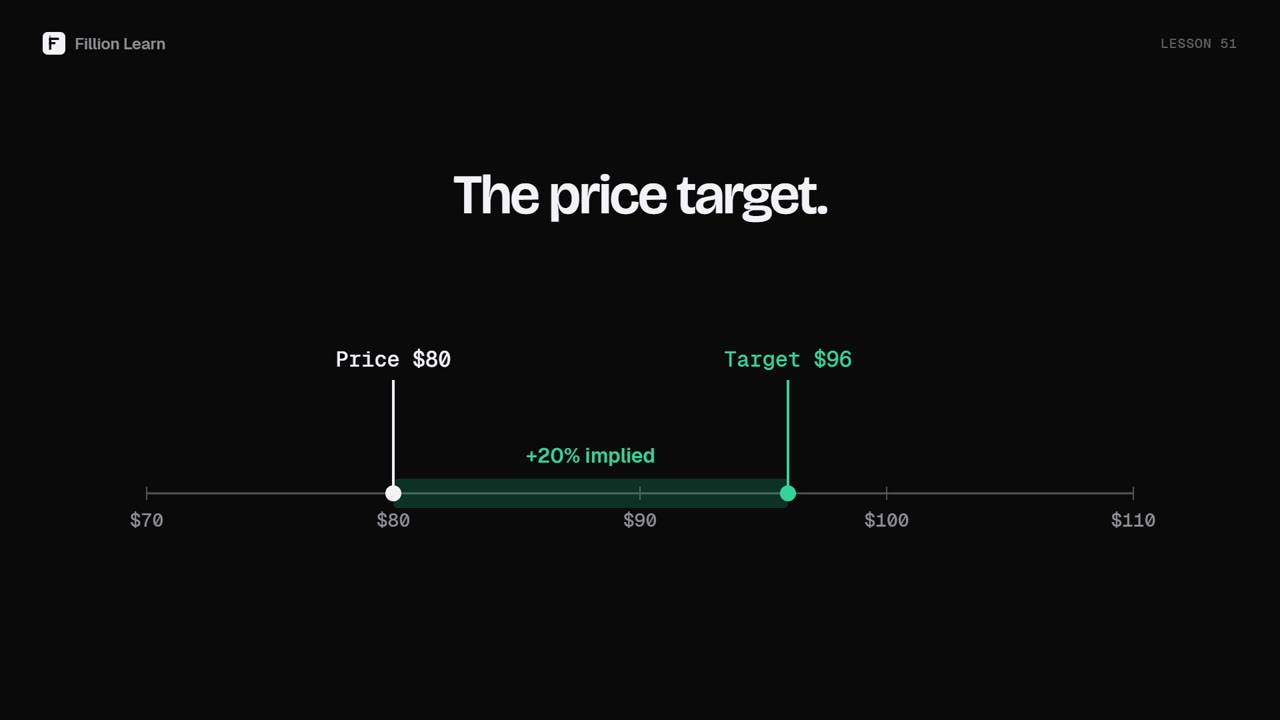 2:23Lesson 51Analyst ratings and price targetsUpgrades, downgrades and targets: how much they move stocks, and how much to trust them.
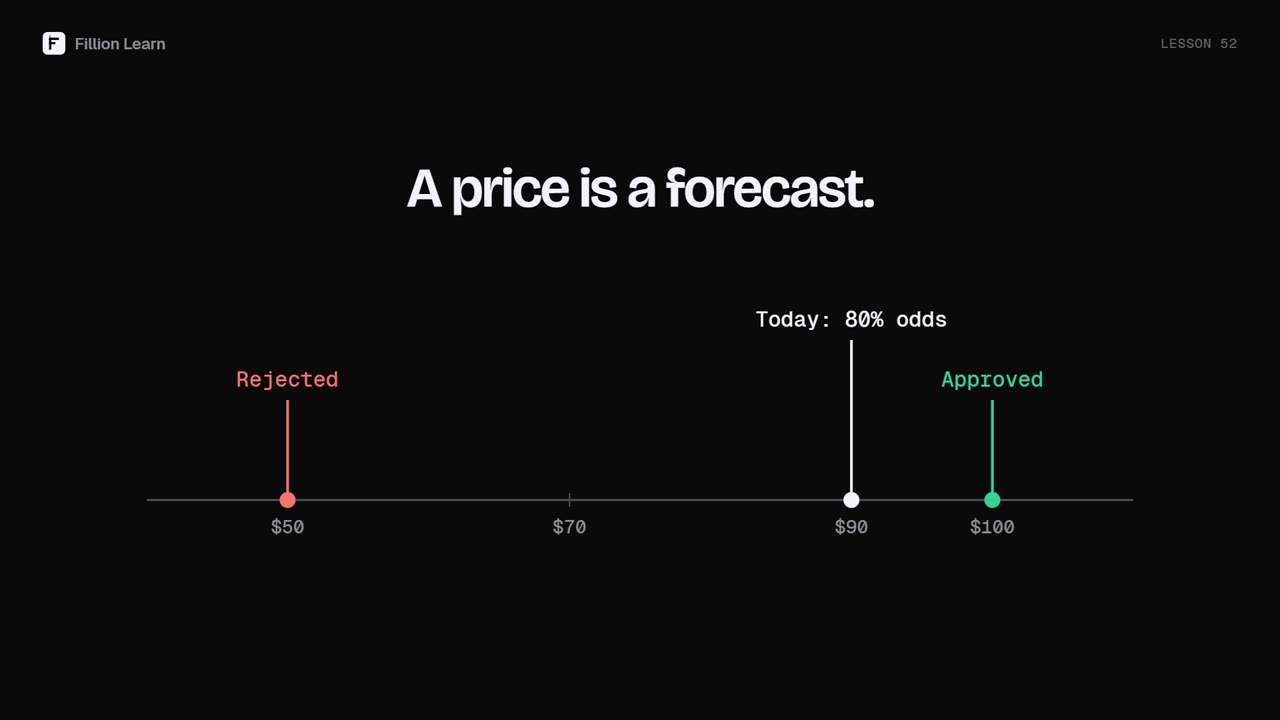 2:26Lesson 52Priced inMarkets trade on the future. Why known news rarely moves a stock the way you expect.
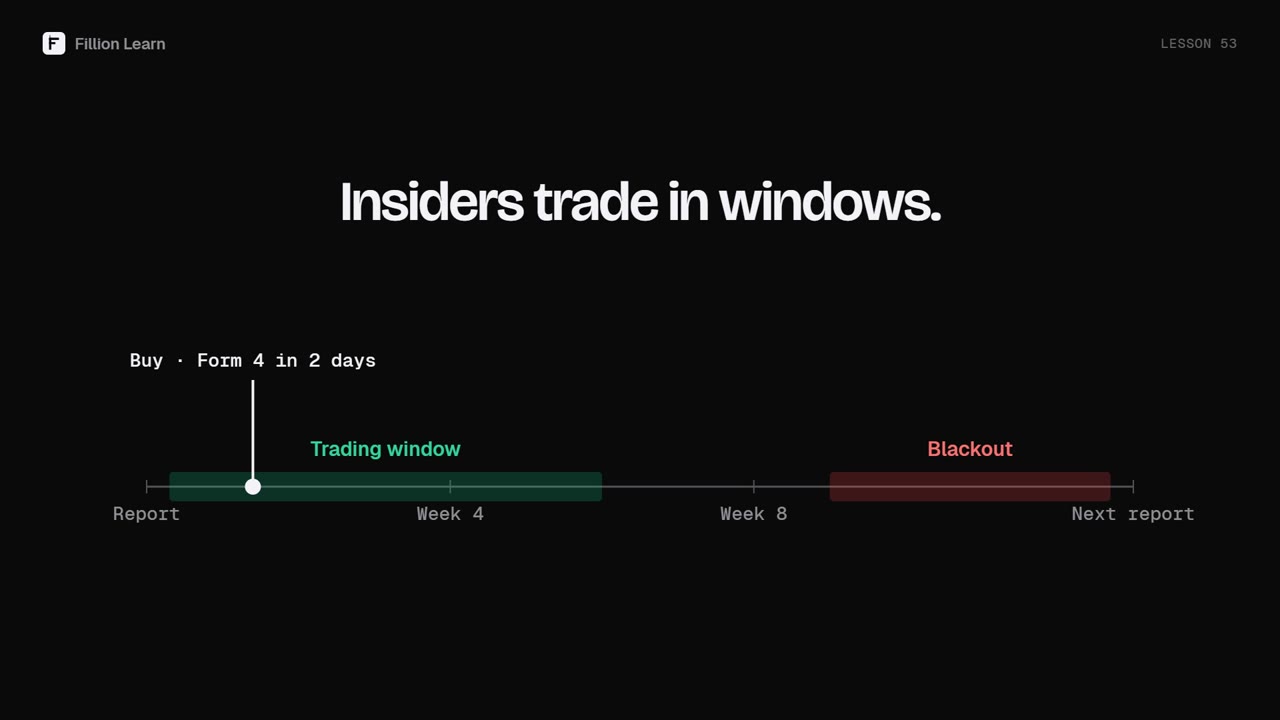 2:40Lesson 53Insider buying and sellingExecutives trading their own stock. Which signals mean something and which are noise.
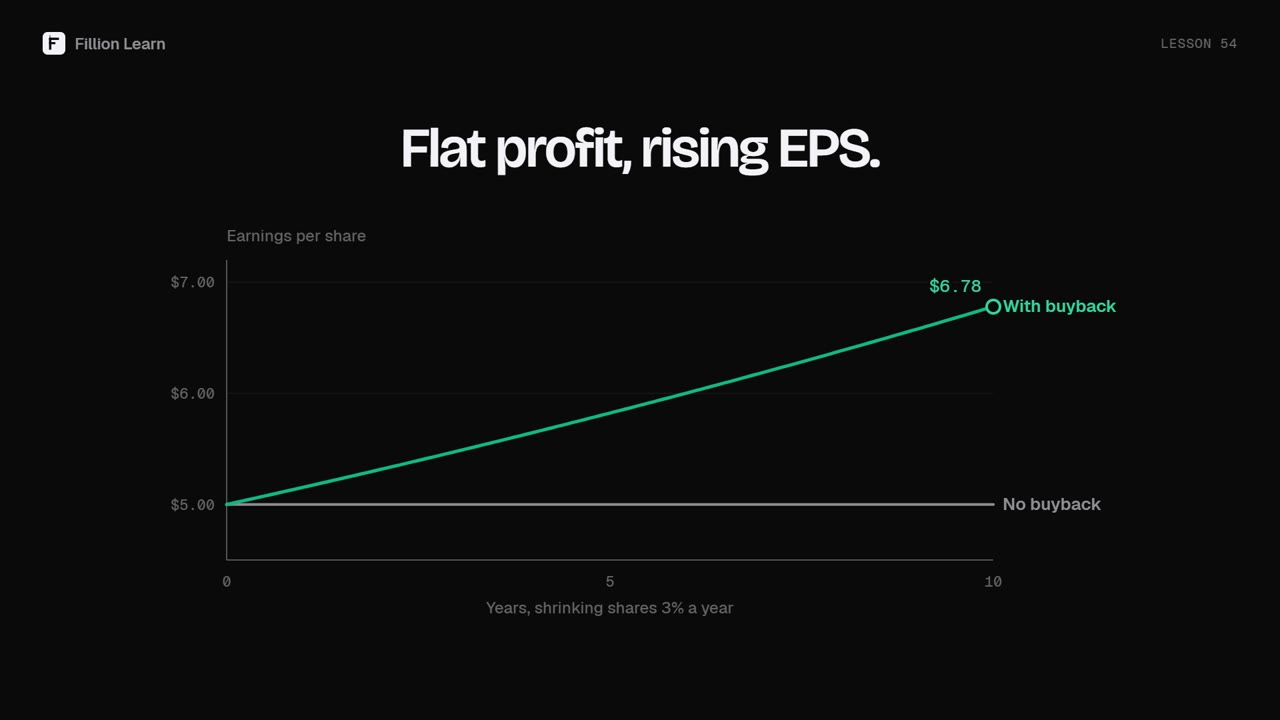 2:28Lesson 54Buybacks, dividends and splitsHow companies return cash to shareholders, and why a split changes nothing about value.
The trade plan
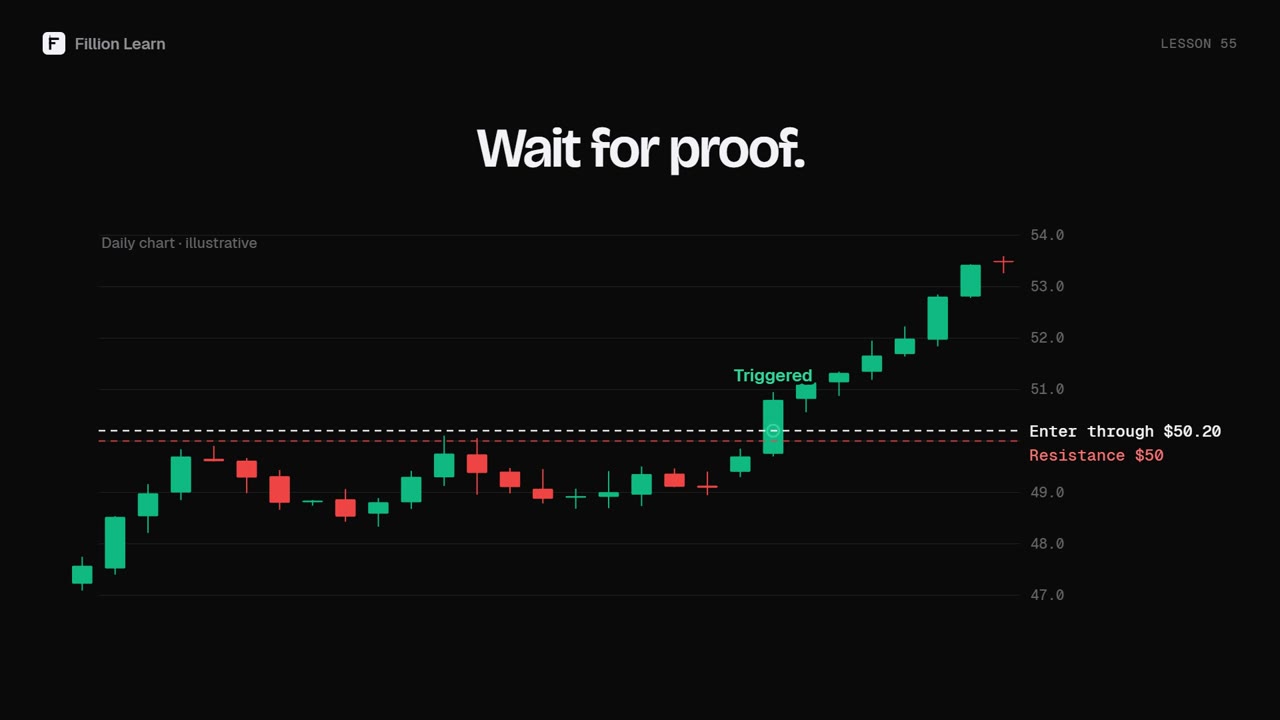 2:16Lesson 55Entry triggers and cancel levelsWait for price to prove the idea before you are in, and know what cancels the plan before entry.
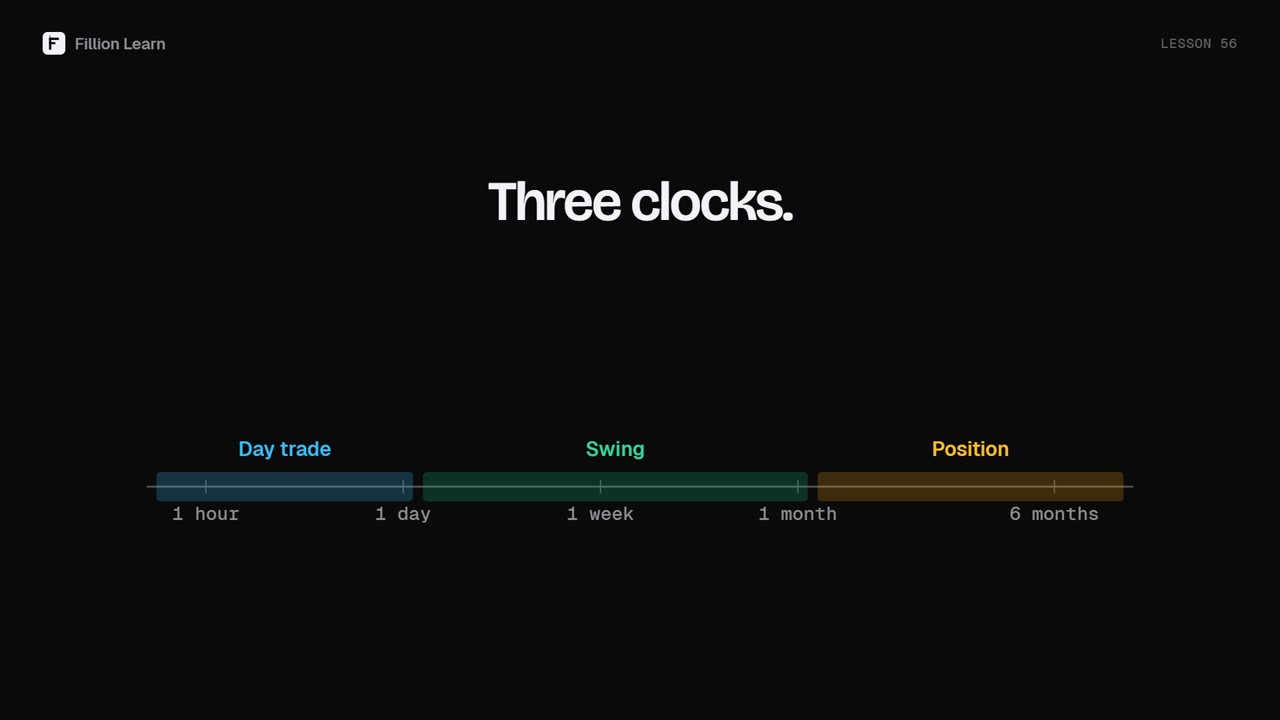 2:32Lesson 56Holding period: day, swing, positionHow long you plan to hold changes the chart you read, the stop you use and the risks you face.
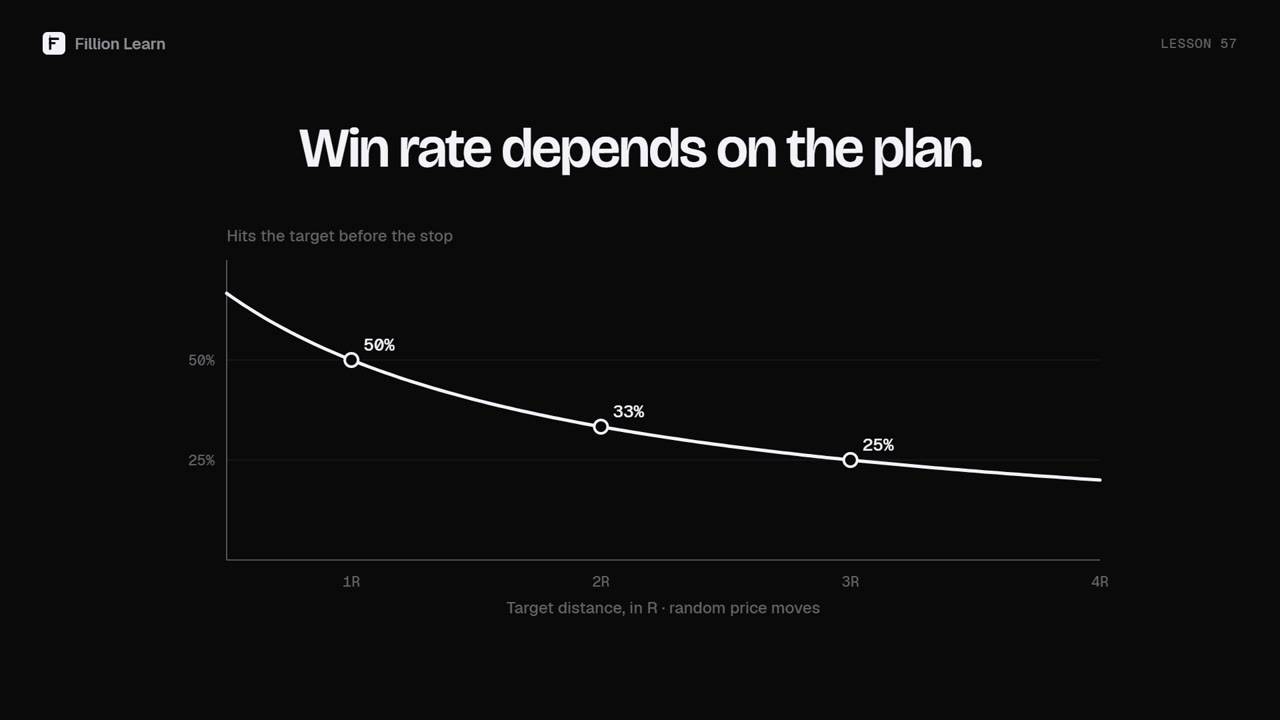 2:32Lesson 57Conviction is not probabilityA conviction score weighs the evidence. It is not a win rate, and treating it as one is costly.
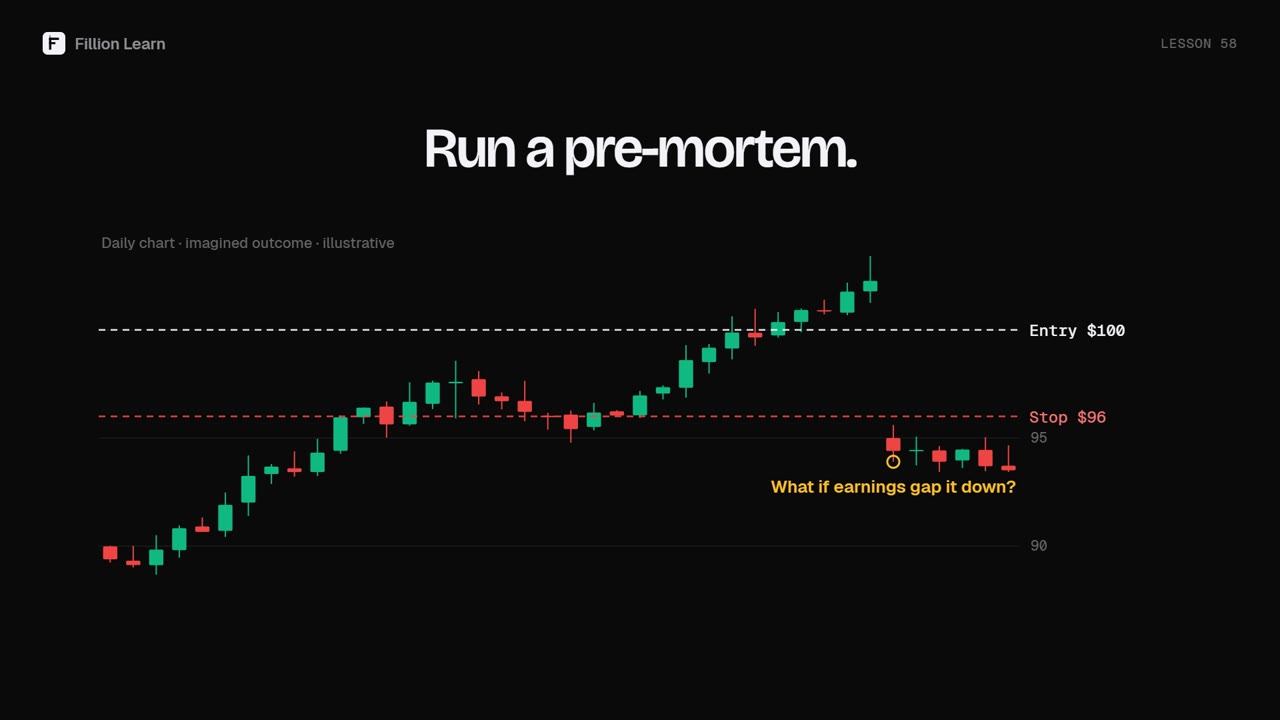 2:19Lesson 58The case againstEvery trade has evidence against it. Reading the dissent first makes better decisions.
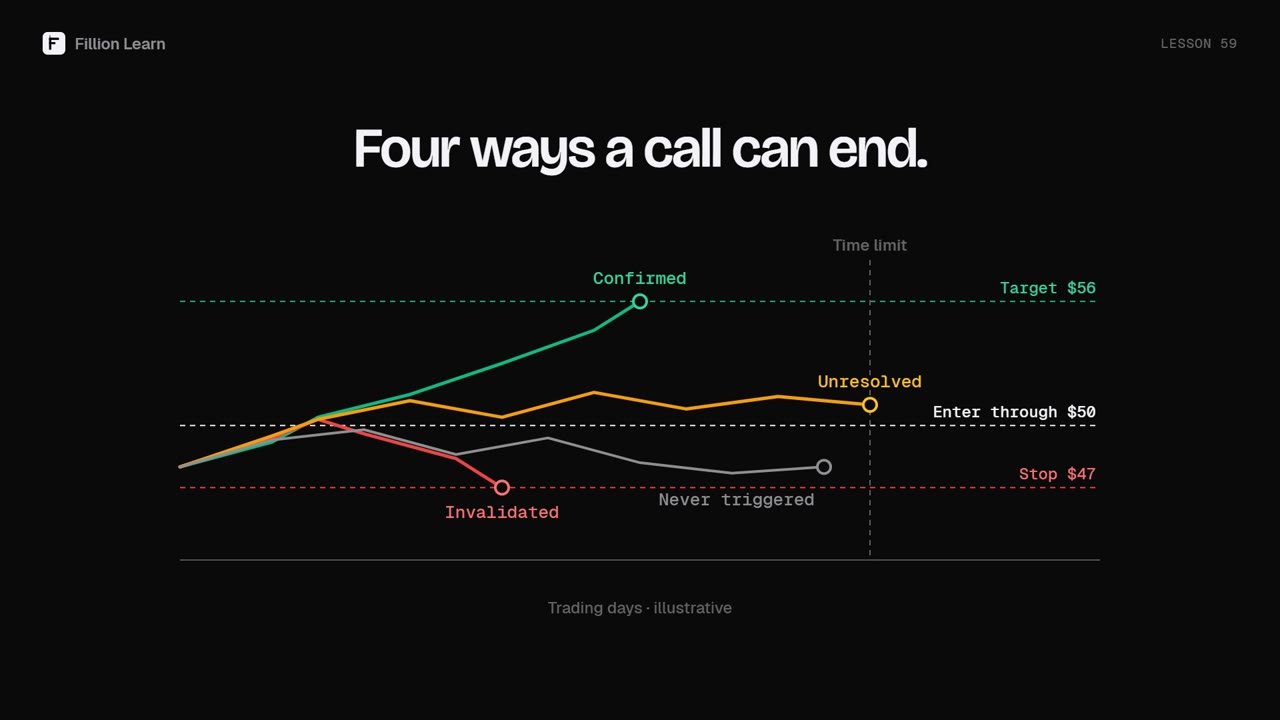 2:50Lesson 59How a call gets gradedThesis confirmed, invalidated, unresolved or never triggered: grading by real prices, not opinions.
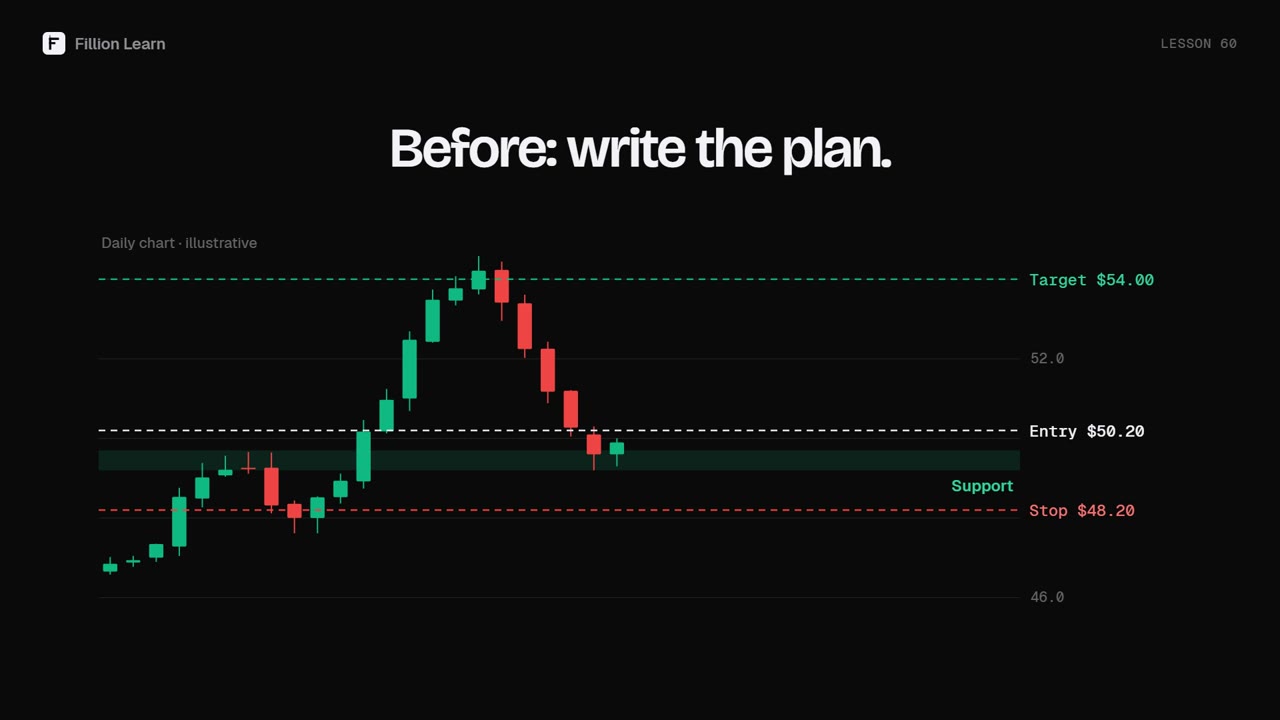 2:52Lesson 60Journaling and reviewThe fastest way to improve is to write down every trade and grade the decision, not the result.
Risk management
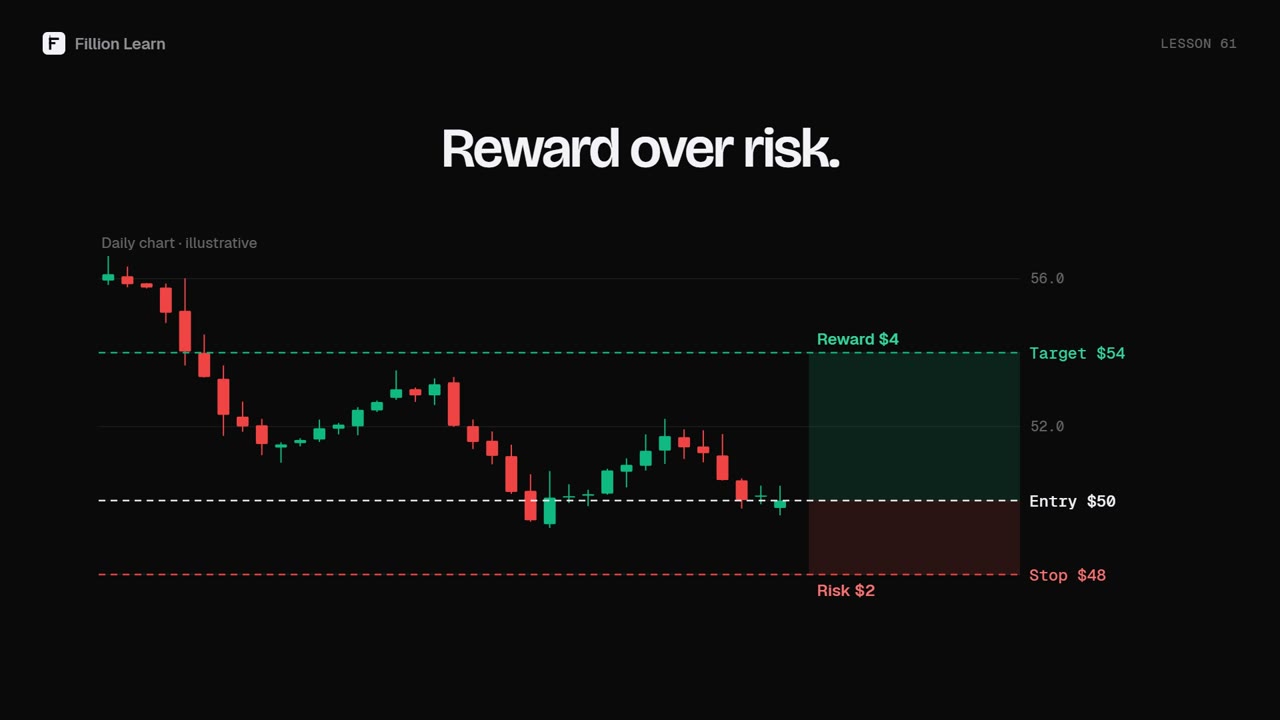 2:48Lesson 61Risk-reward ratioHow far to the target versus how far to the stop, and the minimum that makes a trade worth taking.
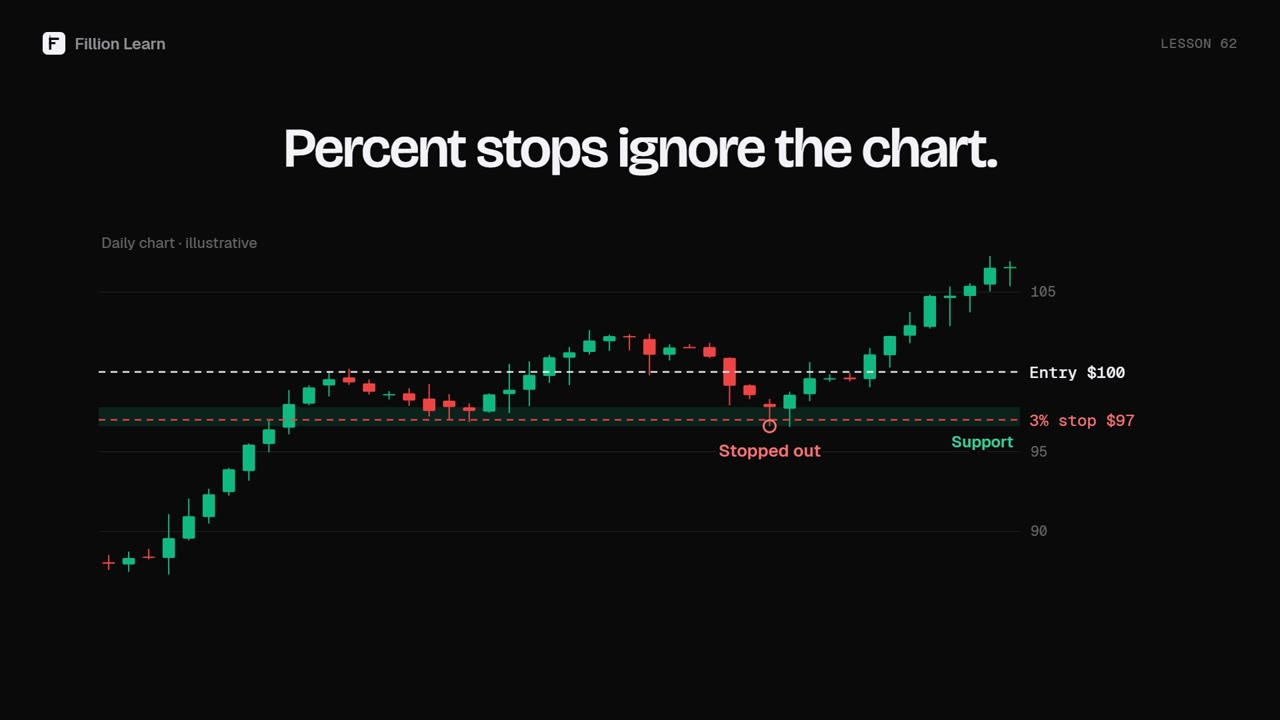 2:19Lesson 62Where to put a stopStops belong where the thesis is wrong, not at a random percentage. Structure, ATR and noise.
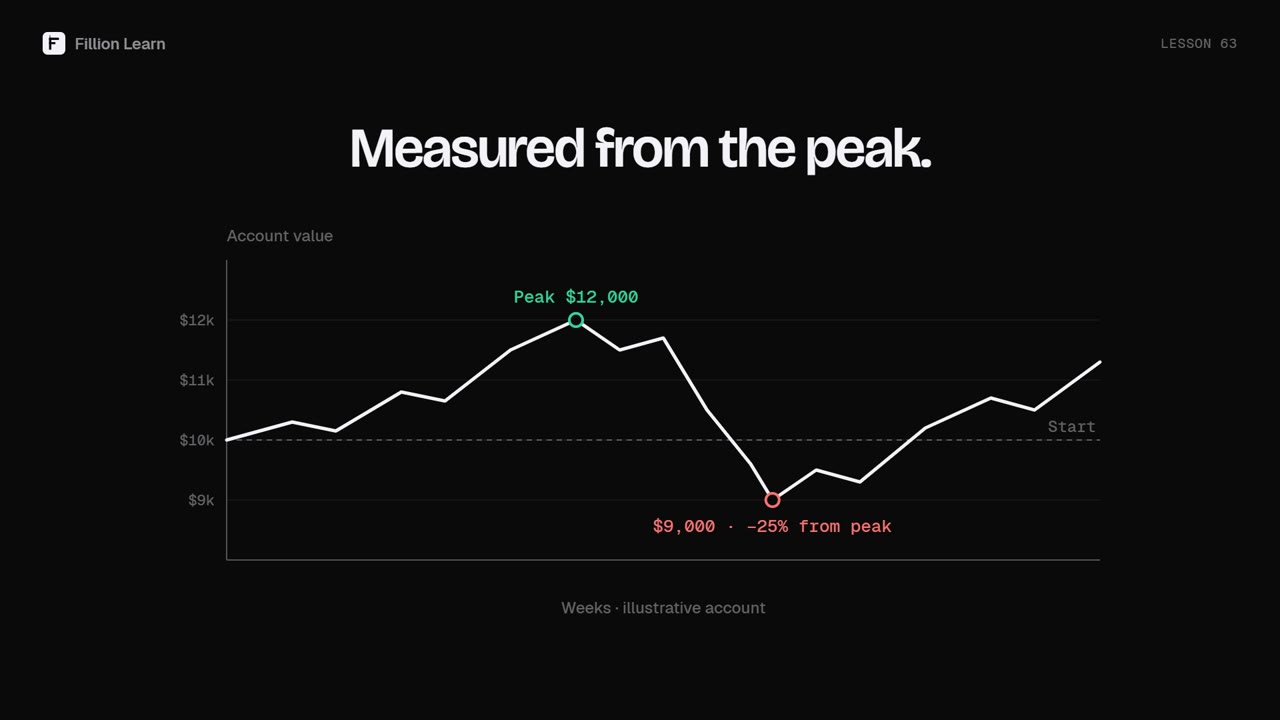 2:20Lesson 63Drawdowns and the math of recoveryLose 50% and you need 100% to get back. Why protecting capital beats chasing returns.
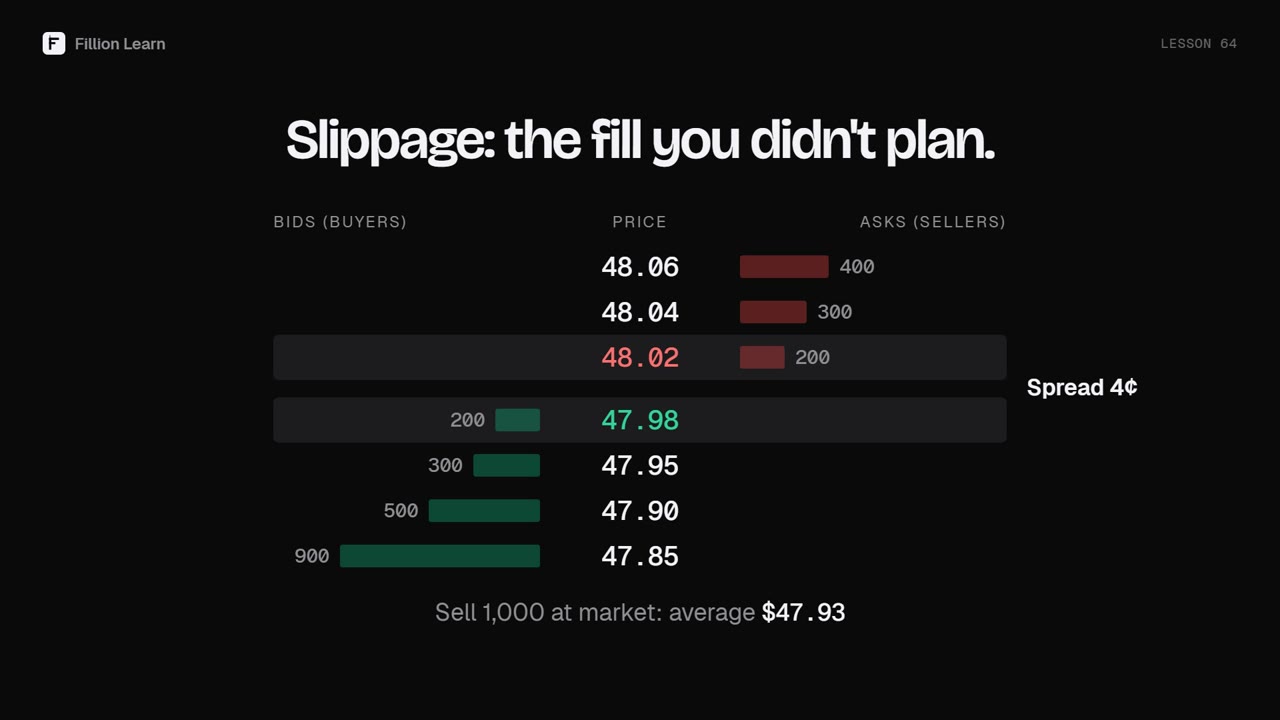 2:20Lesson 64Slippage and gap riskYour stop is a plan, not a guarantee. How fills slip and how overnight gaps jump stops.
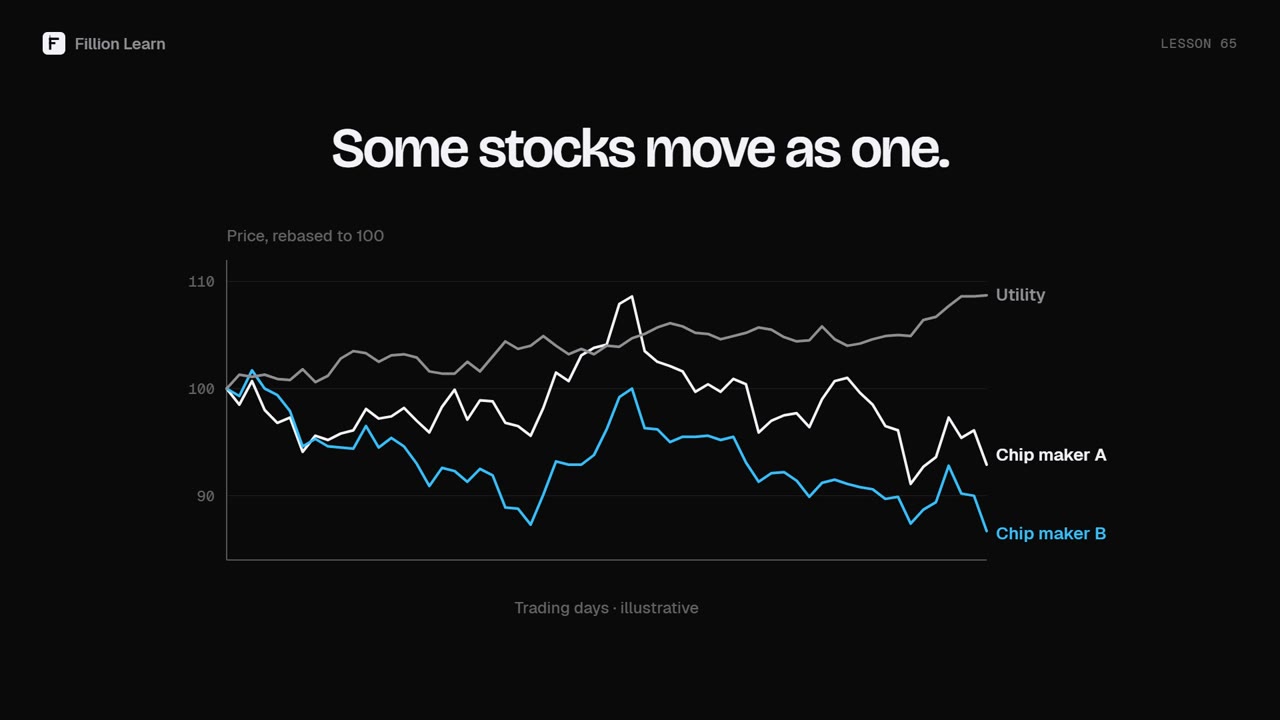 2:29Lesson 65Concentration and correlationFive tech stocks are one trade. How hidden correlation multiplies risk.
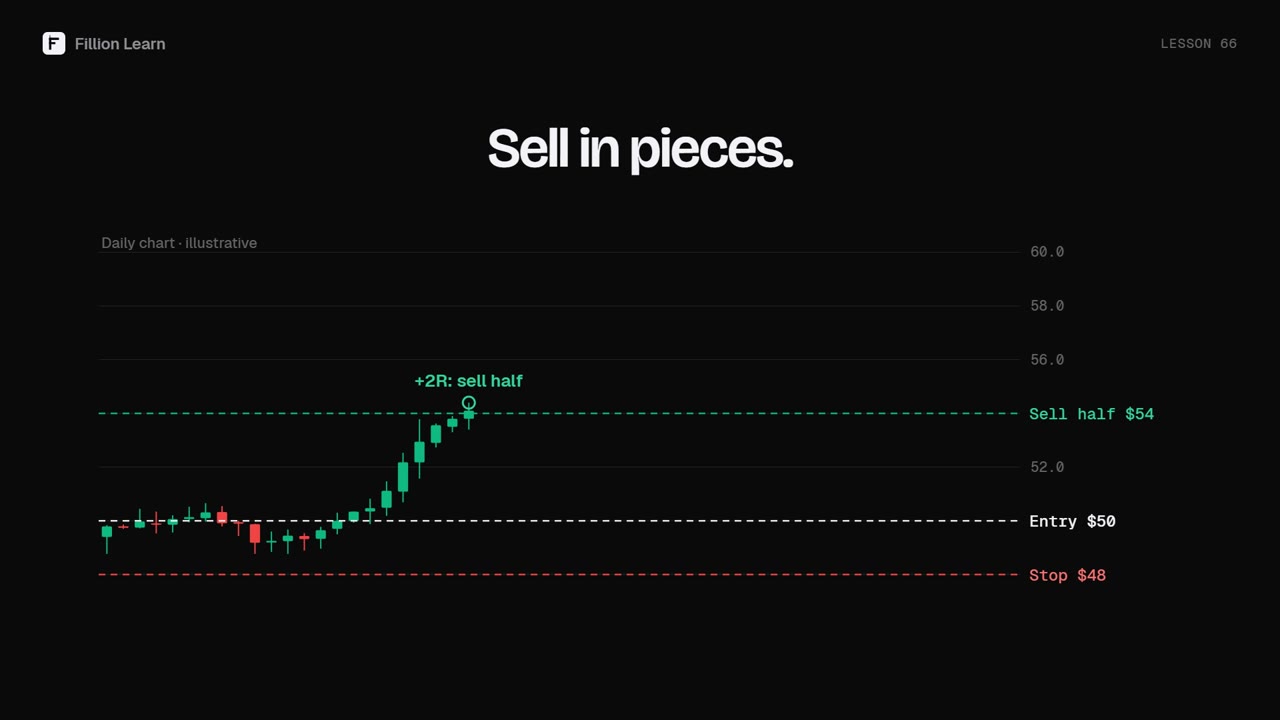 2:05Lesson 66Scaling out and trailing stopsTaking partial profits and moving stops to lock in gains without choking a winner.
Options basics
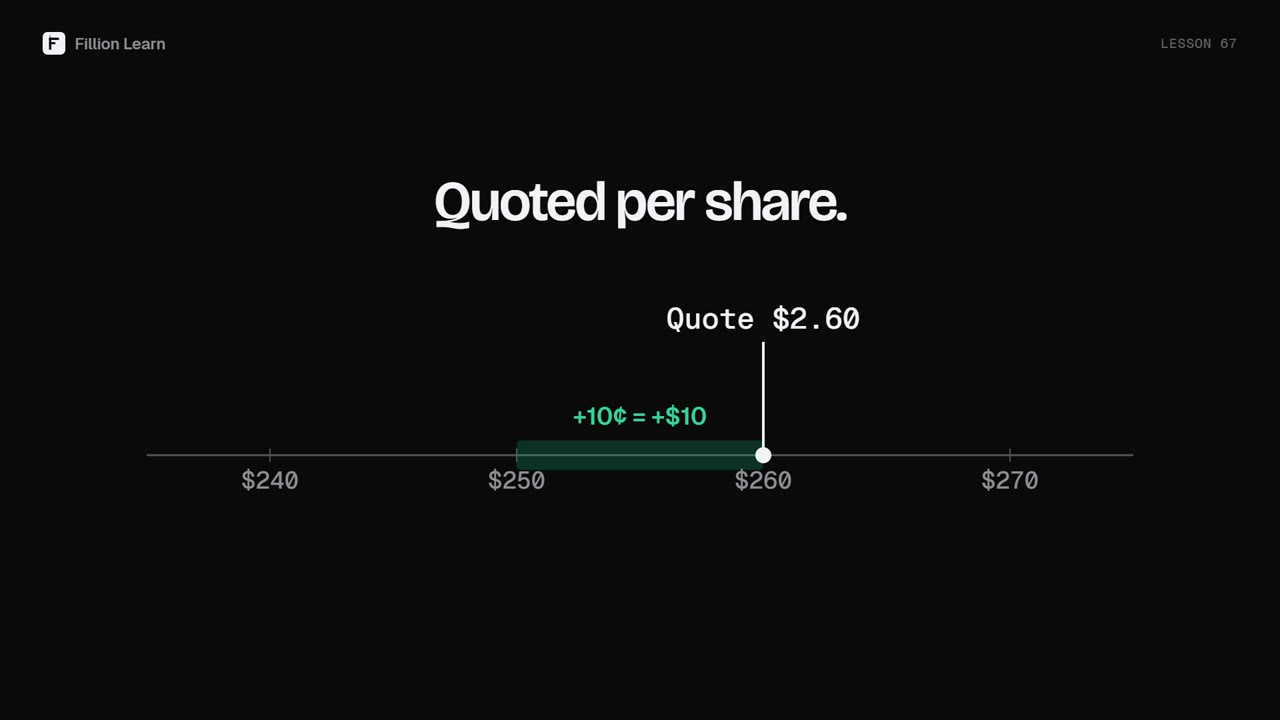 2:41Lesson 67One contract is 100 sharesWhy a $2.50 option costs $250, and how the multiplier changes the size of every trade.
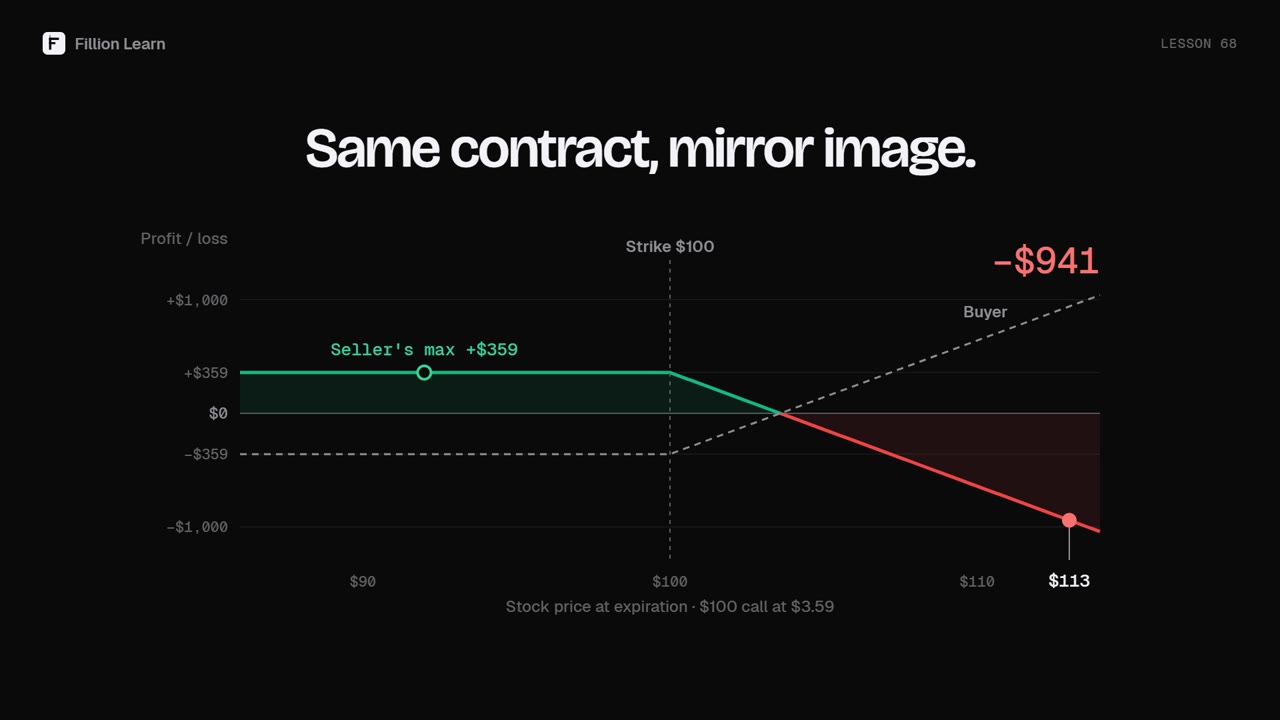 2:27Lesson 68Buying vs selling optionsBuyers pay for possibility, sellers collect for risk. Two very different trades.
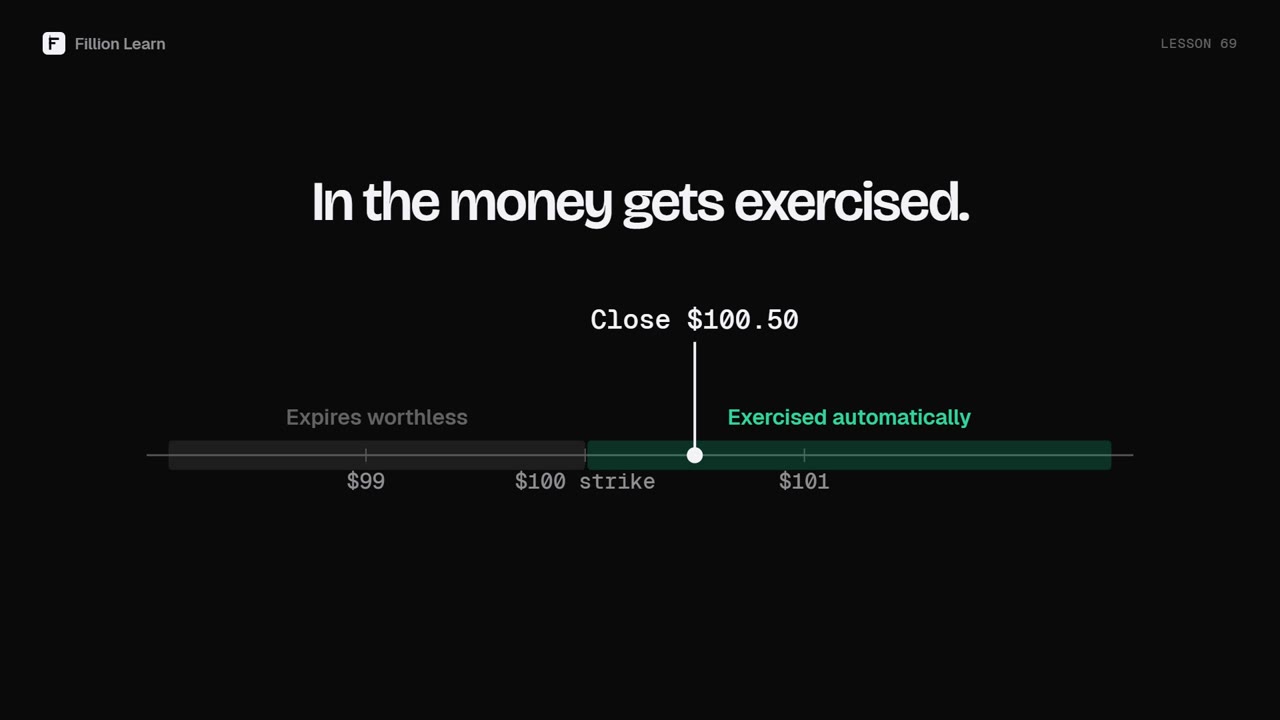 2:43Lesson 69Exercise and assignmentWhat happens at expiration, when you might be assigned early, and how to avoid surprises.
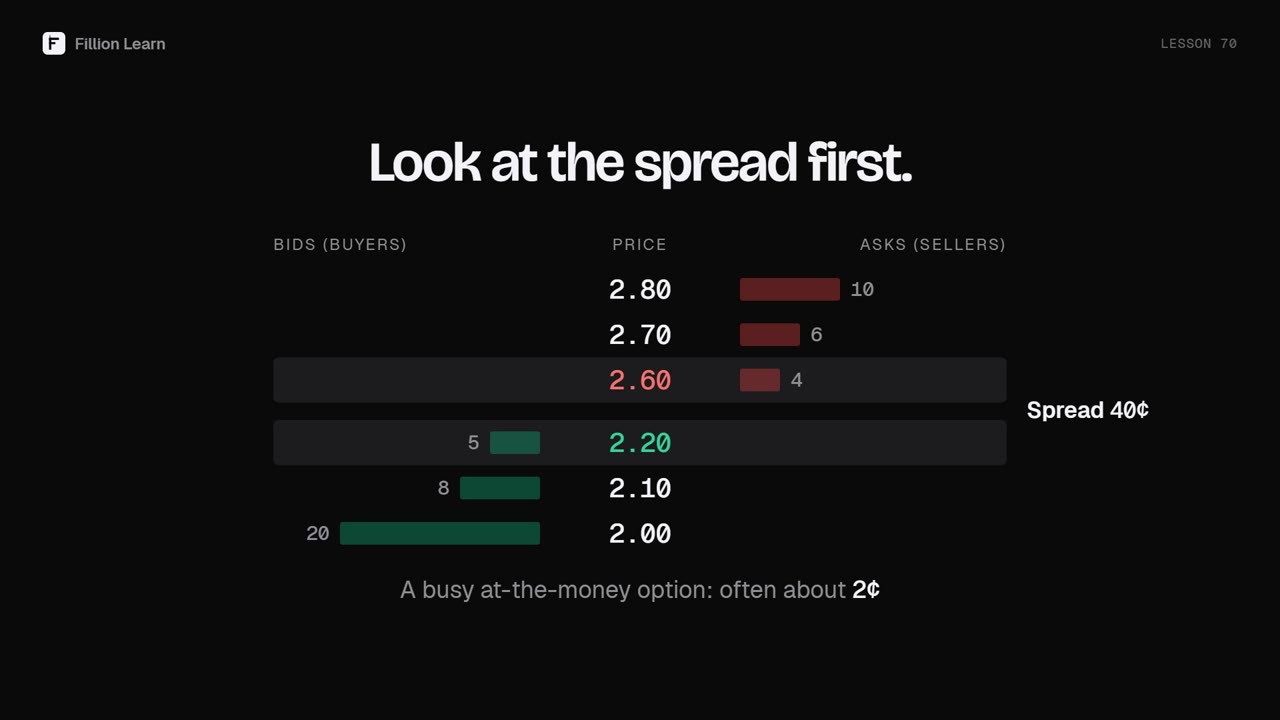 2:15Lesson 70Options liquidityVolume, open interest and the bid-ask spread decide whether an option is tradeable at all.
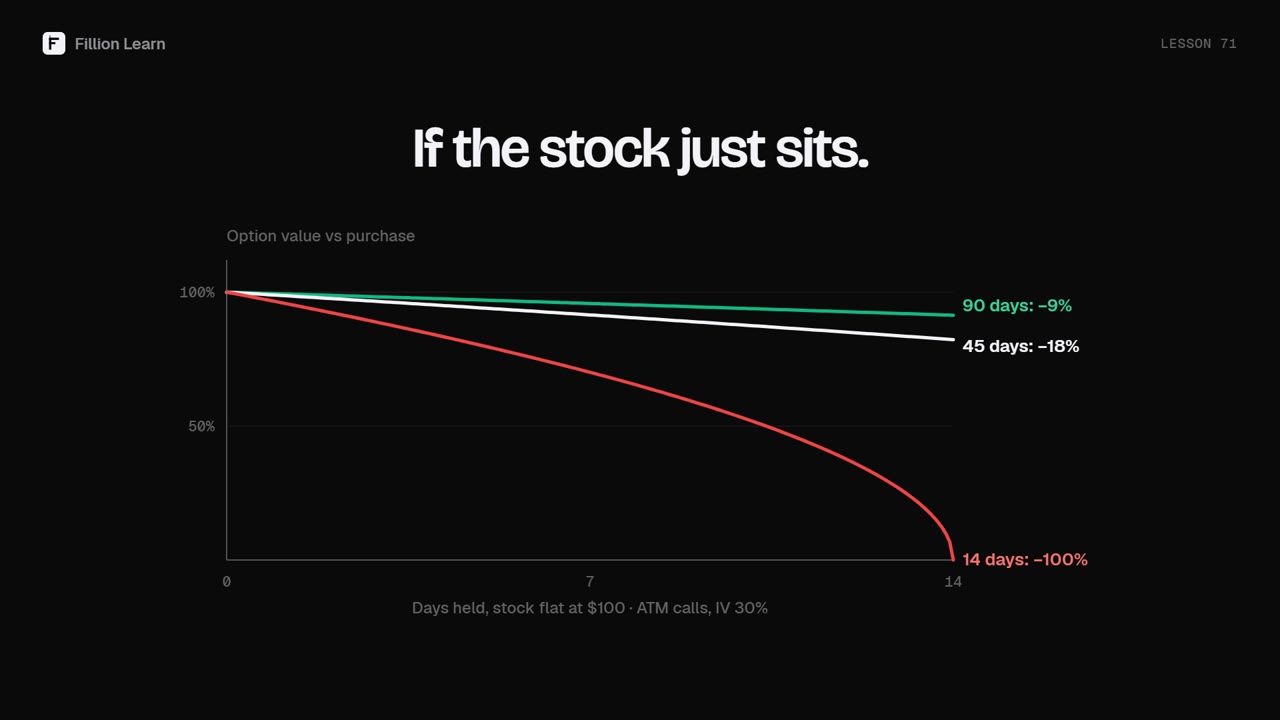 2:32Lesson 71Choosing an expirationGive the thesis enough time. How to match expiration to your holding period.
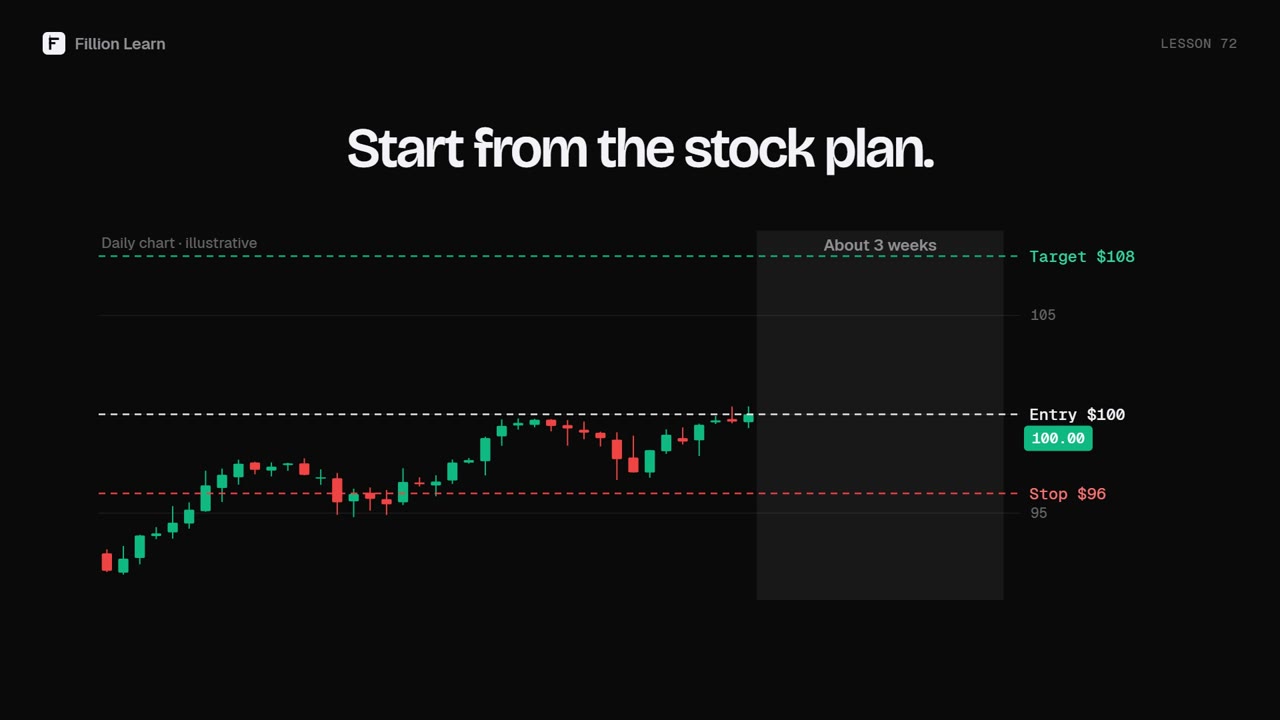 2:15Lesson 72Choosing a strikeTurning a stock target into an option: delta, cost and the odds of getting paid.
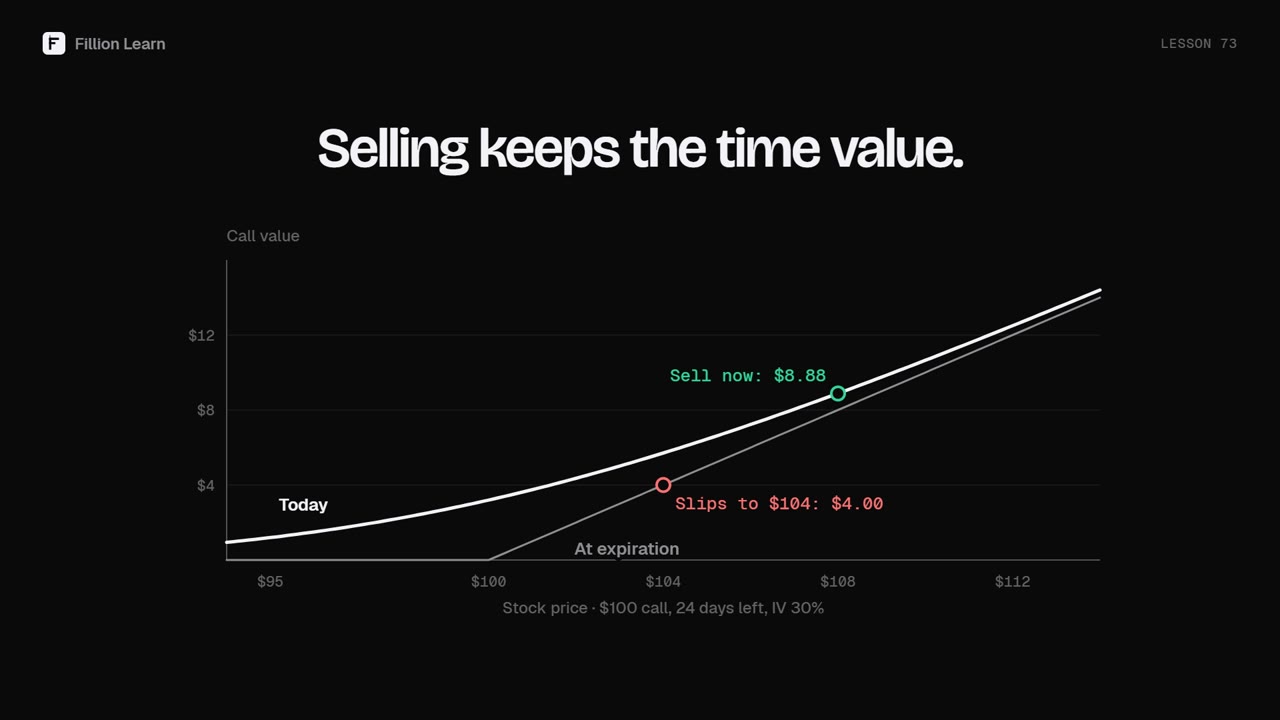 2:06Lesson 73Close early or hold to expirationWhy most option trades should be closed before expiration, and what holding to the end risks.
Greeks and volatility
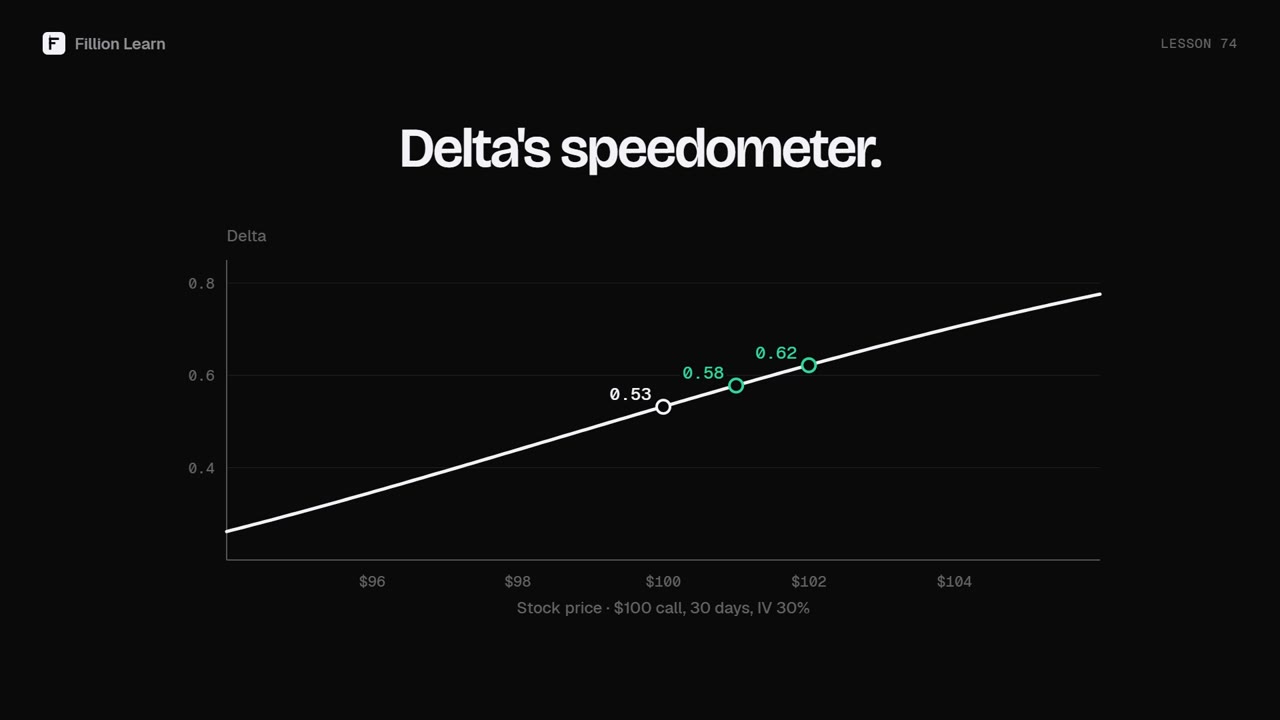 2:23Lesson 74GammaHow fast delta changes. Why options near expiration can swing wildly.
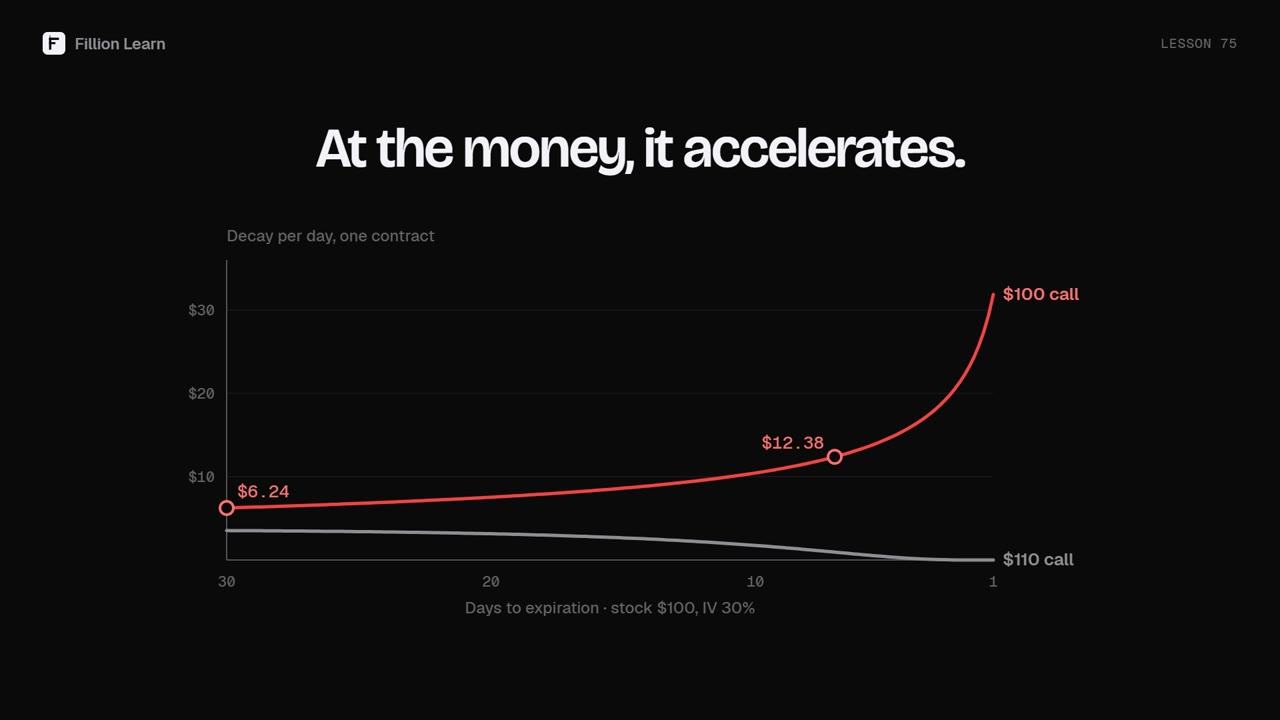 2:17Lesson 75ThetaTime decay in dollars per day, and why it speeds up in the final weeks.
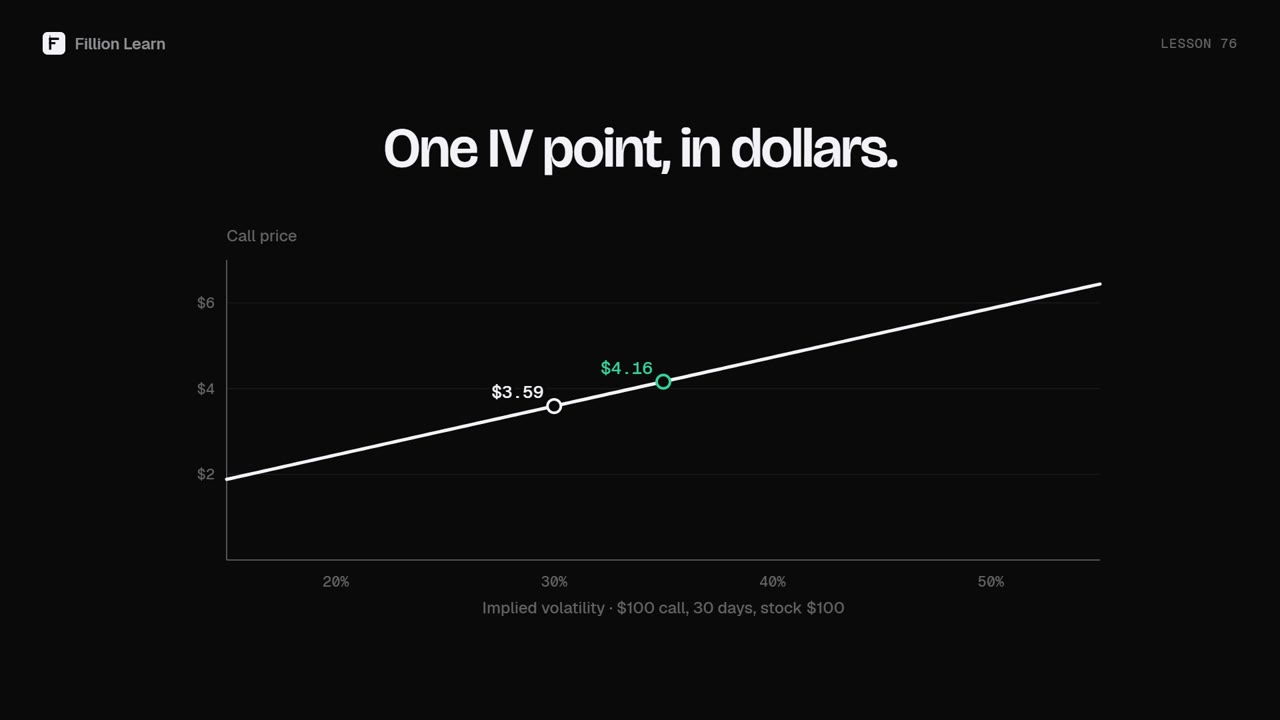 2:26Lesson 76VegaHow much an option gains or loses when implied volatility moves one point.
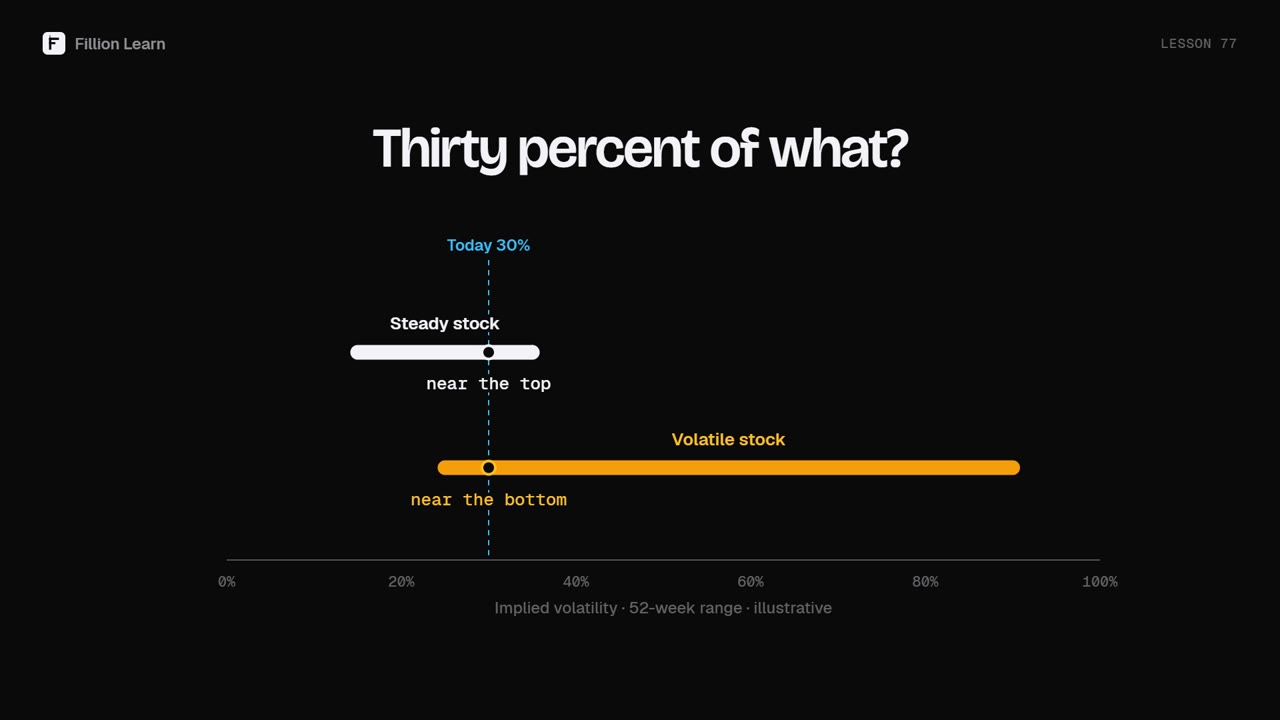 2:52Lesson 77IV rank and IV percentileIs volatility high or low for this stock? The context that tells you if options are cheap.
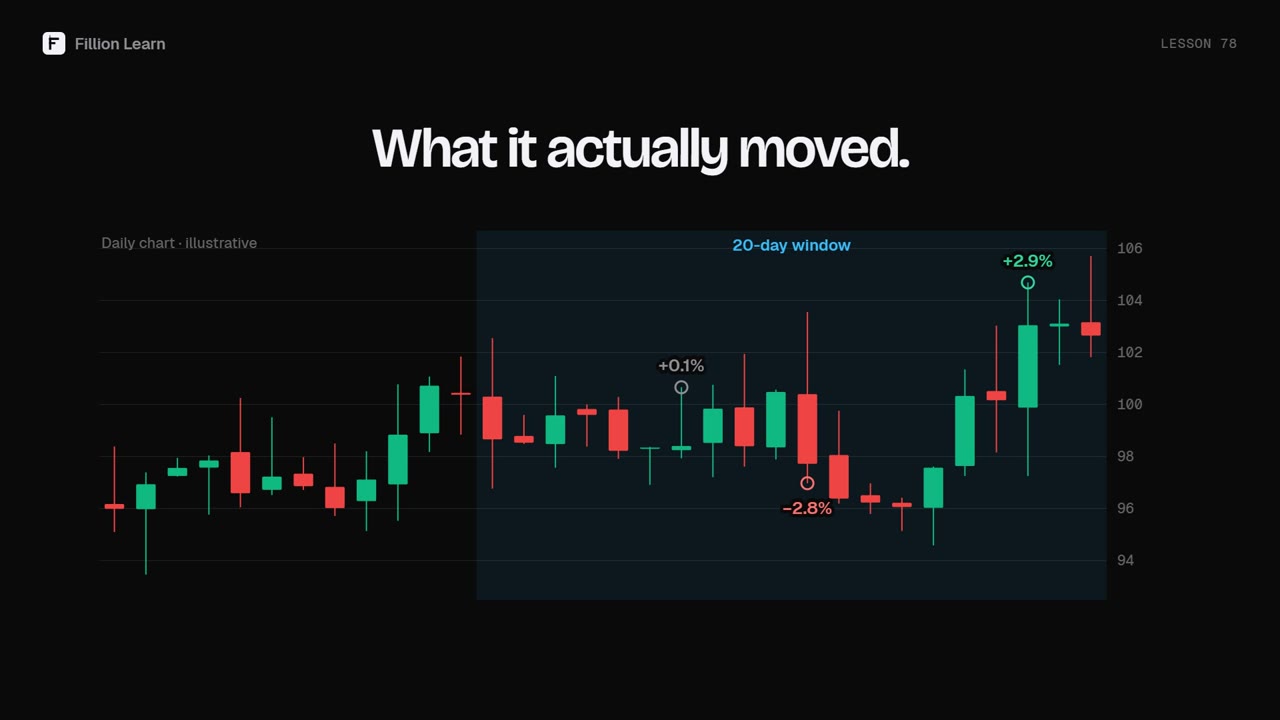 2:55Lesson 78Historical vs implied volatilityWhat a stock has moved versus what the market expects. The gap is where option edges live.
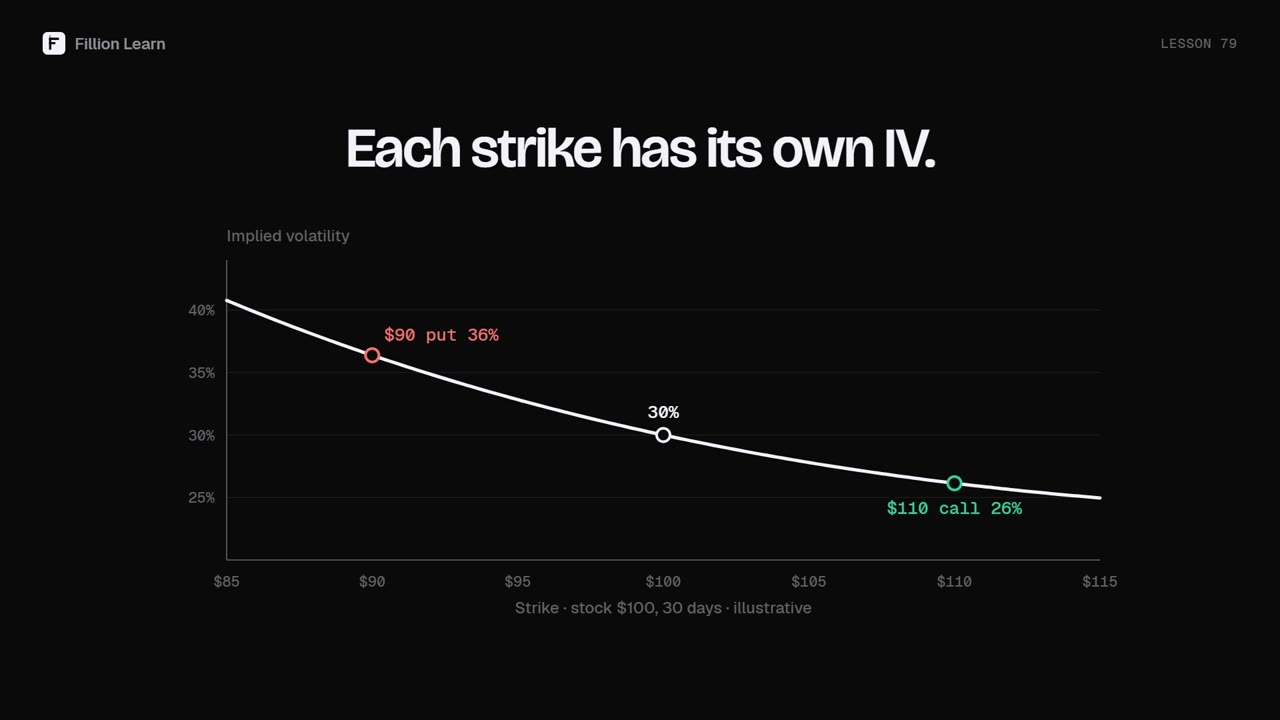 2:51Lesson 79Volatility skewWhy downside puts usually cost more than upside calls, and what skew says about fear.
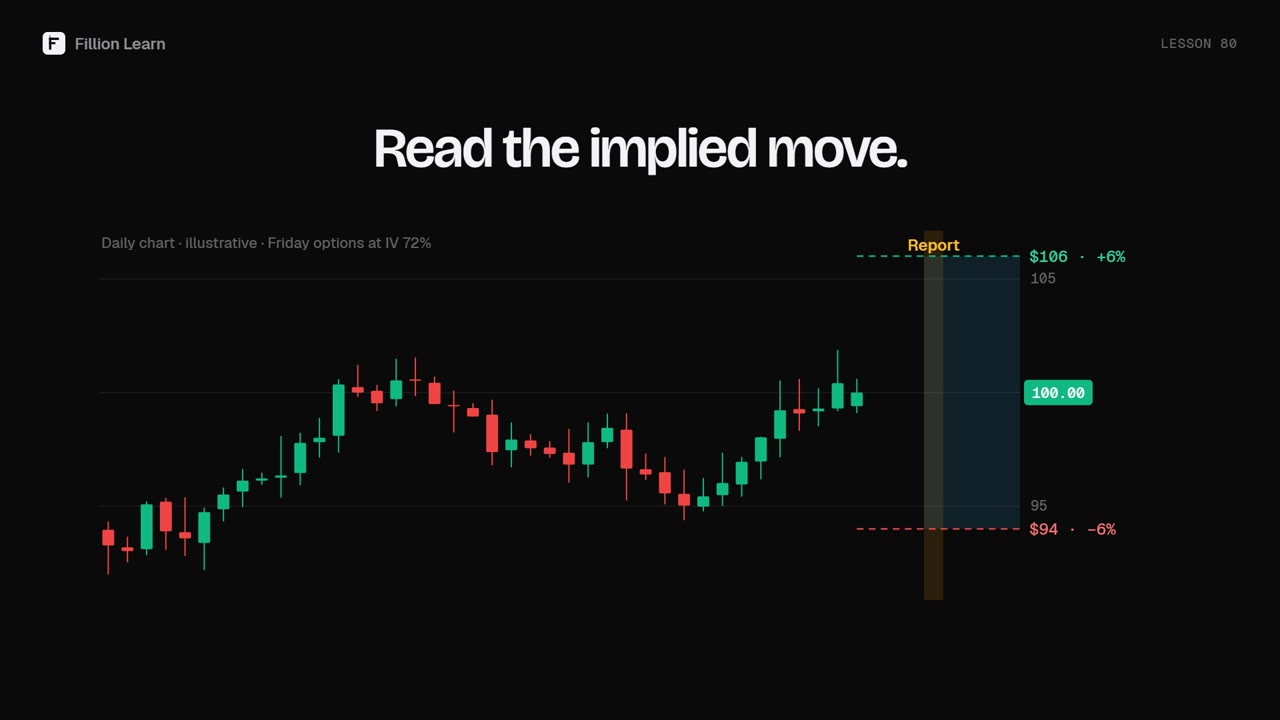 2:42Lesson 80Pricing earnings with optionsRead the expected move before earnings, and decide if the event is cheap or expensive.
Options strategies
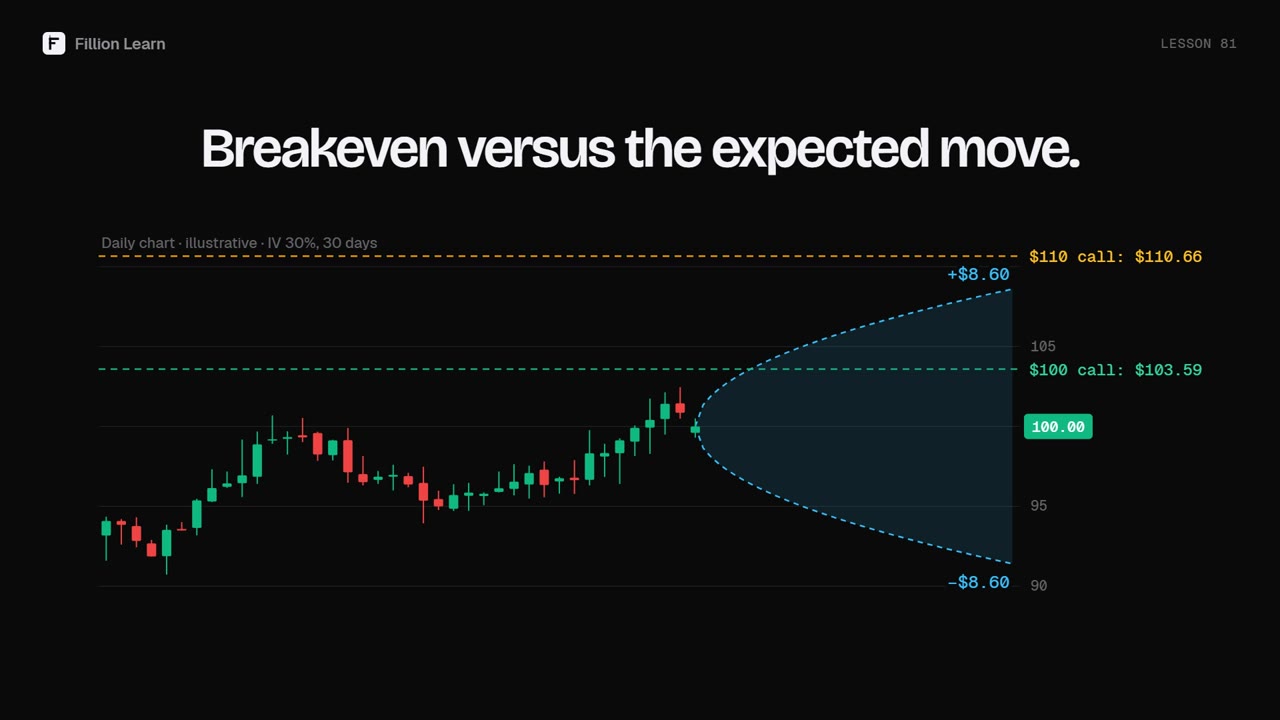 2:39Lesson 81Long calls and puts: when they workSimple directional bets with defined risk. The conditions that give them a real chance.
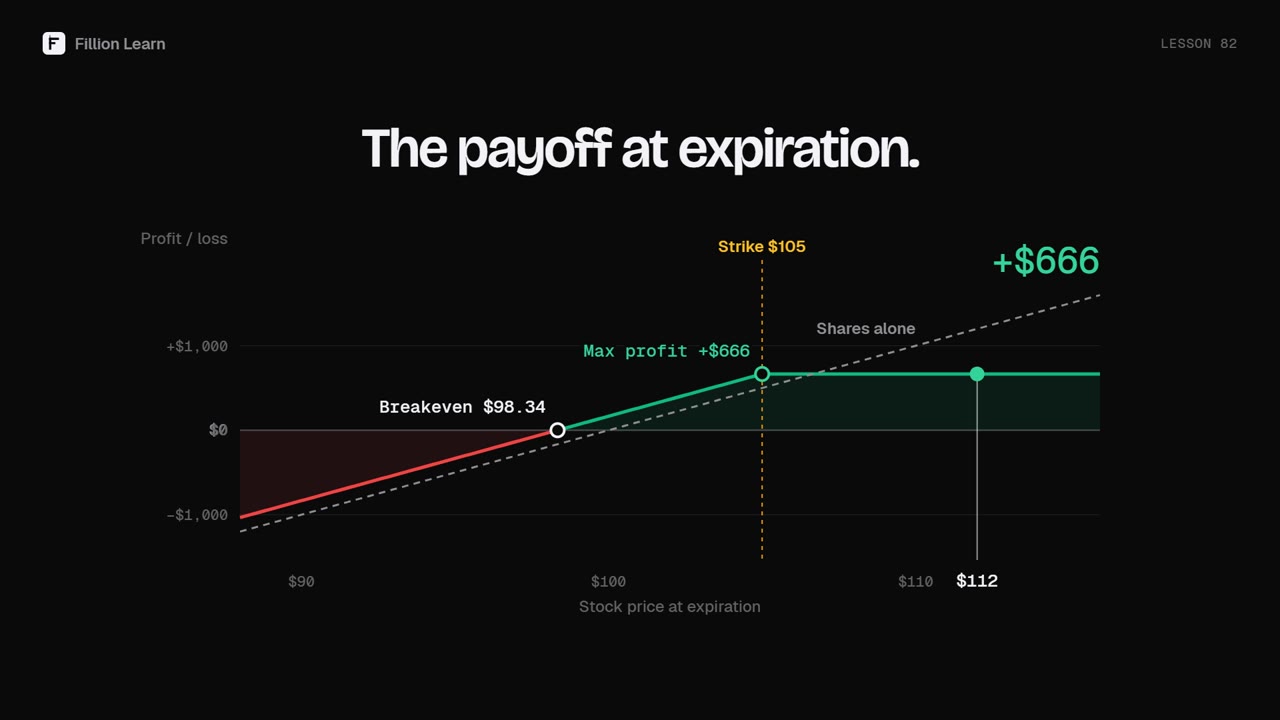 2:26Lesson 82Covered callsSelling calls against shares you own for income, and the upside you give away.
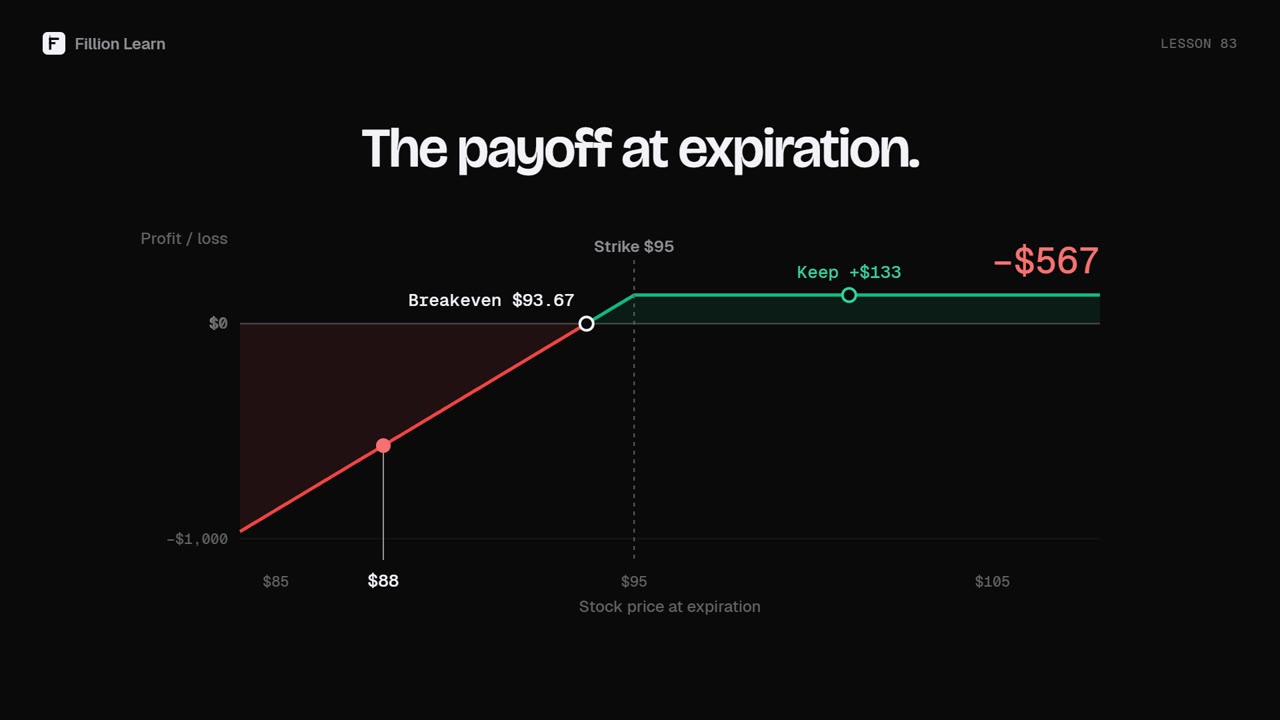 2:27Lesson 83Cash-secured putsGetting paid to wait for a lower entry on a stock you want to own.
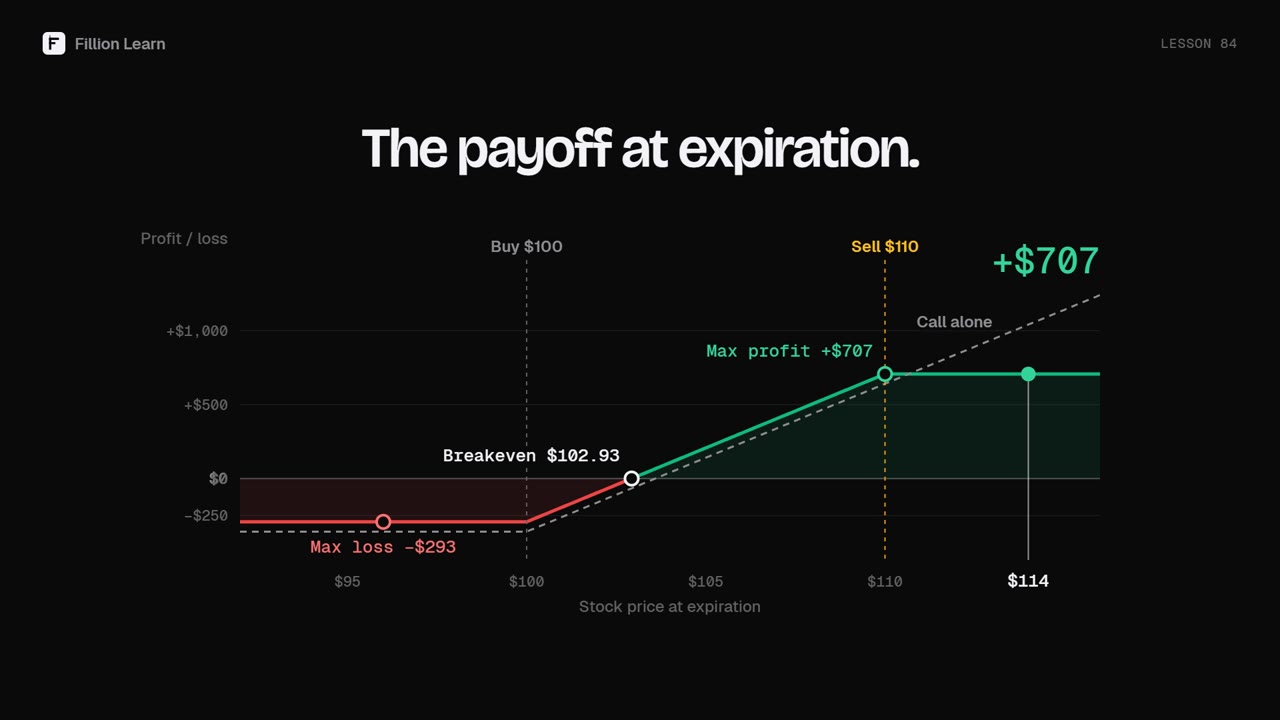 2:23Lesson 84Debit spreadsBuy one option and sell another to cut cost and time decay, with a capped payoff.
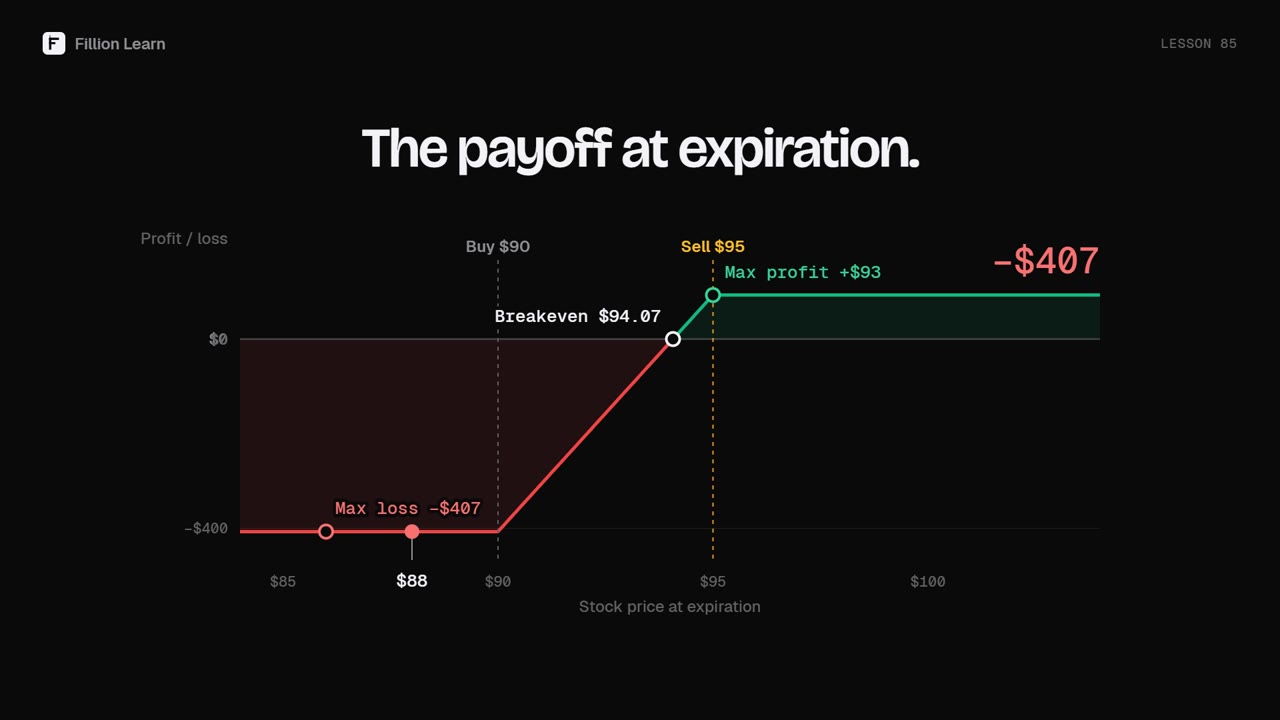 2:39Lesson 85Credit spreadsCollect premium with defined risk, betting a stock stays above or below a level.
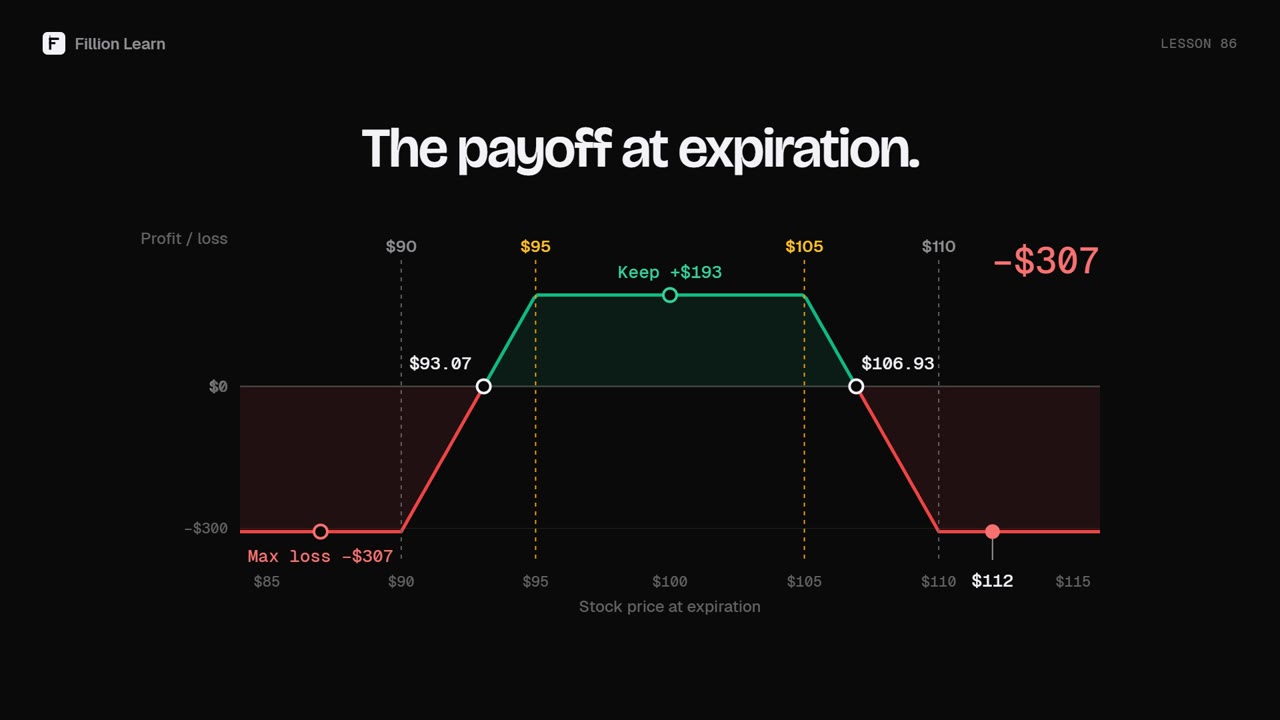 2:30Lesson 86Iron condorsA range bet with two credit spreads. Profit when the stock sits still.
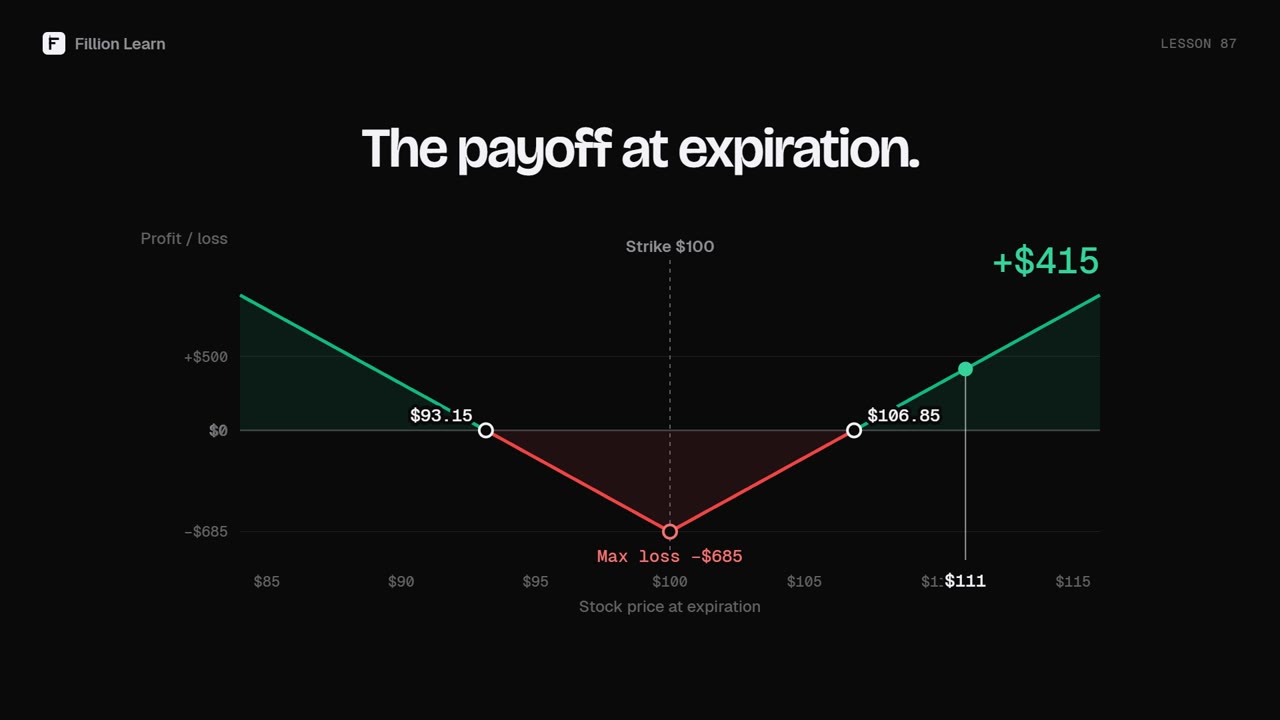 2:43Lesson 87Straddles and stranglesBetting on a big move in either direction, and why it usually costs more than it pays.
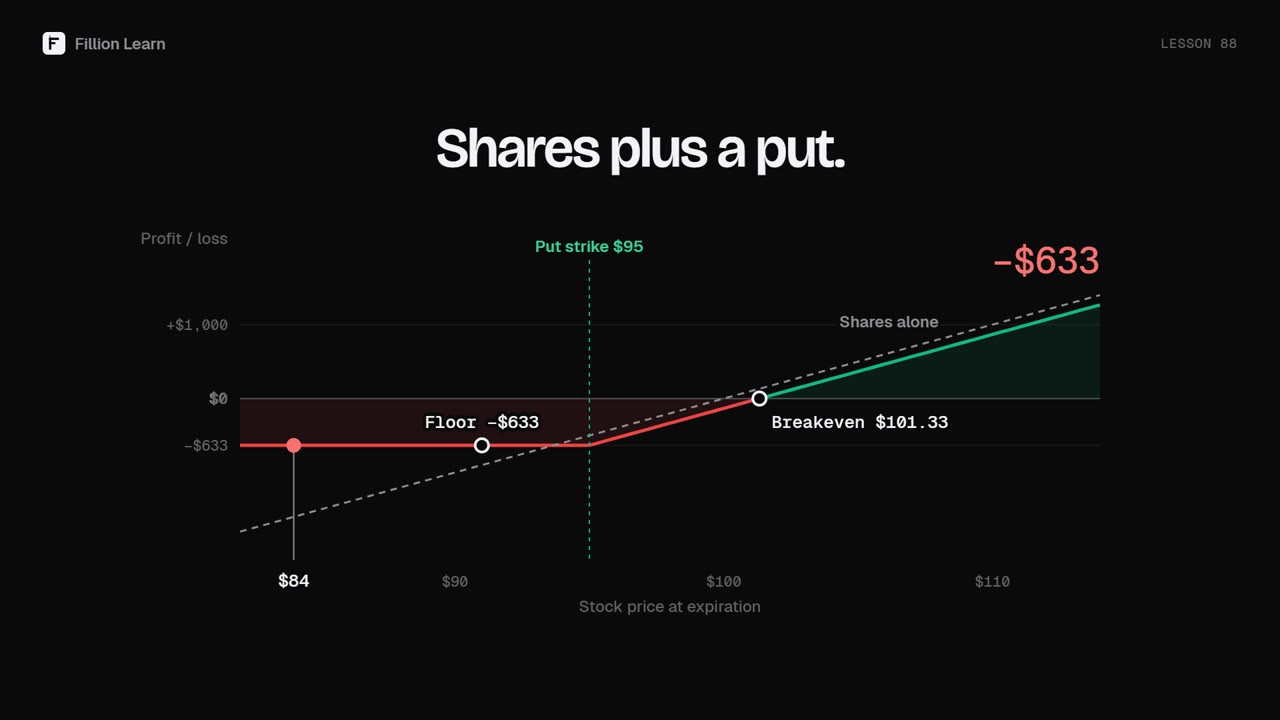 2:26Lesson 88Protective putsInsurance for a stock position, and how to judge if the premium is worth it.
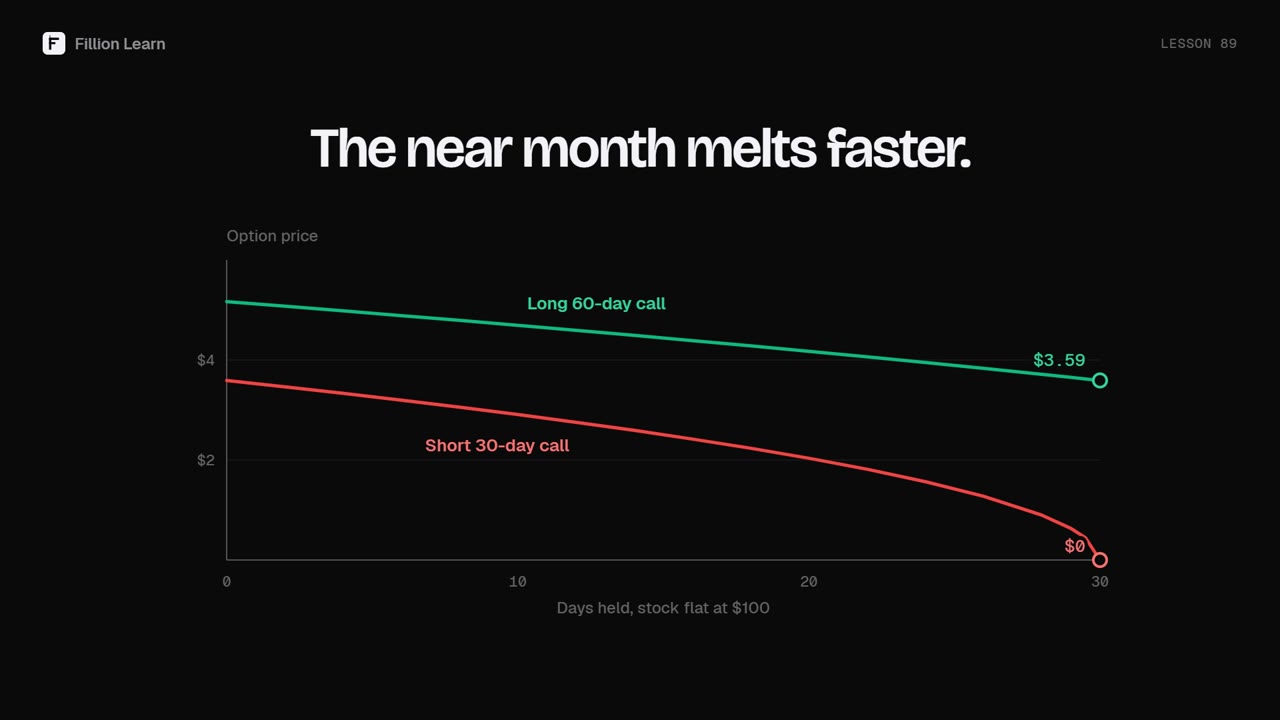 2:31Lesson 89Calendar spreadsSelling near-term time and buying longer-term time on the same strike.
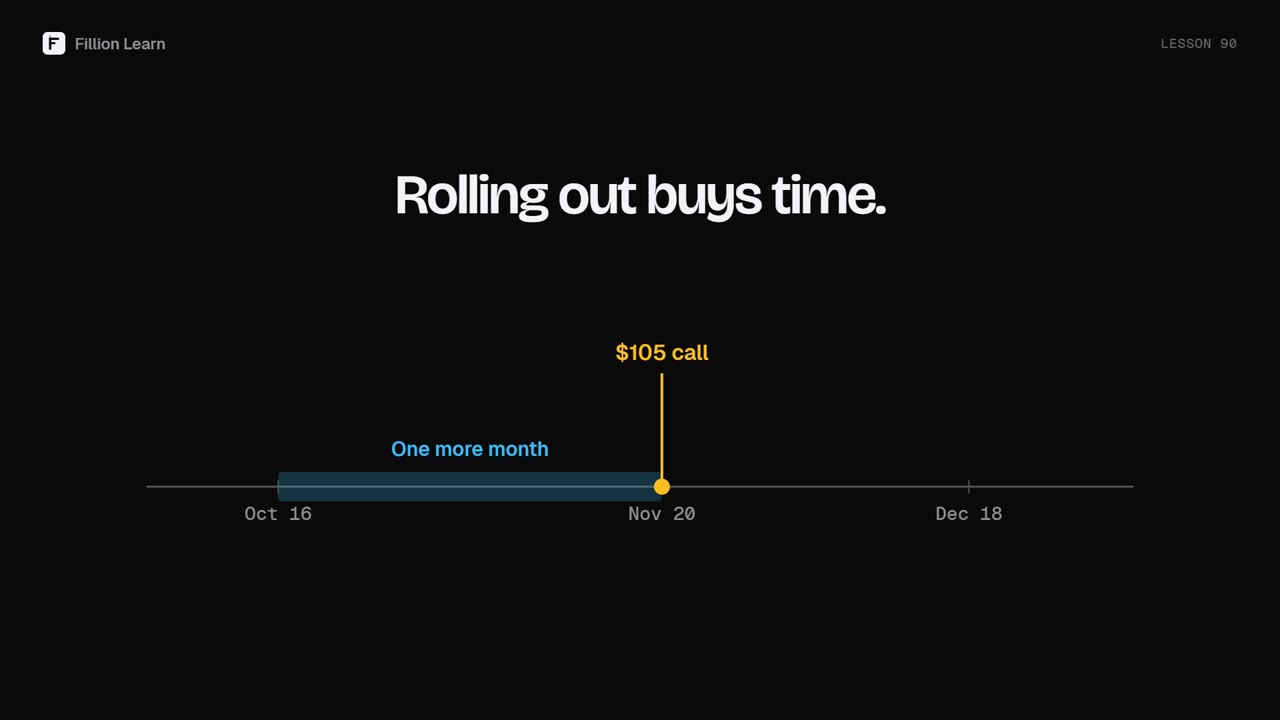 2:32Lesson 90Rolling a positionMoving an option to a later date or new strike, and when rolling just delays a loss.
Flow and positioning
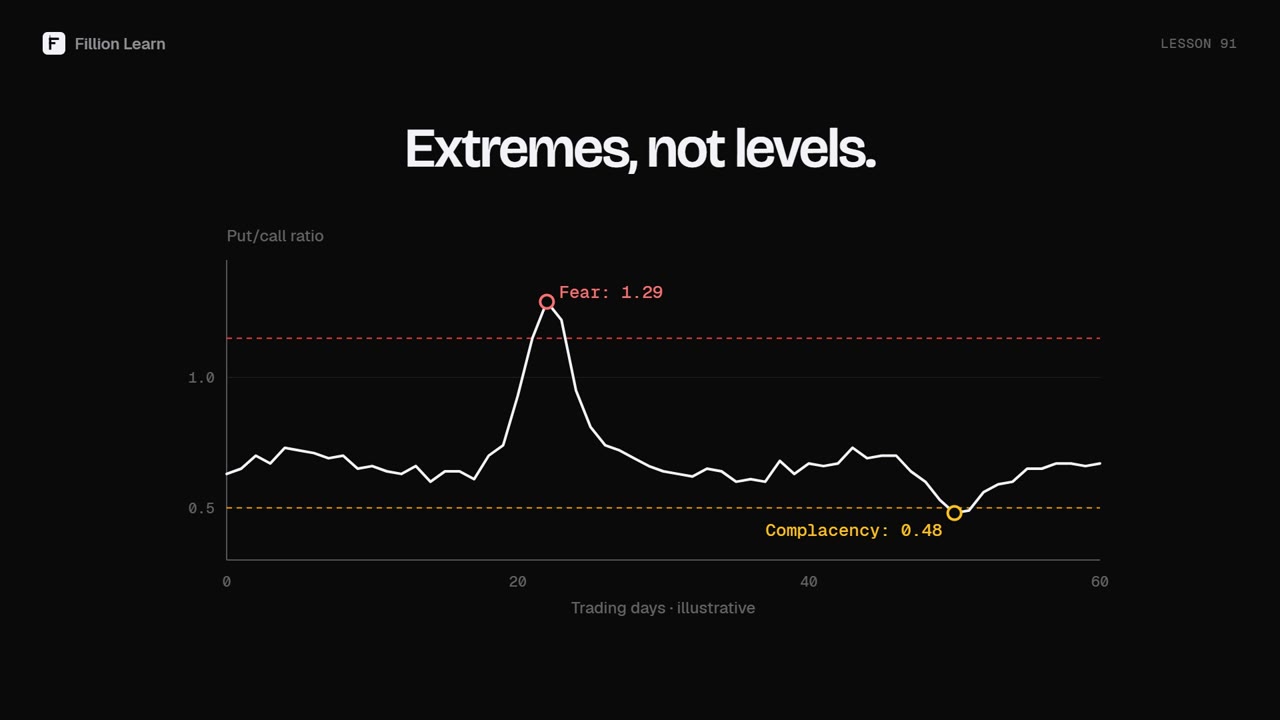 2:44Lesson 91Put/call ratioHow many puts trade versus calls, and why extremes often mark turning points.
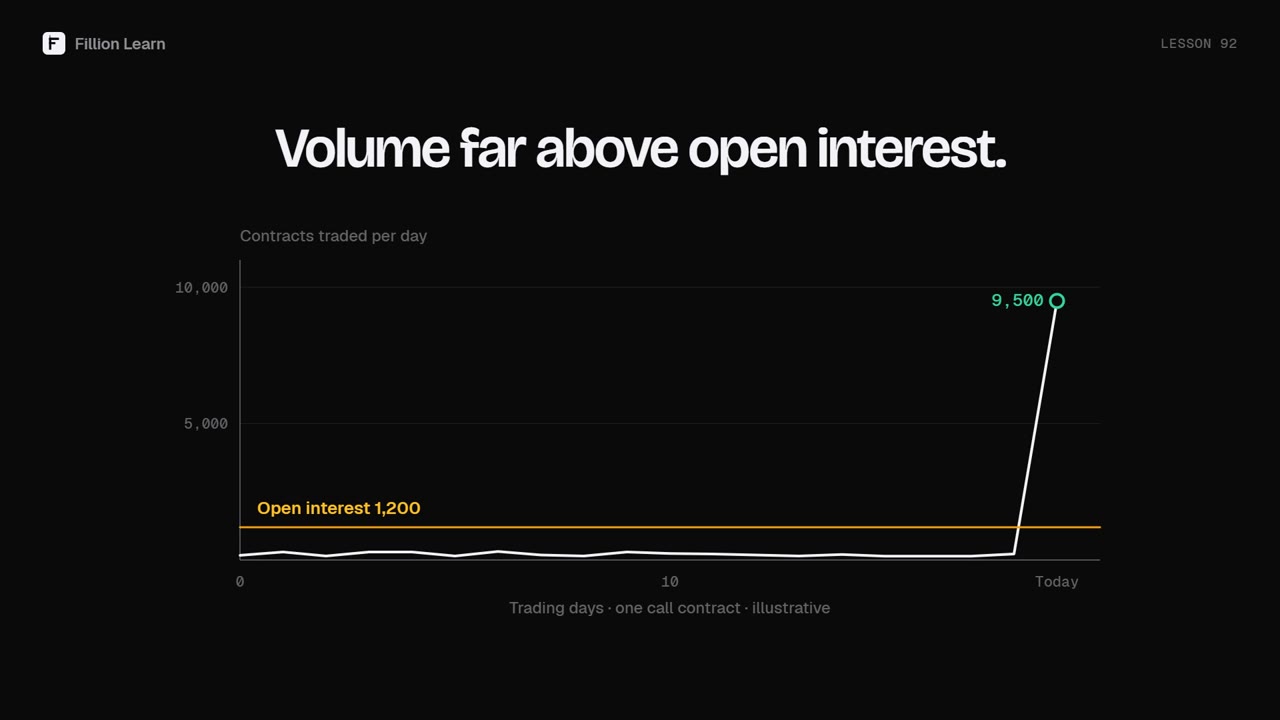 2:19Lesson 92Unusual options activityBig, out-of-pattern option trades. What they can signal and the traps in reading them.
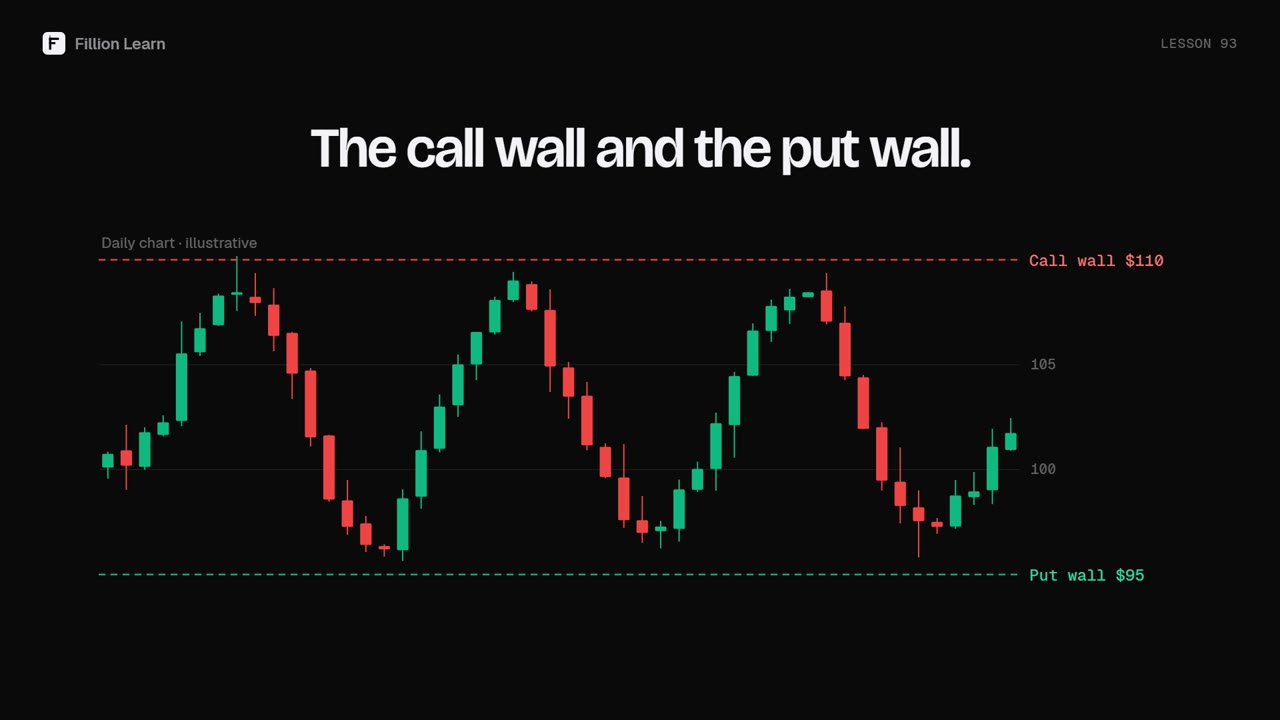 2:45Lesson 93Open interest as price magnetsStrikes with huge open interest can act like support, resistance or pins.
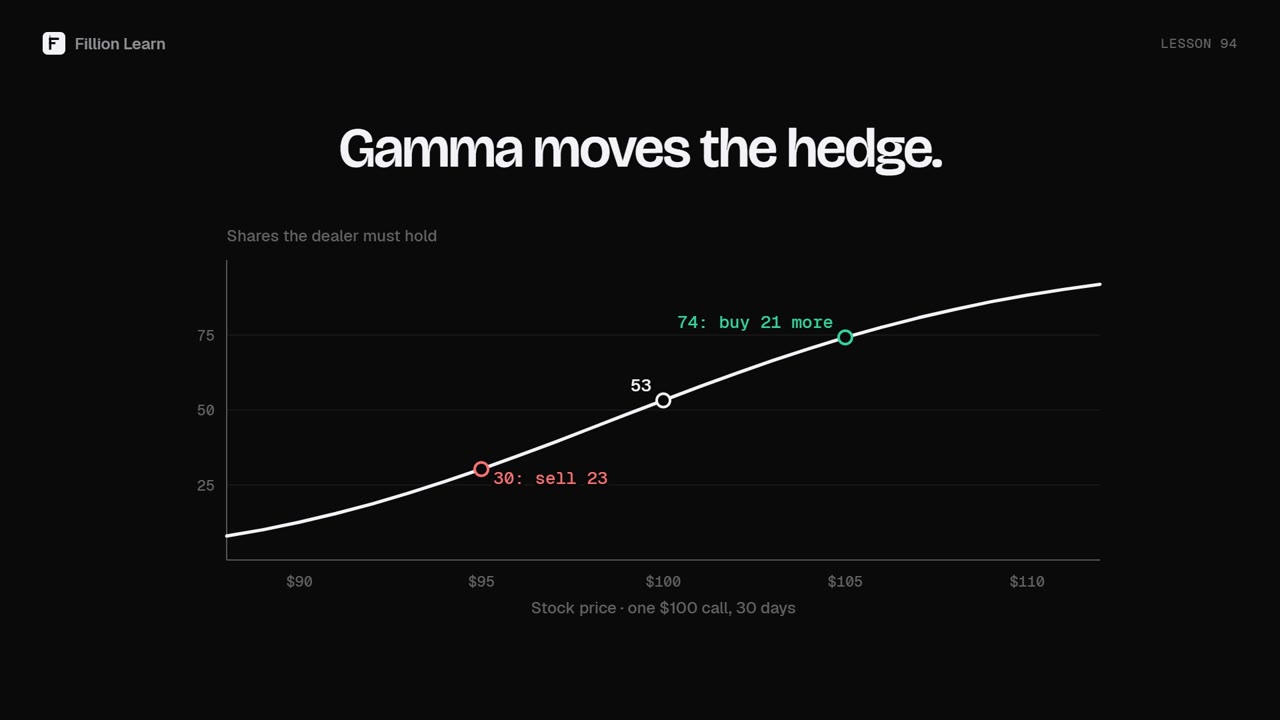 2:44Lesson 94Dealer gammaHow market makers hedge, and why it can calm the market or make it move faster.
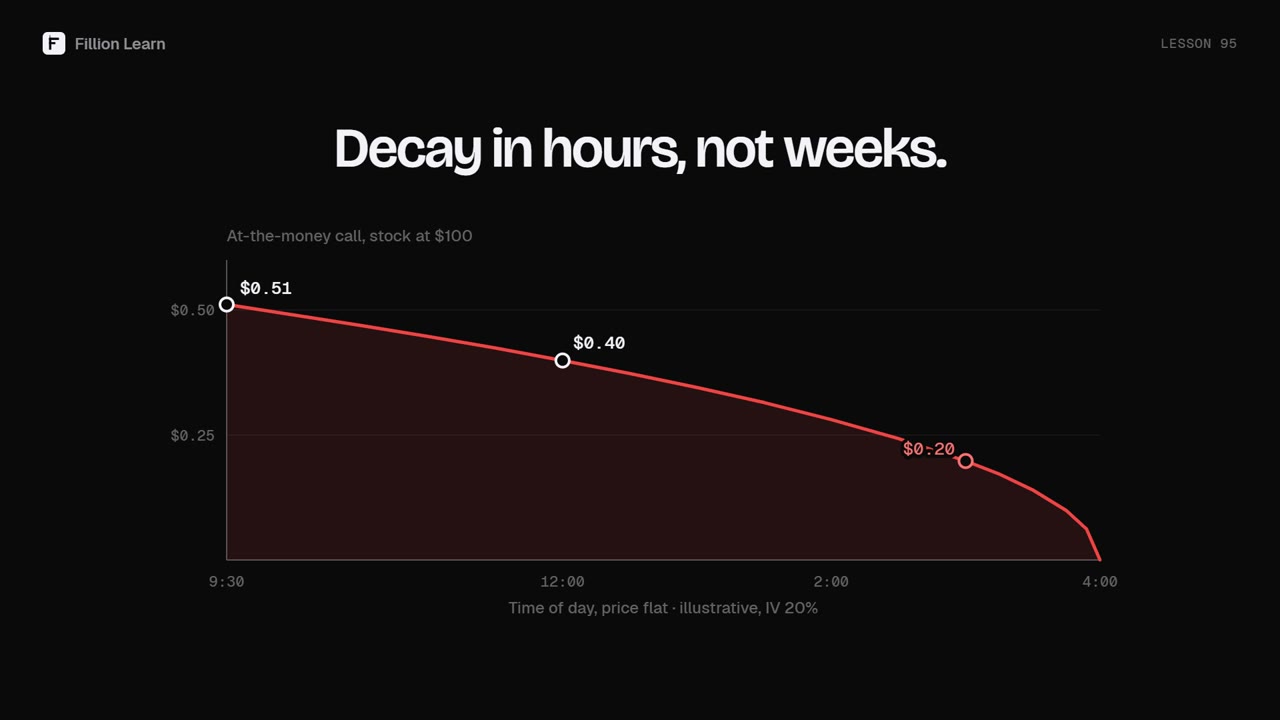 2:34Lesson 950DTE optionsOptions that expire today: why they are popular, and why they move like lottery tickets.
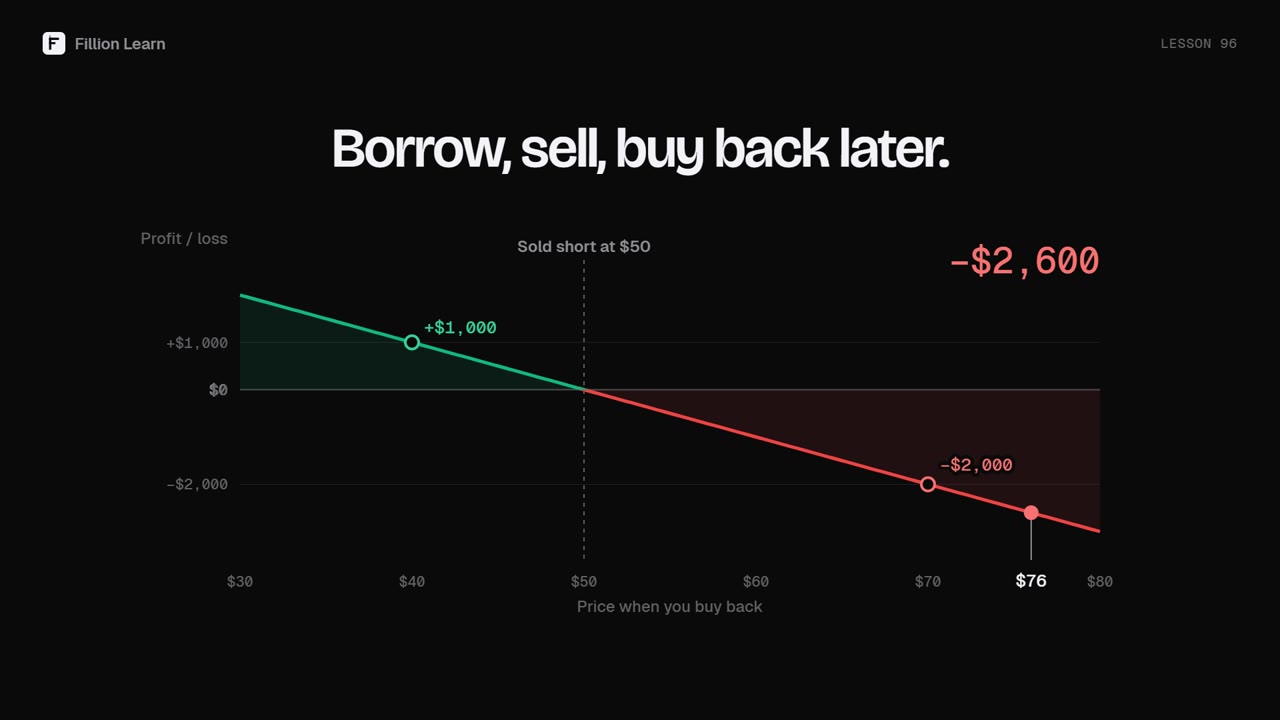 2:42Lesson 96Short interest and squeezesWhen too many traders bet against a stock, a rally can force them to buy all at once.
Mindset and process
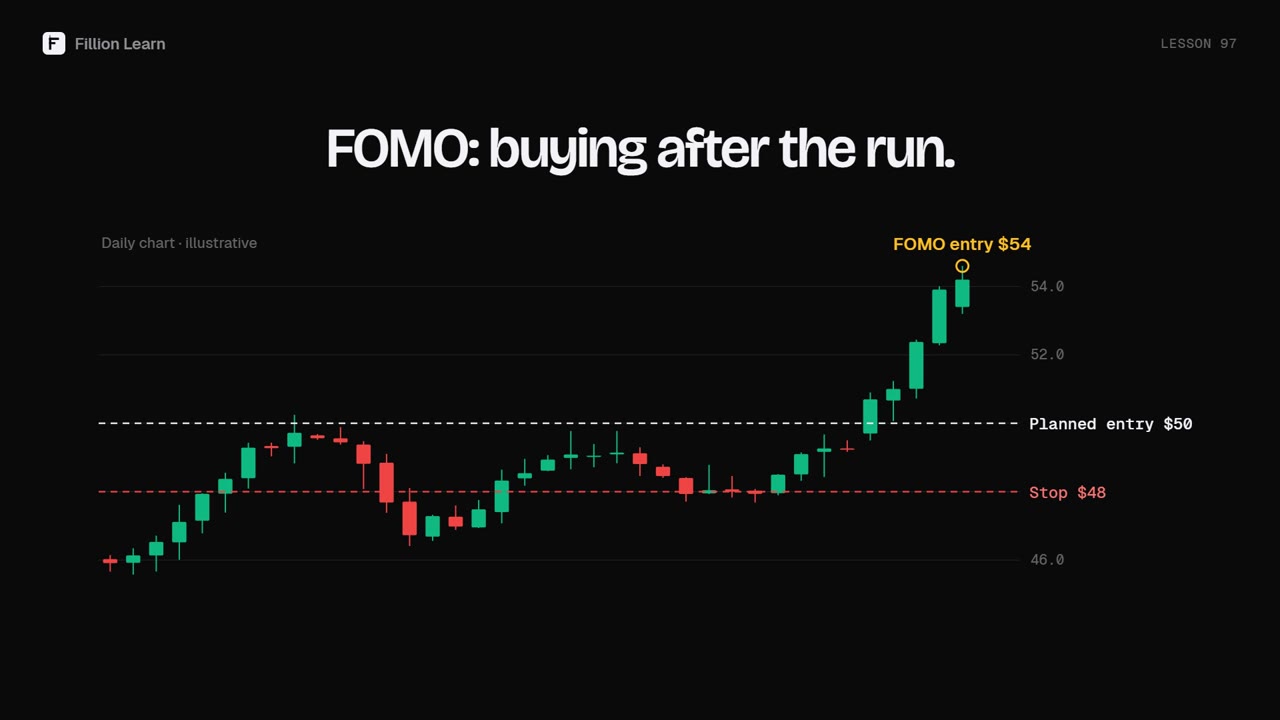 2:35Lesson 97FOMO and revenge tradingThe two habits that drain accounts fastest, and the rules that stop them.
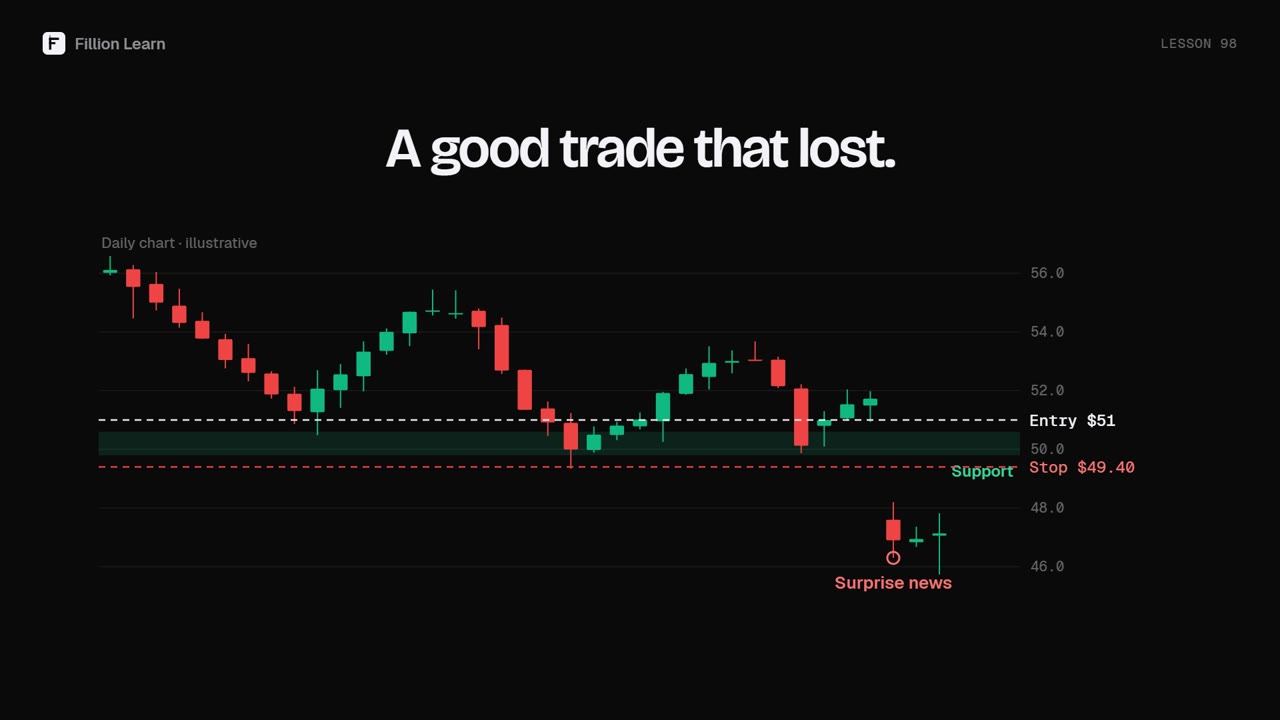 2:30Lesson 98Process over outcomeA good trade can lose and a bad trade can win. Judge decisions, not single results.
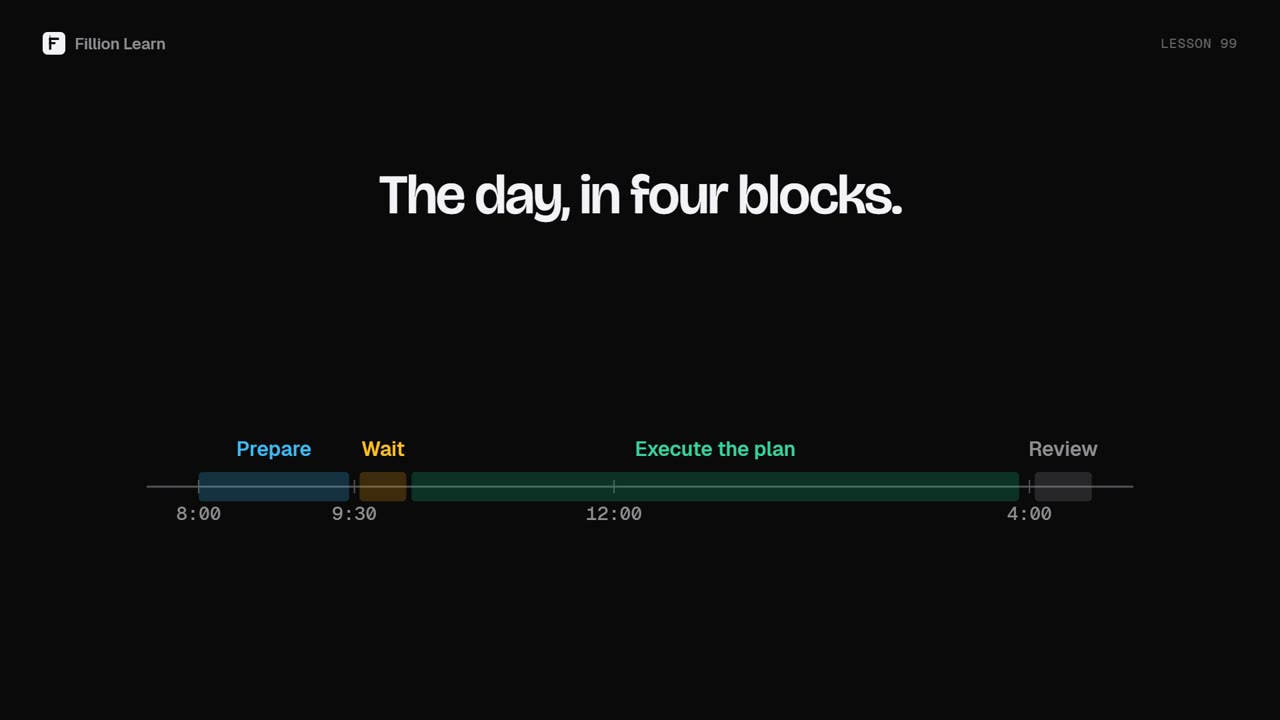 2:16Lesson 99Building a daily routineA repeatable pre-market and post-market routine that keeps you prepared and honest.
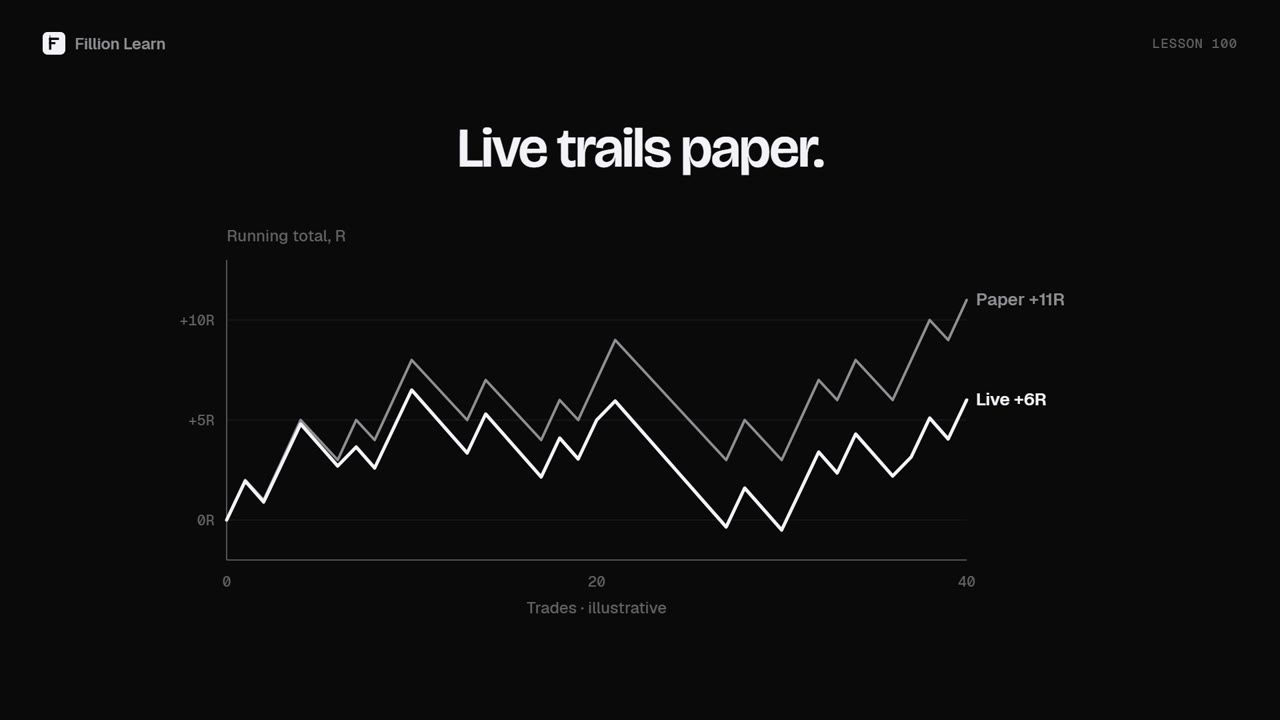 2:38Lesson 100From paper trading to real moneyHow to practice, what paper trading cannot teach you, and how to size up safely.